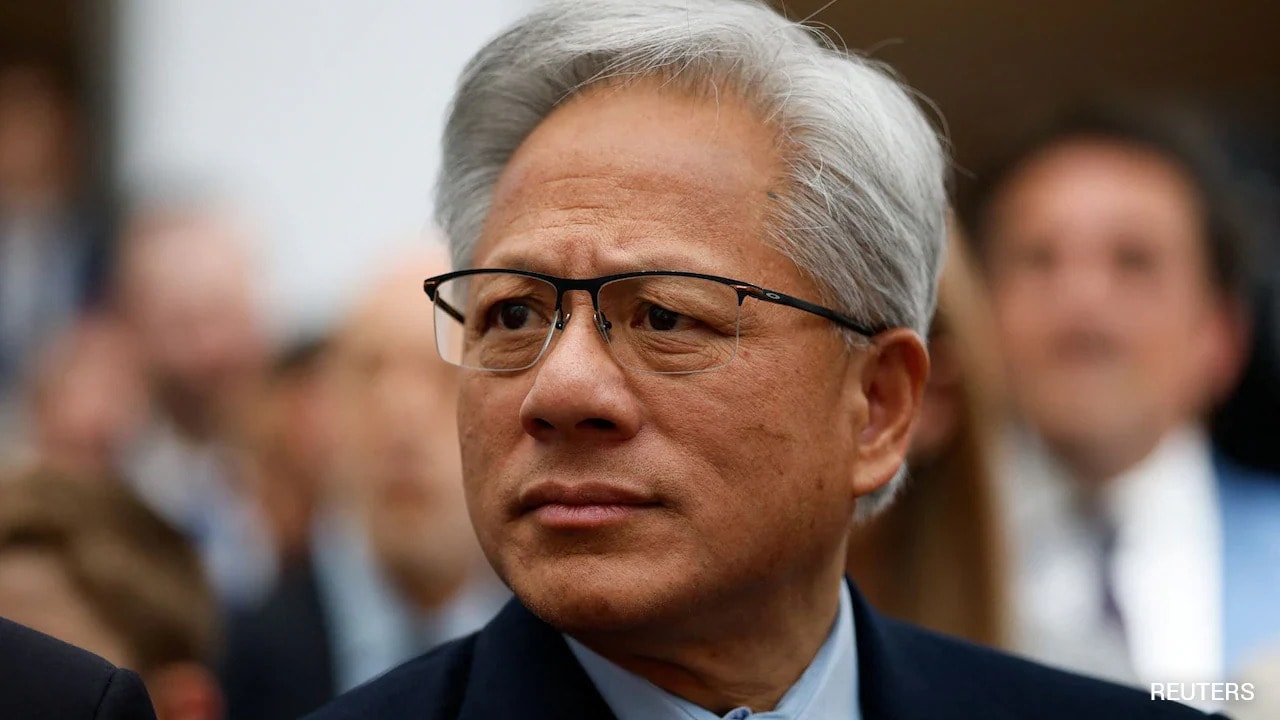
You cannot spend hundreds of billions of dollars backing the companies that buy your products without creating a massive loop of circular economics. Nvidia isn't just selling high-end graphics processing units anymore. Under Jensen Huang, the company evolved into the de facto central bank of the entire technology sector, funneling mountains of cash into cloud providers, foundational model labs, and infrastructure startups.
That strategy worked brilliantly when the artificial intelligence gold rush was accelerating without friction. Now, it has placed the world's most valuable hardware maker in a precarious position. When you supply the picks and shovels, finance the miners, and guarantee the outcome, any stumble at the top threatens to pull down the entire ecosystem.
The Banker Of The Global Intelligence Boom
Look closely at how modern compute infrastructure scales. Tech giants and specialized neocloud operators like CoreWeave and Nebius don't just walk into a bank for standard commercial loans to buy tens of thousands of H100 or Blackwell chips. They rely heavily on manufacturer-backed financing, equity participation, and complex partnership structures.
Nvidia has deployed tens of billions into venture investments and infrastructure commitments. When a hardware manufacturer acts as a primary capital source for its own customer base, traditional market boundaries blur.
This financial web creates a powerful compounding effect during a bull market. Startups get funded, neoclouds scale data centers, and revenue reports break records quarter after quarter, with gross margins sitting comfortably near seventy-five percent.
Yet, it leaves very little margin for error. If the end-user applications built on top of these massive language models fail to generate enough cash to justify their staggering operating costs, the financial pressure flows straight back up the supply chain.
The Single Point Of Failure Problem
Leadership concentration creates its own vulnerability. Jensen Huang isn't just an executive managing operations from a corner office. He runs Nvidia with an unusually flat organizational hierarchy, keeping tight personal control over strategic direction, supplier relationships, and high-stakes customer negotiations.
When tech billionaires like Larry Ellison or Elon Musk talk about begging for GPUs over dinner, they are negotiating with one man who dictates chip allocations across an entire global industry. That level of personal centralization makes the corporate machinery remarkably fast, but it also creates immense key-person risk.
Recent corporate turbulence and intense scrutiny surrounding leadership stability have shaken investor confidence, wiping billions off market valuations in single sessions. Wall Street is waking up to a hard truth: you cannot easily substitute a founder who functions as the chief architect, salesperson, and financial backstop all at once.
Navigating Geopolitical Crosswinds
Beyond internal financial loops and executive stability, Nvidia faces severe external friction. The global semiconductor supply chain is tightly bound to geopolitical tension between Washington and Beijing. Huang has spent years trying to thread the needle, advocating for continued access to the massive Chinese market while strictly complying with export controls.
Balancing national security mandates from regulators with the commercial demands of global clients is an impossible balancing act. If chips cannot flow freely, or if foreign markets build around US architecture using open-source alternatives and localized compilers, Nvidia's growth narrative faces a hard ceiling. Competitors are actively targeting the CUDA software moat, pouring millions into alternative frameworks designed to make non-Nvidia silicon a viable drop-in replacement.
What Comes Next For The Chip Giant
The core question isn't whether artificial intelligence technology will change how enterprises operate. It already has. The real test is whether the financial architecture supporting this multi-trillion-dollar buildout can stand on its own feet without requiring the chipmaker to continuously fund its own demand.
Nvidia possesses massive cash reserves and unmatched technical advantages, but gravity catches up to every cycle eventually. Realizing sustainable long-term value means transitioning away from cyclical self-funding loops toward organic enterprise adoption that generates genuine economic return. Watch the capital expenditure reports of the major hyperscalers and track how fast alternative compilation software erodes the proprietary software barrier. That is where the actual outcome of the current artificial intelligence cycle will be decided.