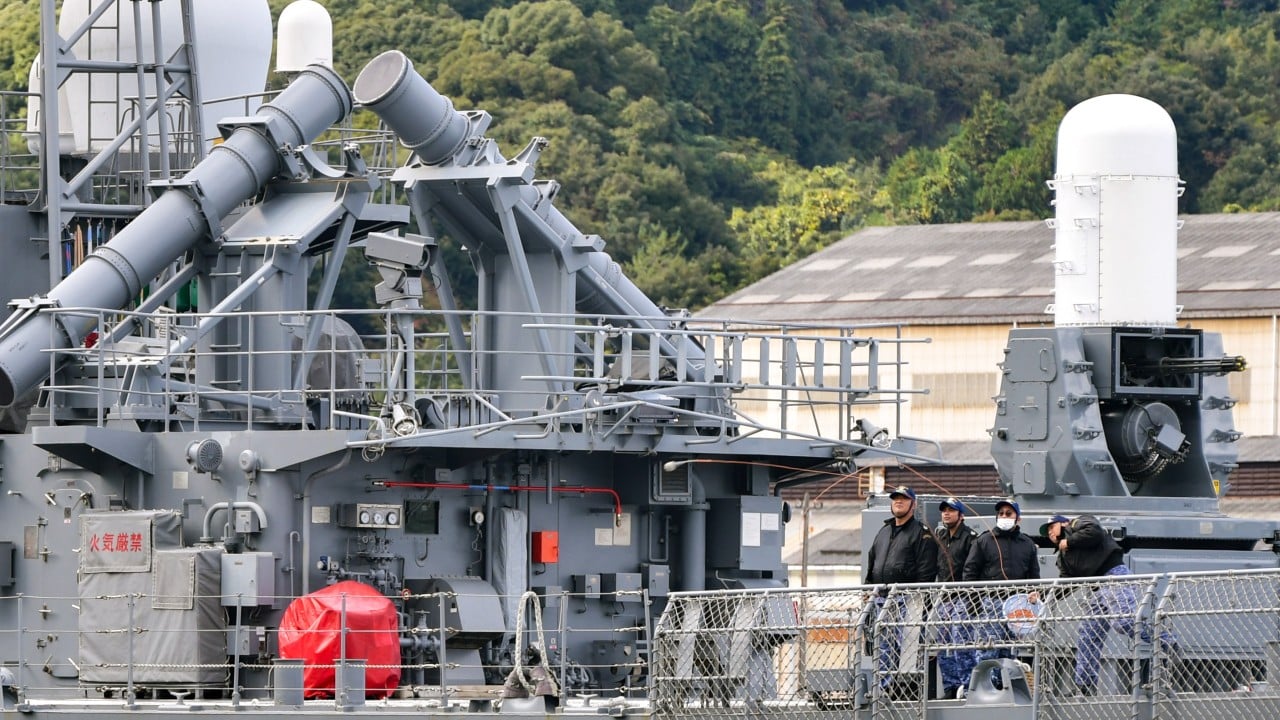
Japan is quietly rewriting its military playbook. Tokyo isn't just updating defense guidelines anymore; it’s aggressively reshaping its entire naval posture to deter potential adversaries in the Indo-Pacific.
Recent draft guidelines for the upcoming Defense Buildup Program reveal a striking new acquisition target: a ship-launched, long-range anti-ship missile housed in a containerized launcher. If you've been paying attention to how regional naval dynamics are shifting, you know this isn't just another routine procurement cycle. It’s a calculated move to expand Japan's counterstrike capabilities far beyond traditional coastal defense.
Breaking Down the Containerized Missile Strategy
The core of this new initiative centers on flexibility. Instead of relying solely on dedicated missile cruisers or specialized destroyers—which take years to build and are heavily tracked—Japan's Ministry of Defense is exploring systems that resemble standard shipping containers.
This design choice changes the math of naval deterrence completely.
- Versatile Platforms: These containerized launchers can theoretically be integrated into various Maritime Self-Defense Force vessels, including transport ships, patrol vessels, and support craft.
- Operational Disguise: Adversaries suddenly face a massive intelligence headache. A routine logistics or transport ship could pack serious anti-ship firepower, multiplying the operational platforms available during a crisis.
- Domestic Production Push: Tokyo is prioritizing domestic defense manufacturing to ensure supply chains don't choke under emergency demands.
Naval analysts point out that moving from research to actual weapon system development signals a major shift in urgency. Japan wants to force potential opponents—specifically China's expanding navy—to account for a vastly higher density of heavily armed surface vessels across the region.
The Reality of Standoff Range and Training Hurdles
Owning a missile with a 1,000-kilometer range is one thing; figuring out how to train with it is entirely another. Japan’s geography is cramped, and testing long-range standoff munitions locally has always been a logistical nightmare.
That constraint explains why Tokyo has looked outward, establishing defense cooperation frameworks—such as recent training agreements utilizing foreign ranges like those in India—to test systems like the upgraded Type-12 and newer hyper-velocity projectiles. You simply can't stretch the legs of a 1,000-km missile inside domestic waters without causing international friction or running out of airspace.
Furthermore, these hardware upgrades are backed by an ambitious overhaul of space-based surveillance. Medium Earth orbit monitoring networks are slated to provide constant tracking data, ensuring these long-range weapons actually have the targeting telemetry they need to hit moving maritime targets. Without real-time tracking, a long-range missile is just an expensive paperweight.
Demographic Pressures and Unmanned Shifts
You can't talk about Japan's military evolution without addressing the elephant in the room: a severe personnel shortage.
A declining birthrate means the Self-Defense Forces are chronically short on recruits. Tokyo isn't expanding its military footprint through sheer manpower; it's substituting people with tech. The new defense guidelines heavily emphasize medium-size unmanned surface vessels for search, rescue, and missile operations, alongside "bodyguard satellites" designed to protect Japanese space assets from adversarial anti-satellite weapons.
Critics argue that ballooning defense budgets—potentially reaching historic highs over the coming five-year block—threaten domestic livelihoods and strain public finances as inflation bites. Public pushback remains real, with citizens questioning whether massive military spending should take priority over pressing social needs.
Regardless of the domestic debate, the strategic trajectory is set. Japan is shedding its strictly post-war defensive constraints, adopting modular, long-range naval weaponry, and preparing for a high-stakes future in a tense Indo-Pacific.