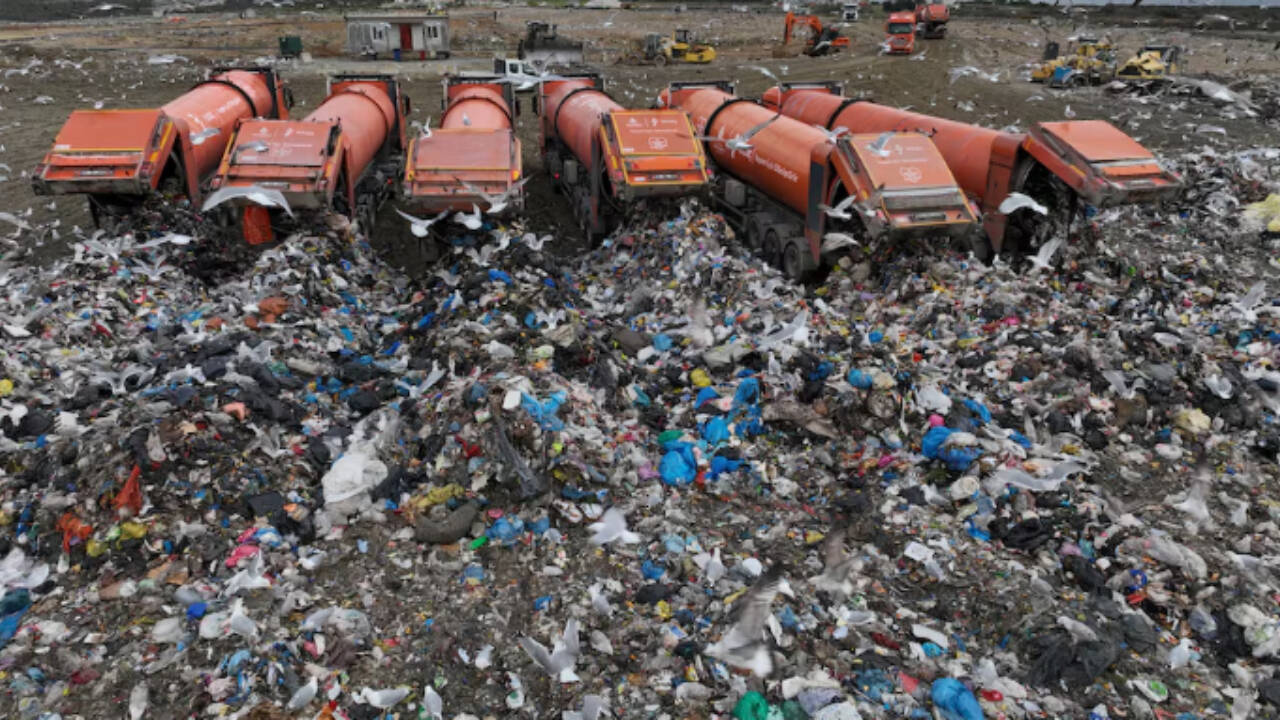
You burn trash to keep the lights on, but the invisible gas escaping through the ground tells a much darker story. Right outside Istanbul, mountains of domestic refuse do two things simultaneously. They feed a modern waste-to-energy power plant, and they leak roughly 7.4 tonnes of methane straight into the atmosphere every single hour.
As Turkey gears up to host the COP31 climate summit, advanced satellite surveillance is exposing a massive disconnect between green energy PR and actual atmospheric leakage. If you look closely at how modern megacities handle garbage, you'll find that capturing waste gas is only half the battle. Stopping the leaks is where everyone drops the ball.
The Satellite Eye in Space
For years, local municipal operators could claim their landfills were tightly sealed environmental success stories without much pushback. Ground sensors are easy to bypass, and traditional inspections miss massive plumes shifting with the wind. That changed when researchers at the University of California, Los Angeles (UCLA) applied publicly available Carbon Mapper data from the Tanager-1 satellite.
Running observations from January 2025 through May 2026, the satellite analysis exposed 70 distinct methane plumes across Turkey's ten highest-emitting waste sites. These weren't minor dribbles. Emission rates measured between 841 kilograms and an alarming 7.4 metric tons per hour on average.
The worst offender identified by satellite observations is the Seymen landfill facility, located west of Istanbul. This massive site swallows about 8,500 tons of household waste every single day—a huge chunk of the 20,000 tons generated across the entire Istanbul metropolitan area.
Power Generation Versus Real-World Leaks
Let's be fair to the operators. The Seymen site isn't just venting gas recklessly into the air. Municipal operator ISTAC set up collection infrastructure, piping the methane underground as organic matter decays to feed an adjacent energy conversion facility that started running in 2020. According to data from energy reports, that facility generates roughly 22,000 megawatt-hours of electricity every month.
Converting rotting garbage into usable electricity sounds like a textbook win. You turn an environmental hazard into a power source.
The problem is containment failure. Having pipes and an energy plant doesn't mean you're catching everything. When satellite data flagged the 7.4-ton-per-hour average leak rate at Seymen, operators defended their numbers by pointing to extraordinary variables. They claimed typical emissions run between four and six tons an hour, and blamed the spikes on routine maintenance of collection pipes, a temporarily uncovered 30-hectare sector of the site, and low atmospheric pressure.
Maintenance excuses don't change atmospheric physics. Methane is the second biggest driver of global warming after carbon dioxide, packing a punch more than 80 times greater over its first two decades in the air. When millions of cubic feet of it escape because a pipe is disconnected or a landfill cover is thin, your clean energy narrative starts falling apart.
Where Turkey Stands on the Global Stage
The waste sector is a glaring weak spot in Turkey's climate commitments. Climate TRACE data ranks Turkey as the fifth-largest emitter of solid-waste methane on Earth, trailing only heavyweights like China, the United States, Russia, and Brazil. World Bank figures show that Turkey's methane output from waste jumped nearly 25 percent between 2014 and 2024, vastly outpacing the global average increase of just 6.5 percent.
Turkish officials point to the country's Zero Waste Initiative, noting that the national waste recovery rate climbed from 13 percent in 2017 to 37.53 percent in recent years. Boosting recycling helps divert organic material away from disposal sites, reducing future rot.
Yet, glaring policy gaps remain. Turkey is still not a signatory to the Global Methane Pledge, the international agreement launched at COP26 requiring nations to slash methane emissions by 30 percent from 2020 levels by 2030. Hosting COP31 puts a massive international spotlight on the country's environmental infrastructure. Global climate regulators are watching closely to see if local leaders will bridge the gap between generating power and actually sealing their landfills.
The Human Cost Downwind
Talk to the people living near these facilities, and you quickly realize that satellite data only tells part of the story. Residents in towns like Seymen, located just a few kilometers from the sprawling waste site, deal with foul odors on hot summer days.
While methane itself is completely odorless, the cocktail of volatile organic compounds accompanying decomposing garbage makes life miserable for nearby communities. Municipal operators promise better filters and improved capping techniques, but local residents bear the immediate sensory burden of living next to a megacity's trash heap.
Fixing this isn't rocket science, but it takes money and rigorous oversight. Waste sector experts emphasize three essential steps: upgrading gas collection infrastructure before pipes fail, immediately repairing damaged landfill liners, and aggressively diverting organic food waste away from open landfills altogether.
Producing electricity from trash is a great step forward, but it's completely counterproductive if the facility leaks enough potent greenhouse gas to cancel out the climate benefits. As global eyes turn toward Turkey for the upcoming climate talks, the real test of leadership won't be found in press releases. It will be found in how tightly they seal the ground.