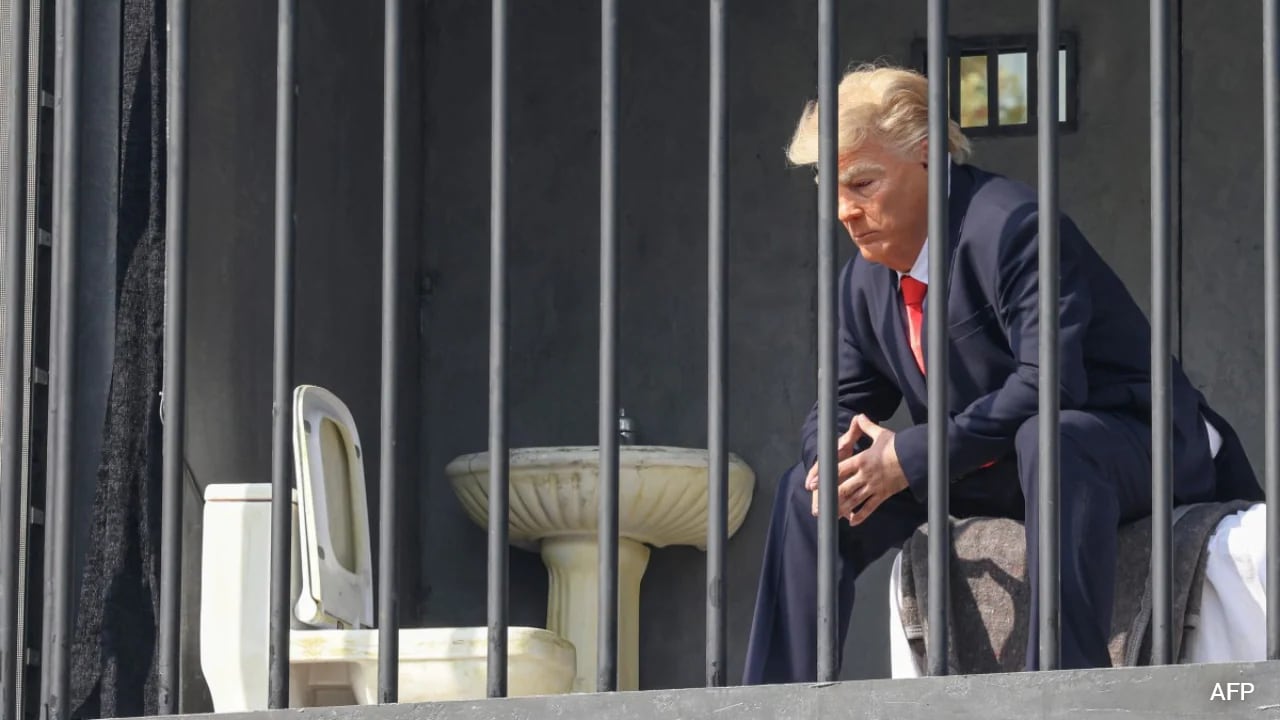
You can walk through the upscale neighborhoods of north Tehran right now and find something entirely unexpected suspended several stories high above Tajrish Square. It is a life-size mock prison cell. Inside, an actor wearing a prosthetic mask and a signature red tie paces back and forth behind steel bars.
It is Tehran's newest anti-American art installation. It draws massive crowds of curious locals stopping for selfies, shouting insults, or cracking jokes about paying bail.
State-backed street propaganda is nothing new in Iran. But this particular public spectacle takes things to an entirely different level. It reflects the raw, volatile mood on Iranian streets following the conflict that erupted with US and Israeli strikes.
Inside the Tajrish Square Installation
The suspended cage dominates the busy square. A live actor portrays Donald Trump, clutching the bars while a nearby electronic screen projects messages accusing the American administration of war crimes.
Reactions from passersby vary wildly. Some spectators treat the display as dark street theater. One local joked to the masked actor that crowds would raise bail money to get him out. Others channel genuine rage. Teenagers have shouted threats at the makeshift cell, screaming demands for justice and revenge.
Municipal authorities in Tehran designed the exhibit to run continuously, operating day and night. It serves as a physical manifestation of state-sanctioned messaging following months of regional escalation.
The Grievances Driving the Display
To understand why this display exists, you have to look at the narrative dominating Iranian state media. Tehran accuses Washington of targeting civilian infrastructure, citing specific casualties from strikes that hit civilian areas early in the conflict.
Iranian officials have publicly labeled the US leadership as war criminals. They demand international accountability and domestic defiance. The street installation acts as a constant visual reminder of these grievances for anyone commuting through the capital.
Anti-Western murals and rallies have long been a staple of political life in Iran. Yet, turning political theater into an interactive, 3D street performance with live actors marks an aggressive shift in public information tactics. It ensures that geopolitical tensions remain a visceral, daily reality for ordinary citizens navigating city streets.
What Happens Next on the Streets
Public stunts like the Tajrish Square cage do more than just provoke immediate reactions. They feed a cycle of permanent hostility that makes diplomatic de-escalation increasingly difficult. As long as the conflict casts a long shadow over daily life in Tehran, public art will remain a weapon of statecraft.
Expect more theatrical displays as domestic and foreign policies remain deadlocked. The physical cage in north Tehran isn't just a temporary stunt. It's a snapshot of a nation living on a permanent war footing.



