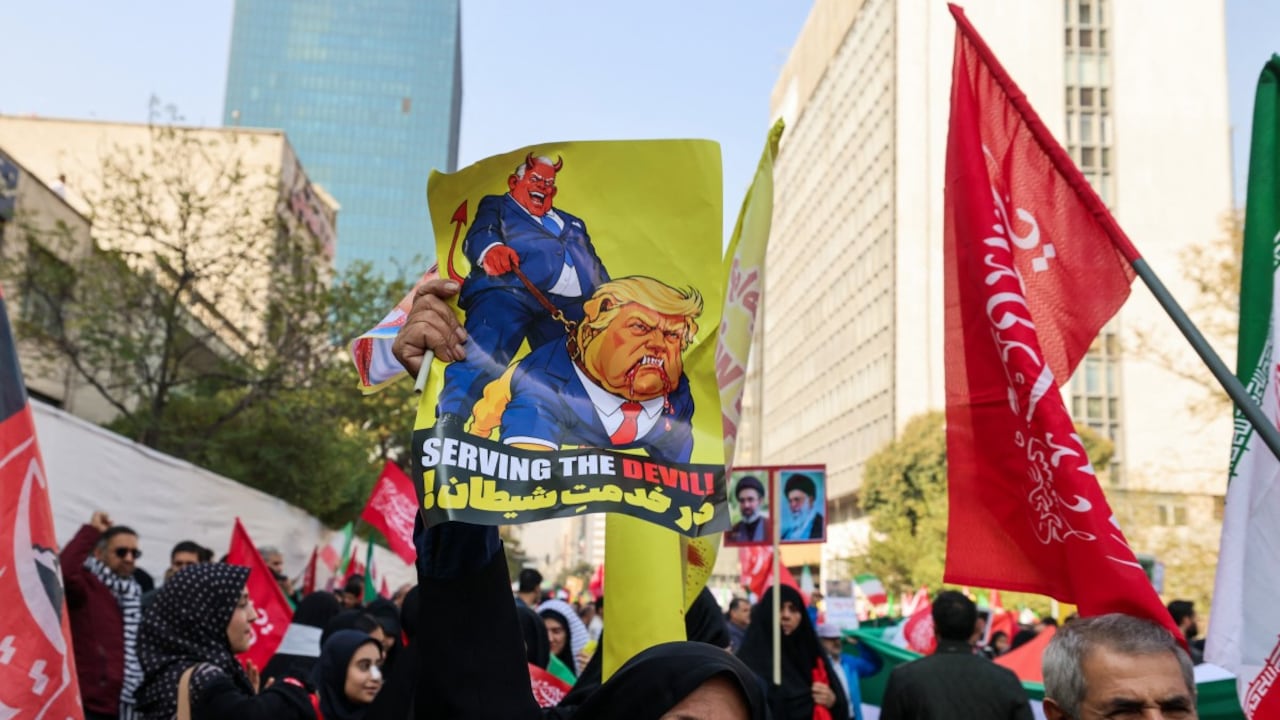
When thousands of demonstrators flooded Enqelab Square in central Tehran to chant "Death to America" beneath a towering banner declaring "We will kill Trump," they weren't just running through routine revolutionary theater. The timing mattered. These rallies erupted hours after American voters stripped Donald Trump's Republican Party of control over both chambers of Congress in the 2026 midterm elections.
Frustration over soaring living costs, volatile tariff policies, and the grinding military conflict with Iran fueled a brutal electoral referendum. For Tehran, the ballot box rejection of the White House felt like immediate validation.
The Anatomy of a Midterm Backlash
Let’s be honest about why the Republicans took such a massive hit. Voters didn’t wake up angry about congressional zoning laws; they reacted to economic pressure and an expanding foreign entanglement. Even inside the administration, figures like Vice President JD Vance acknowledged that voter fatigue over the Middle East conflict played a major role in alienating constituents.
When you start wars abroad, grocery prices tick up, and supply chains stutter, people notice. American families expressed their exhaustion at the ballot box. Democrats seized both the House and the Senate, creating an immediate roadblock for the executive branch's legislative agenda.
But foreign capitals watched the returns with an entirely different lens. In Tehran, state media and hardline factions interpreted the congressional sweep as a direct rebuke of White House foreign policy. Banners displayed during the annual anti-American embassy takeover rallies didn't hold back, featuring provocative imagery like a blood-stained bulldog version of Trump on a leash held by a caricature resembling Israeli Prime Minister Benjamin Netanyahu.
Triumphalism Meets a Dangerous Crossroad
Iran's hardliners are treating the congressional shift as a geopolitical victory. They believe public opposition to the conflict forced a crack in Washington’s armor. State-aligned outlets highlighted the electoral rout as proof that ordinary Americans reject long-term military friction in the Gulf.
Yet, this triumphalism creates a volatile paradox. Diplomacy doesn't operate in a vacuum. Rather than softening his stance after a domestic political beating, Trump has historically doubled down when pushed into a corner. Observers tracking the region note that a politically wounded president facing a hostile, Democrat-controlled Congress might feel liberated from domestic constraints regarding future military escalations. Hardline commentators in US media circles are already whispering that the president has nothing left to lose politically, which could tempt a swift, aggressive response to provocative slogans coming out of Tehran.
What a Divided Washington Means for Foreign Policy
With a new congressional math in place, the checks and balances of US foreign policy are shifting overnight.
- Legislative Gridlock: The White House will struggle to pass unhindered funding packages or sweeping new statutory authorities related to Middle East operations.
- Subcommittee Investigations: Expect empowered Democratic committee chairs to launch rigorous oversight hearings into the intelligence and decision-making behind the initial Iran strikes.
- Executive Retaliation: Denied legislative cooperation at home, a frustrated executive branch often pivots entirely to unilateral powers, increasing the risk of sudden, unannounced military maneuvers.
Reading Between the Lines of Global Reactions
International markets reacted swiftly to the shift in Washington, with bond yields moving and currency fluctuations reflecting the new political reality. Investors hate uncertainty, and a Washington split down the middle guarantees gridlock.
The real danger lies in miscalculation. Tehran assumes American domestic fatigue equals permanent paralysis. Meanwhile, Washington hawks view Iranian street rhetoric as an open invitation to finish what was started earlier this year. Both assumptions miss a critical nuance. Voters rejected the economic fallout of a conflict, but they didn't vote to surrender American deterrence.
Keep an eye on maritime traffic through the Strait of Hormuz and diplomatic channels managed by regional mediators like Qatar. If back-channel talks collapse under the weight of these post-midterm celebrations, the rhetoric on the streets of Tehran will quickly translate into something far more dangerous on the water.