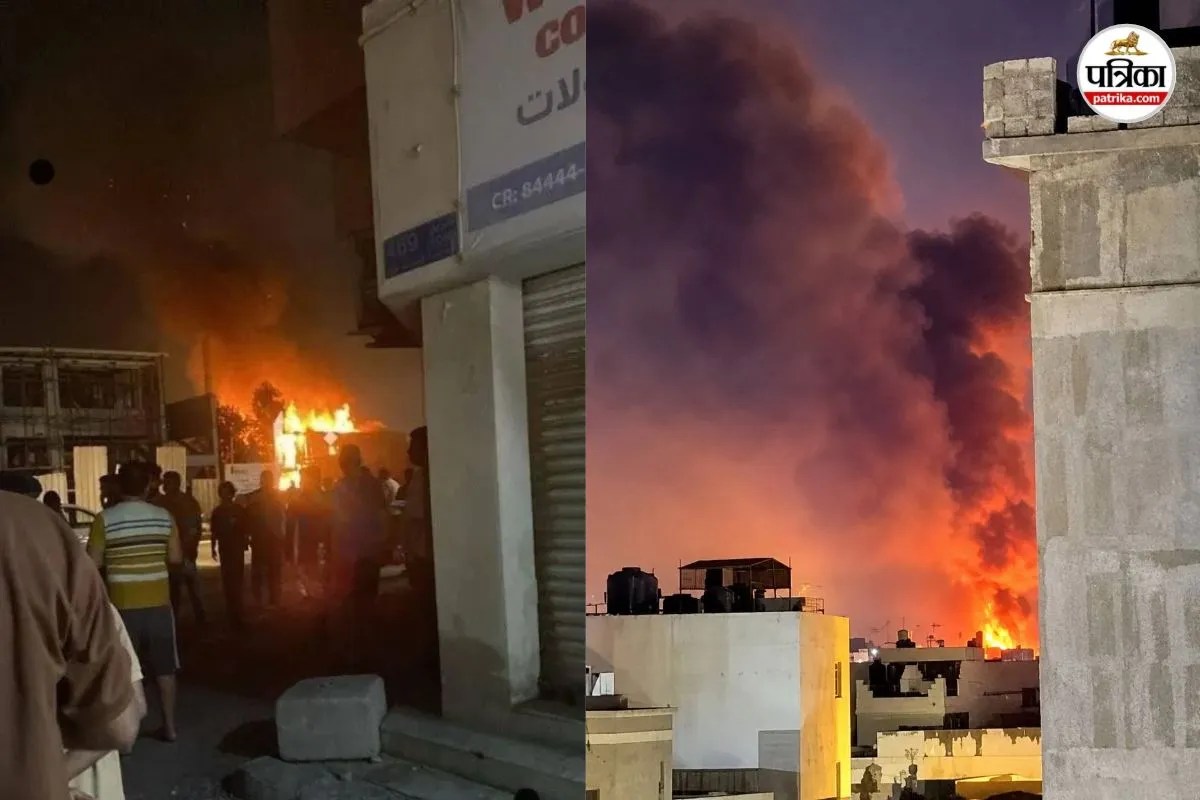
Iran says it struck two U.S. Patriot air defense radars in Bahrain. Bahrain says the attack hit a civilian industrial site instead.
Welcome to information warfare in November 2026, where every missile launch comes with a video clip, a counter-statement, and a fight over who controls the narrative. The Islamic Revolutionary Guard Corps, or IRGC, announced a combined missile and drone operation targeting American military positions at the Al-Riffa and Awali sites in Bahrain, specifically claiming hits on two Patriot radar installations. Iranian state broadcaster IRIB aired footage of the operation and earlier clips purporting to show U.S. MQ-1 and MQ-9 drones downed near the Strait of Hormuz, challenging U.S. Central Command to dispute the damage.
That headline alone grabs attention, yet the version most people read stops way too short. When I looked past the initial wire summary and checked regional statements, Bahrain's government pushed back sharply, saying the strike sparked a fire at a civilian industrial facility rather than knocking out U.S. radars, and urged the United Nations Security Council to act. U.S. officials also indicated there were no impacts to American forces or military assets from the latest attack attempts, even as regional tension spiked and Saudi Arabia issued an emergency alert near Mecca.
What Actually Happened Around Al-Riffa and Awali
Let's separate the claim from the confirmed facts first. Tehran framed the strikes under an operation codenamed "Ya Umm al-Banin," tying them to alleged airspace violations by U.S. MQ-1 and MQ-9 drones and retaliation for an earlier strike on a radar installation on Iran's Hengam Island. Notice how fast the narrative shifted across Iranian outlets too—while IRIB focused on Al-Riffa and Awali, semi-official Fars news agency pointed to bases used by U.S. forces at Sheikh Isa and Juffair, and IRNA claimed an interceptor missile from the U.S. Fifth Fleet area crashed on Sitra Island.
Bahrain told a very different story on the ground. According to Bahrain's Interior Ministry and defense officials, air defenses intercepted multiple incoming aerial threats, and an attack hit a civilian industrial facility, causing a fire and material damage with no reported injuries as civil defense crews worked to put it out.
Honestly, conflicting claims during active exchanges are standard operating procedure now. Both sides have strong incentives: Iran wants to project reach, deterrence, and precision against U.S. air defenses, while Bahrain and U.S. officials want to prevent panic, protect critical infrastructure, and avoid validating enemy strike assessments before independent verification.
Why Bahrain and Its Patriot Radars Matter So Much
Bahrain isn't just another dot on the Persian Gulf map. It hosts the U.S. Navy's Fifth Fleet, making the island kingdom a central hub for naval operations, logistics, and regional coordination.
Since the broader U.S.-Israel war with Iran erupted in late February 2026, Bahrain has faced repeated aerial threats, drone and missile barrages, and shipping disruptions across the Persian Gulf. Even after a lull of several weeks, recent drone activity and strikes have reminded everyone how exposed small island geography can be when missiles and drones fly short distances across the water.
When an attacker claims to hit Patriot radars, they're targeting the eyes of a layered air defense network rather than just a single launcher. Patriot batteries rely on phased-array radar systems to detect, track, and guide interceptors against incoming aircraft, drones, and ballistic missiles.
- Radar blind spots create risk: Even if a battery still has missiles loaded, losing or degrading radar tracking makes defending nearby bases and ports much harder.
- Civilian proximity complicates defense: Bahrain is compact and densely connected, so interceptions, falling debris, or off-target munitions can easily endanger industrial zones, ports, or residential areas.
- Escort missions face strain: IRGC statements explicitly mocked U.S. escort and aerial protection efforts in the region, reflecting how maritime security and air defense are locked in a daily test of endurance.
What the Competitor Coverage Missed
A quick two-minute news brief tells you IRGC claimed two Patriot radars at Al-Riffa and Awali and aired a video. That's fine if you just want the spark notes, yet it leaves out the exact friction points that explain why this story matters beyond a single headline.
First, Bahrain's pushback and appeal to the UN Security Council show this isn't just a bilateral military exchange—it's a diplomatic pressure point over strikes affecting civilian and industrial infrastructure. Second, data from UK Maritime Trade Operations shows shipping through the Strait of Hormuz running roughly 65% below pre-war levels in the week ending November 18, alongside multiple tanker attacks in the strait and wider Persian Gulf.
You can't really understand why a strike claim in Bahrain moves markets and ministries without looking at Hormuz. When tanker traffic drops that sharply and diplomatic talks—including Iran's two-day proposal tied to sanctions relief, reopening Hormuz, and uranium stockpiles—remain deadlocked, every military move doubles as leverage at the negotiating table.
How to Read Claims Like This Without Getting Played
When footage drops on state television during a regional conflict, treat every clip as a piece of evidence, not proof on its own. Videos can be real footage of an attack without proving the exact target hit, or they can be older or mislabeled clips packaged for psychological effect.
Look for three things before you take any strike claim at face value:
- Independent damage confirmation: Satellite imagery, verified geolocation, or credible third-party assessments matter far more than wartime press releases from either side.
- Consistency across official channels: Watch whether different state outlets name the same bases, weapons, and outcomes—or contradict each other within hours.
- Real-world operational fallout: Check whether shipping advisories, aviation notices, emergency alerts, or diplomatic moves match the scale of damage being claimed.
If you're tracking this situation for work, travel, or market exposure in the Gulf, stick to primary operational advisories from sources like UK Maritime Trade Operations, U.S. Central Command, and official Bahraini government releases, and verify any viral strike video against independent reporting before sharing it.