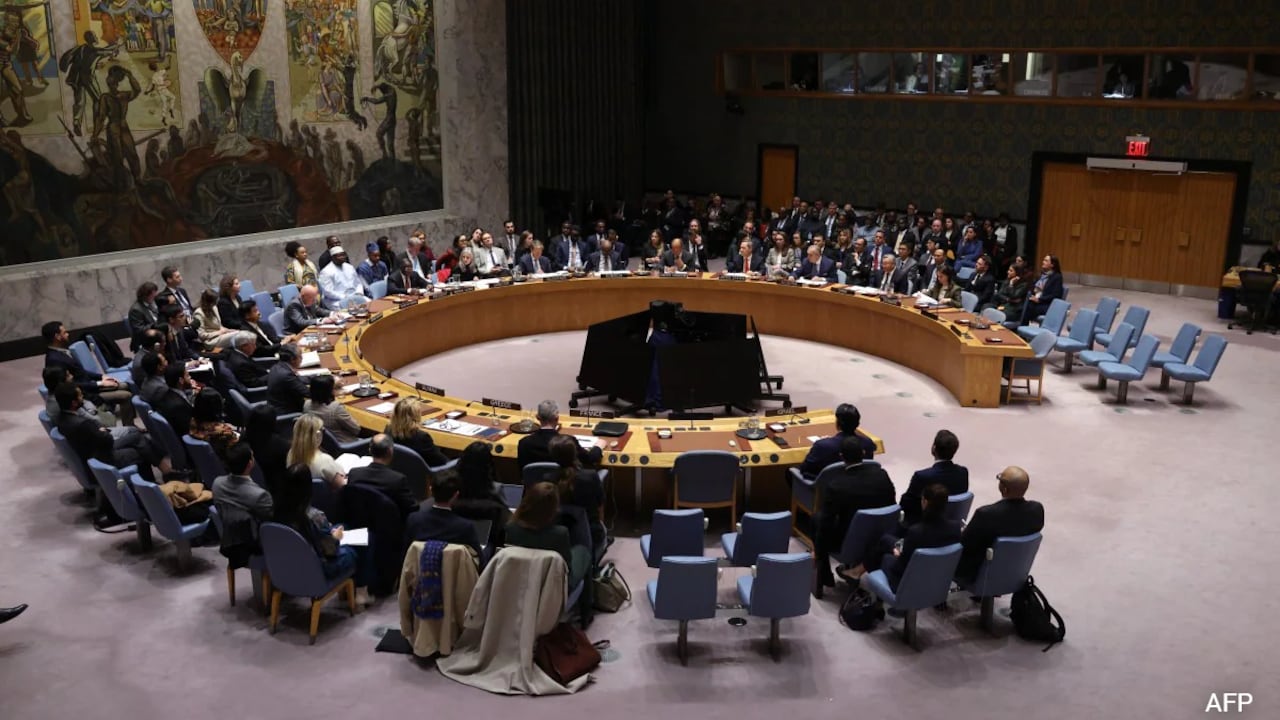
The United Nations was built in 1945 for a world that no longer exists. Back then, a handful of victorious powers carved out global governance rules, handing themselves permanent seats and absolute veto power on the Security Council. Eighty years later, global economics, population shifts, and geopolitical weight have completely flipped. Yet, the horseshoe table in New York remains frozen in amber.
India’s recent statements at the UN General Assembly hit hard at this archaic setup. New Delhi isn't just asking for a seat at the table. It's demanding that if veto power exists, every permanent member must hold it equally, or the whole reform process is nothing more than cosmetic window dressing.
The Problem With Second Class Membership
Nobody wants a token prize. That's essentially what a permanent seat without veto power amounts to.
During the Inter-Governmental Negotiations plenary focusing on the question of the veto, India’s Permanent Representative to the UN made the country's stance completely unambiguous. If the UN creates a new tier of permanent members stripped of veto rights, those nations will simply become second-class players. The existing P5—China, France, Russia, the UK, and the US—would retain exclusive control over high-stakes international peace and security decisions.
Honestly, why would any rising global power spend political capital on a reform that changes nothing about the actual distribution of power?
If you expand the Security Council just to grow the head count without touching the veto dynamic, you haven't fixed the institution. You've just complicated it.
Why the Current UN Security Council Architecture Fails Today
Let's look at the numbers. The current Security Council consists of five permanent members with veto powers and ten non-permanent members elected for short two-year terms. This structure completely shuts out entire continents and emerging economic powerhouses from permanent decision-making.
Think about it. Africa, Latin America, and major parts of Asia lack permanent representation. Meanwhile, Europe punches way above its weight class with multiple permanent seats.
When global crises erupt, from protracted regional conflicts to supply chain blockages and climate emergencies, the UN frequently stymies itself. A single veto from any of the P5 can paralyze the entire body. Adding more permanent members who have to beg for permission or watch helplessly from the sidelines doesn't solve paralysis. It scales it.
The Real Agenda Behind India's Push
India's diplomatic strategy isn't sudden. New Delhi has spent decades pushing for a comprehensive overhaul of the UN. The argument is simple: an institution claiming global legitimacy cannot represent mid-20th-century realities while ignoring 21st-century facts.
Beyond the permanent seat debate, India is actively campaigning for a non-permanent seat for the 2028-29 term, competing within the Asia-Pacific Group. But short-term electoral wins on the council don't substitute for structural surgery.
What India wants is structural equity. If the veto is an essential tool for protecting national security interests—as the P5 routinely argue—then withholding it from newly admitted permanent members is hypocritical. It implies that certain nations are inherently more responsible or trustworthy than others.
What Happens Next in Global Diplomacy
The path to actual UN charter amendment is notoriously steep. It requires a two-thirds vote in the General Assembly and ratification by all five permanent members. That means the very countries holding monopoly power must vote to dilute it.
Don't expect the P5 to surrender their privileges overnight. France and the UK occasionally pay lip service to reform, while other powers drag their feet behind closed doors.
Yet, pressure is mounting. Turkey and other nations are loudly echoing the sentiment that the world is bigger than five capitals. As multipolarity replaces Cold War unipolarity, the cost of maintaining an exclusionary club grows higher for the UN's own credibility.
Reform isn't a favor to developing nations. It's an absolute survival requirement for an organization risking total irrelevance.



