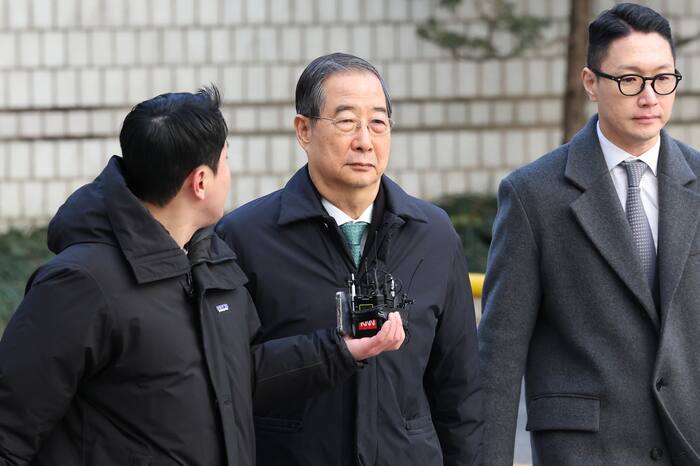
He walked into court as a lifelong technocrat and walked out—at least on paper—partially vindicated. Except Han Duck-soo isn't going home.
South Korea’s Supreme Court just overturned key charges against former Prime Minister Han Duck-soo tied to ousted President Yoon Suk Yeol’s short-lived December 2024 martial law decree. Headlines might make it sound like Han beat the case. Honestly, that misses the real story. The justices ruled that prosecutors didn't prove Han intentionally helped legitimize the martial law declaration by calling a Cabinet meeting—sending his 15-year appellate prison sentence back to the Seoul High Court for a fresh look. At the same time, the court extended his detention by two months and left other insurrection-related findings standing.
If you're following South Korean politics, this ruling shows just how messy untangling an attempted executive power grab really is. Courts don't get to draw neat lines between routine bureaucracy, constitutional panic, and criminal conspiracy overnight.
http://googleusercontent.com/lmdx_content/tWgEVCoHlBxvKFJtAptRocaVVWDrhoXjTSPKDKgbsxABTyyTzIlpmfPgUBXFcOPcRZktKPJgCVwjopraJCIjogbCWAyJSKBtaKTZSFJBfAPhsbWhKAvXqkqFgwtLKPDMIrMfb68347 The Washington Post has provided coverage on this critical issue in extensive detail.
What the Supreme Court Actually Overturned in the Martial Law Case
Let's get clear on what happened on November 19, 2026, because wire summaries can blur the legal distinctions.
Sitting en banc, the Supreme Court pushed back against the lower courts' reasoning that Han aided Yoon’s December 3, 2024 martial law push by convening a Cabinet meeting. A majority of justices concluded that calling that meeting didn't prove an intent to facilitate the declaration itself. Prosecutors hadn't met the evidentiary bar on that pre-declaration count.
That distinction matters a lot in South Korean criminal law. Calling a Cabinet session during a political shockwave looks suspicious from the outside, especially when an authoritarian-style decree follows hours later. Yet judges have to separate bad judgment or institutional compliance from provable criminal intent to aid an insurrection. That's a high bar, and it's why the top court kicked the case back to the Seoul High Court.
What hasn't vanished? Han’s broader legal jeopardy. Reports from outlets like The Korea Herald and The Chosun Daily note that the Supreme Court did not wipe out every piece of his case, nor did it release him. Allegations and findings tied to actions after martial law was declared—such as seeking Cabinet signatures, discussing plans around sealing major institutions, or cutting power and water to certain media outlets—remain entangled in the remand process, and his detention continues.
Why Calling a Cabinet Meeting Became the Legal Flashpoint
When you look at how South Korea’s constitutional system works, the Cabinet isn't just a rubber stamp. Under South Korean law, martial law and related emergency measures intersect directly with formal state procedures and Cabinet deliberation.
Prosecutors argued that Han helped give Yoon’s decree a veneer of institutional legitimacy by gathering ministers. That narrative makes intuitive political sense. Han is a 77-year-old career civil servant who has held top economic and diplomatic posts across administrations. People expected a seasoned technocrat to either stop a reckless move or take responsibility if he enabled it.
Here's the catch with criminal prosecutions of senior officials: political expectations aren't criminal elements. During his trials, Han maintained he hadn't supported or assisted the martial law declaration. Even the Seoul High Court, when cutting his initial 23-year district court sentence down to 15 years in May 2026, reasoned that Han couldn't simply be punished for failing to stop Yoon’s martial law decree.
A career bureaucrat caught in a constitutional crisis can look complicit in hindsight without prosecutors proving beyond a reasonable doubt that they engineered the coup.
👉 See also: 1st gen tundra front bumper
In my view, that's where many commentators overreach. They treat every high-ranking official near Yoon that night as an equal co-conspirator. The Supreme Court is forcing prosecutors—and the appeals court on remand—to prove specific unlawful acts and intent rather than leaning on guilt by proximity.
How the Sentence Swings Show a System Still Finding Its Footing
Look at the whiplash in Han's sentencing over less than a year:
- In January 2026, the Seoul Central District Court sentenced him to 23 years in prison and ordered him detained.
- In May 2026, the Seoul High Court reduced that prison term to 15 years while keeping insurrection convictions intact.
- In November 2026, the Supreme Court overturned part of that appellate ruling, sent the case back to the Seoul High Court, and extended his detention by two months.
That isn't a sign of a broken judiciary; it's what happens when courts rush high-stakes political trials through multiple tiers after an unprecedented constitutional shock. Remember how fast everything unfolded after December 3, 2024. Lawmakers forced the decree back within hours, impeached Yoon on December 14, 2024, saw the Constitutional Court formally remove him in April 2025, and watched a snap election in June 2025 bring Lee Jae Myung to the presidency.
Han himself had a bizarre, brief turn at the center of that storm. After Yoon's removal, Han served as acting president before stepping down in May 2025 to chase a presidential run—an effort that fizzled quickly when the conservative People Power Party didn't pick him as its standard-bearer. Less than a year after trying to pitch himself as a steady hand, he was sitting in a prison cell.
Kim Keon Hee’s Ruling and the Wider Fallout Around Yoon
Han's partial reversal didn't happen in a vacuum. On the same day, South Korea’s Supreme Court upheld a four-year prison sentence for former first lady Kim Keon Hee on corruption charges involving stock price manipulation and bribery tied to the Unification Church.
That contrast tells you a lot about how the top court is handling the broader Yoon era. Where justices saw documented financial wrongdoing and upheld appellate findings—as with Kim—they let the prison term stand. Where they saw overbroad legal reasoning on Han's pre-declaration Cabinet role, they sent it back for a closer look.
Meanwhile, Yoon himself remains at the center of sprawling legal battles. After his impeachment and removal in 2025, he was re-arrested in July 2025 and has faced multiple proceedings, including a life sentence for rebellion that he has appealed, along with separate trial timelines stretching into 2027. For South Korea's political system, the martial law crisis isn't a closed chapter—it's an ongoing stress test of prosecutorial limits, judicial independence, and democratic accountability.
Common Misconceptions People Have About This Ruling
Whenever a top court overturns charges in a blockbuster political case, social media fills up with bad takes. Let's clear up three big ones.
First, an overturned charge doesn't mean total exoneration. Han’s case goes back to the Seoul High Court, remaining insurrection-related issues aren't wiped away, and he stays detained. A remand means another round of legal scrutiny, not a parade home.
Second, this isn't a free pass for martial law plotters. Other officials tied to the December 2024 crisis have faced heavy prison sentences too, including former justice minister Park Sung-jae, whose sentence was reduced on appeal in October 2026 from 25 years to 9 years after courts found he knew the decree was unconstitutional and ordered subordinates to act on it. Courts are drawing sharp lines between executing an illegal order and convening a meeting.
Third, South Korea's democracy didn't collapse in December 2024—it pushed back. Lawmakers climbed barriers, gathered enough votes to force the decree down within hours, and used constitutional impeachment mechanisms. Anyone claiming the December 2024 crisis proved South Korea has no guardrails ignores the fact that parliament and the courts actually held.
How to Track What Happens Next Without Getting Misled
If you want to follow the next phase of Han Duck-soo's case—and the rest of the Yoon-era trials—don't rely on headline skimming. Here's what actually pays off:
- Read remand orders closely. When the Seoul High Court re-examines Han’s case, watch which specific charges carry the weight and how judges calculate any new sentence. A lower count can still mean serious prison time if post-declaration insurrection charges hold.
- Check English-language Korean outlets alongside wire reports. Global wire dispatches from sources like the Associated Press give fast summaries, while newspapers such as The Korea Herald and The Chosun Daily often unpack procedural nuances like en banc rulings, detention extensions, and remand scopes.
- Separate political spin from evidentiary rulings. Both supporters and critics of the former administration will spin every court twist. Focus on what the judges actually said about proof and intent, because that's what decides whether a conviction survives appeal.



