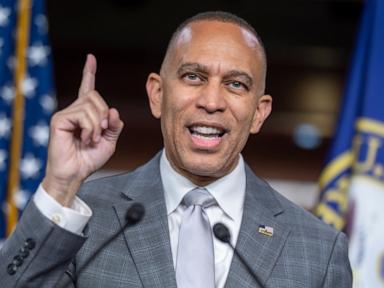
Most politicians avoid a formal vote when they can win by acclamation. Not Hakeem Jeffries.
According to TIME, as House Democrats gather for internal leadership elections in November 2026, Jeffries is facing a critical test on his path to becoming the next Speaker of the House. Rather than letting supporters wave him through with a unanimous voice vote, Jeffries insisted on a recorded secret ballot.
It sounds risky on paper. In reality, it's a calculated political move designed to vent internal pressure behind closed doors before the public floor vote in January.
The Strategy Behind the Secret Ballot
Under House Democratic Caucus rules, leadership elections happen by secret ballot unless members agree to waive the requirement. TIME reports that some of Jeffries' allies wanted to nominate him by acclamation—a move that would project instant unity by skipping an actual headcount.
Jeffries rejected that approach.
Instead, lawmakers will cast their ballots using an application on their House-issued phones. The final tally will be made public, though individual votes remain private. Why invite a number that could show dissent?
Because private dissent is infinitely cheaper than public chaos.
If Jeffries can absorb a handful of protest votes inside a closed caucus room in November, those same members have far less leverage to hold the House floor hostage on January 3, when the 120th Congress officially elects its speaker. We saw what happened to Republicans during previous speaker battles when internal grievances spilled onto the House floor. Jeffries isn't repeating that mistake.
"You think I don't have the votes nailed down?" Jeffries asked a reporter ahead of the vote, smiling.
Where the Friction Comes From
Even with a strong electoral showing in the 2026 midterms, managing a big-tent caucus isn't easy. Fresh off a wave of primary wins and the arrival of several democratic socialists, the progressive wing of the party is testing how much influence it can extract right now.
According to TIME, progressive lawmakers have pressed Jeffries for two major commitments ahead of next year:
- A guaranteed committee markup on Medicare for All legislation
- Floor action on the Block the Bombs Act, which would restrict certain offensive weapons transfers to Israel
So far, Jeffries hasn't publicly committed to either demand.
Instead, he has kept his public messaging squarely focused on kitchen-table economics and opposing the Trump administration. In statements ahead of the leadership votes reported by CBS News New York, Jeffries emphasized driving down the cost of groceries, gas, and housing while endorsing a broader expansion of Medicare.
That distinction matters. Jeffries has long positioned himself separately from democratic socialists, describing himself as a Black progressive focused on systemic racial and economic issues without bending to hard-left policy demands. By refusing to cut side deals before the caucus vote, he's signaling that his leadership team—which includes Katherine Clark running for majority leader and Pete Aguilar running for majority whip—won't govern through pre-packaged concessions.
Why the Midterm Margin Changes the Math
In Congress, leverage comes down to simple arithmetic. When a party holds a razor-thin majority, five or six holdouts can stall the entire chamber.
That's not the dynamic Democrats are walking into for the 120th Congress. Following the 2026 midterm elections, Democrats flipped multiple districts and built a comfortable cushion in the lower chamber. As Democratic strategist Hank Sheinkopf—Wait, let's stick strictly to the facts reported in the coverage—as political analysts noted to CBS News New York, the sheer size of the Democratic majority limits how much leverage a small faction of progressives can realistically exert on the speakership vote.
When you have dozens of seats to spare above the 218-vote threshold, a few blank ballots or protest votes in a secret caucus tally don't threaten the outcome. They simply give frustrated members a safe way to register a point with their constituents back home without derailing the party's agenda.
What Else Is Happening in House Leadership
Jeffries' speaker nomination isn't happening in a vacuum. Both parties are locking in their leadership rosters for 2027 and 2028, and the contrast between the two caucuses is sharp.
On the Democratic side, the top of the ticket is largely settled:
- Speaker nominee: Hakeem Jeffries (D-N.Y.)
- Majority Leader: Katherine Clark (D-Mass.)
- Majority Whip: Pete Aguilar (D-Calif.)
- Caucus Chair: Ted Lieu (D-Calif.)
- Assistant Speaker: Joe Neguse (D-Colo.)
The only major contested race among top House Democrats is for Democratic Caucus vice chair, where Rep. Sara Jacobs of California and Rep. Lauren Underwood of Illinois are competing for the spot.
Meanwhile, House Republicans already held their internal leadership elections on November 10, 2026, following outgoing Speaker Mike Johnson's decision not to run for minority leader. According to Ballotpedia, Rep. Jim Jordan of Ohio defeated Steve Scalise 106–73 to become the incoming House minority leader, while Tom Emmer won the minority whip race against August Pfluger 103–76.
What Happens Between Now and January
Winning the Democratic Caucus nomination in November is step one, not the finish line. Here is what to watch over the next several weeks as the transition unfolds:
- Watch the secret ballot margin: Pay close attention to the exact number of non-Jeffries votes released after the caucus tally. A handful of blank or protest votes is normal maintenance; a double-digit defection would signal deeper friction over foreign policy and healthcare legislation.
- Track committee assignments: Keep an eye on how leadership distributes seats on powerful panels like Energy and Commerce, Ways and Means, and Appropriations. Committee placements are often where quiet compromises with progressive and moderate factions actually happen.
- Follow the investigative agenda: Jeffries has already signaled plans to push back aggressively against the White House, including backing a resolution from Rep. Thomas Massie to impeach Defense Secretary Pete Hegseth and criticizing the appointment of Stephen Miller as White House chief of staff. Watch which oversight probes get prioritized before January.
- Mark January 3 on the calendar: The formal, public roll-call vote for Speaker of the House takes place on the floor when the new Congress convenes on January 3, 2027. That vote will determine whether Jeffries officially makes history as the first Black Speaker of the House.



