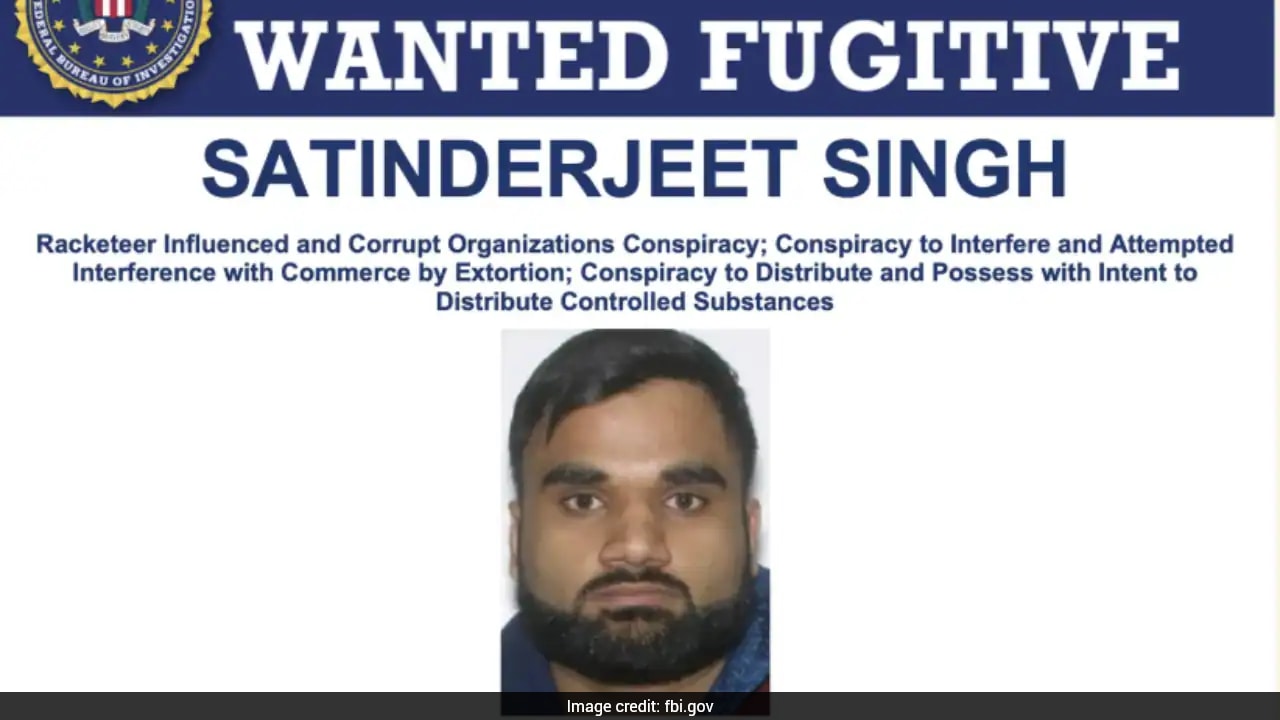
Why Goldy Brar on the FBI Most Wanted List Matters Right Now
When the FBI puts a fugitive on its Ten Most Wanted list and attaches a reward of up to $1 million, the manhunt stops being a regional headache and turns into a global alarm. For Satinderjeet Singh, better known as Goldy Brar, that exact shift has happened as federal authorities target him over alleged racketeering conspiracy, extortion conspiracy, and narcotics distribution offenses linked to the Lawrence Bishnoi syndicate.
Basically, this isn't just another criminal headline out of South Asia or North America. It's a clear signal that U.S. federal prosecutors and international police agencies treat cross-border gang networks as full-scale organized crime enterprises rather than isolated street feuds.
Anyone tracking transnational crime knows how easily regional gang disputes used to slip through the cracks between countries. One jurisdiction had a murder file, another had a visa trail, and a third had a wire transfer. Putting Goldy Brar on the FBI Most Wanted list changes the pressure game overnight. His face goes onto agency feeds, embassies, consulates, and tip lines worldwide, backed by a seven-figure bounty.
How a Student Gang Link Grew Into a Cross-Border Case
To understand why law enforcement in multiple countries is chasing Brar, you have to look at how his trajectory evolved. Born in Punjab in 1994, Satinderjeet Singh crossed paths with Lawrence Bishnoi during his university years, a connection that later hardened into deep operational alignment. He moved to Canada in 2017 on a student visa, and over the years his name became entangled with major criminal investigations across borders. Further reporting by BBC News delves into similar views on the subject.
In India, authorities linked him to high-profile killings—including the 2022 shooting of Punjabi singer and politician Sidhu Moose Wala—and subsequently designated him under terrorism laws. In Canada, police in Winnipeg have pursued murder-related charges tied to the September 2023 killing of Sukhdool Singh Gill, while Canada's BOLO program has spotlighted him with a substantial reward of its own.
Now U.S. federal prosecutors in the Central District of California have brought RICO conspiracy and related charges into the picture, alleging he played a leading role in North American operations tied to the Bishnoi group. That combination is why agencies like the FBI, the Royal Canadian Mounted Police, and local police departments are coordinating so visibly.
What Most Coverage Misses About RICO and Transnational Gangs
Most quick news recaps stop at the reward amount and a short rap sheet. Honestly, that leaves out the sharpest legal mechanism in the U.S. playbook: RICO conspiracy.
Racketeer Influenced and Corrupt Organizations laws aren't just about proving a single shooter pulled a trigger on a specific street corner. They let prosecutors target the structure, command chain, extortion schemes, and narcotics pipelines keeping an enterprise afloat. In federal indictments connected to the broader crackdown, authorities have pointed to alleged violence, extortion targeting commerce, and large-scale cocaine thefts in Southern California.
Here is what makes that distinction matter in real life:
- Shared accountability: A leader doesn't have to personally commit every act to face heavy federal exposure if prosecutors prove coordinated racketeering activity.
- Asset and network disruption: Federal investigations pull in financial trails, communication patterns, and co-defendants across cities rather than treating each shooting as a standalone local crime.
- Longer reach: Once a fugitive hits the Top Ten list, routine border checks, airport screenings, and foreign tipsters become much harder to dodge.
Rumors, Misinformation, and Why Verification Is Brutal
If you follow diaspora crime stories online, you've probably seen how fast false claims spread. A couple of years ago, social media and parts of the press circulated rumors that Brar had been shot dead in California, only for local police to clarify that the deceased man was someone else entirely.
That kind of noise isn't harmless. False death reports can lull people into letting their guard down, waste investigative energy, and muddy public awareness right when law enforcement wants sharp eyes on the ground. Official notices from agencies like the FBI and RCMP exist for a reason—they lay out verified descriptions, known aliases, and active warrants without the internet rumor mill.
At the same time, it's worth keeping a sober view of what a Top Ten listing actually does. It doesn't magically hand police a GPS pin on a fugitive's phone. High-profile targets move between jurisdictions, use aliases, and rely on sympathetic or paid intermediaries. A $1 million reward helps loosen tongues, sure, yet patient police work and cross-border cooperation still do the heavy lifting.
Practical Steps If You Have Information or Follow the Case
If you're reading this because you follow transnational organized crime, live in an affected community, or actually know something relevant, don't play detective on your own. The FBI explicitly warns the public not to approach suspects listed as armed and dangerous.
- Report directly to official channels: If you have credible information on Satinderjeet Singh or Goldy Brar, submit it through official FBI tiplines, a U.S. embassy or consulate, or local law enforcement—anonymity options exist for people worried about retaliation.
- Check primary releases before sharing: Before reposting viral claims, photos, or "breaking" updates on social media, verify them against official FBI or police statements so you aren't amplifying bad intel.
- Watch the court and enforcement record: Pay attention to federal court filings and joint task force updates rather than anonymous social accounts if you want to track how the broader North American syndicate case unfolds.



