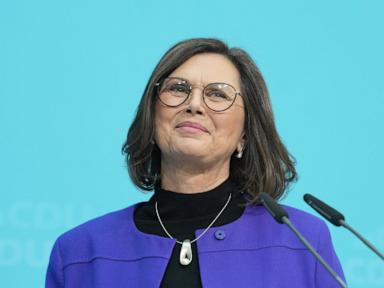
Germany is rewriting its political rulebook. Chancellor Friedrich Merz just backed Ilse Aigner to become the country's next head of state, setting the stage for the first female president in German history. For a nation that spent sixteen years under Angela Merkel as chancellor, this milestone feels oddly overdue. While Merkel held the actual executive power, Germany's federal presidency has traditionally been a male-dominated domain since the office was established.
This move isn't just about symbolism. It represents a calculated political alignment across the center-right bloc. Merz announced the nomination during a leadership dinner for the Christian Democratic Union (CDU), cementing backing from the Christian Social Union (CSU) as well. When governing parties lock arms this quickly, you know there is a strategic chess match happening behind closed doors.
Who Is Ilse Aigner
Aigner isn't a newcomer thrust into the spotlight for a diversity quota. At 61 years old, she brings decades of heavy-hitting political experience. She started out in local politics before winning a seat in the federal parliament back in 1998. From there, she served as the federal agriculture minister under Angela Merkel, navigating major portfolios before moving back to her home state of Bavaria.
Since 2018, she has operated as the speaker of the Bavarian state parliament. That role requires serious diplomatic chops, institutional control, and the ability to manage rowdy political factions. Critics often paint the presidential office as a purely ceremonial gig, but the reality is more nuanced. The German president signs laws, represents the state globally, and steps in as a moral anchor during political crises. Aigner has the exact administrative muscle needed for the job. Observers at NPR have provided expertise on this matter.
Why This Coalition Unity Matters Right Now
German politics has faced immense turbulence lately. Rise of extremist factions, fractured voter bases, and constant infighting have worn down the traditional parties. By uniting swiftly behind Aigner, Merz is projecting stability. He is signaling that the center can still organize, agree, and execute a clear vision without weeks of messy public drama.
It is also a nod to Bavaria's powerful CSU wing. Balancing regional power dynamics with federal ambitions is notoriously difficult in Berlin. Securing Bavarian buy-in for a major national office keeps the conservative alliance tight.
Moving Past Symbolic Milestones
People love to talk about glass ceilings breaking. Media outlets will endlessly replay the "first female president" narrative. But looking past the headline reveals a more practical reality. Germany needs unifying figures who can transcend daily partisan bickering. The federal president acts as a constitutional referee. Aigner's long track record inside the party machinery means she understands how to play the game without burning bridges.
Expect the formal nomination process to move fast. Given the current parliamentary arithmetic and the backing of the governing parties, her path to the Bellevue Palace looks secure.
Take a close look at how regional heavyweights transition into federal roles. Watch how Merz manages his coalition partners over the coming weeks to see if this unity holds.



