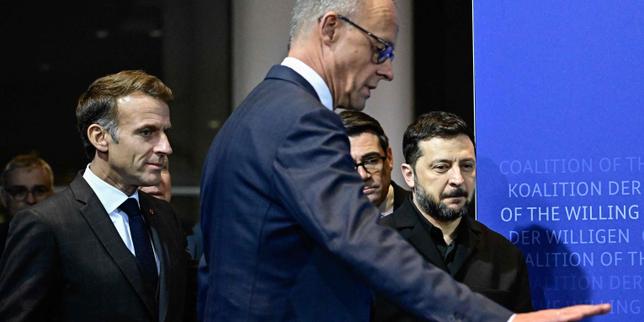
European leaders aren't just sending statements of solidarity to Kyiv anymore. They're fighting for a seat at the bargaining table before Washington and Moscow cut a deal behind Europe's back.
After months of watching bilateral and trilateral diplomatic channels move without full European representation, the Coalition of the Willing met in Berlin on November 19, 2026, alongside Ukrainian President Volodymyr Zelenskyy and U.S. envoys Steve Witkoff and Jared Kushner. German Chancellor Friedrich Merz, French President Emmanuel Macron, and U.K. Prime Minister Andy Burnham joined over 40 partner nations and institutions to hammer out a unified line. Their message was blunt: European support for Ukraine remains intact, backed by fresh funding and tougher sanctions, and Europe intends to participate directly in future peace talks with Russia and the United States.
Live news blogs like Le Monde's real-time coverage capture the minute-by-minute drama of diplomacy as it unfolds. That format is great for fast updates, yet live tickers often scatter the bigger strategic picture across dozens of short dispatches. Stepping back helps clarify what actually changed this week, why European capitals are pushing so hard to be included in talks with Russians and Americans, and where the friction points still sit.
What Actually Happened at the Berlin Summit
At its core, the Berlin gathering was an attempt to prevent a repeat of historical great-power deals struck over the heads of affected nations. Fears of a "new Yalta" have been simmering in European capitals, especially after high-profile contacts involving U.S. President Donald Trump, Russian President Vladimir Putin, and Chinese leaders raised alarms about superpower bargaining on European security.
In their November 19 joint statement, the leaders of Germany, France, the United Kingdom, and Ukraine laid out several clear pillars:
- Long-term backing and defense: Reaffirming political, diplomatic, military, financial, and civilian support for Kyiv, alongside discussions around a proposed €45 billion European Union support package for next year and joint work on air defense and combat aircraft.
- Tighter economic squeeze: Expanding sanctions pressure on Russian oil and gas revenues, targeting Russian cryptocurrency and illicit financial flows, disrupting military-industrial supply chains, and cracking down on the shadow fleet circumventing maritime rules.
- Sovereignty and security guarantees: Insisting that international borders cannot be changed by force, that Ukraine has the sovereign right to choose its alliances, and that frozen Russian sovereign assets stay immobilized until Russia halts its war of aggression and pays for war damages.
- Immediate humanitarian truces: Calling on Moscow to accept a winter energy ceasefire and a Black Sea ceasefire to protect safe navigation and global food exports.
Honestly, the contrast between diplomatic language and battlefield reality is stark. Zelenskyy noted in Berlin that Russian strikes using ballistic missiles and jet-powered Shahed drones have continued daily, causing casualties and damaging civilian and diplomatic sites in Kyiv—including St. Volodymyr's Cathedral and buildings housing the Austrian and Dutch embassies. Earlier ceasefire ideas around energy and the Black Sea have repeatedly run into Russian rejection.
Why Europe Wants Inside the Talks With Russia and the US
For much of the diplomatic push in 2026, European officials felt sidelined from core negotiation tracks. In earlier rounds such as talks in Abu Dhabi, representatives from major European countries and the European Commission met with Ukrainian and American counterparts without formally sitting inside the trilateral room with Russia—a dynamic Russian negotiator Vladimir Medinsky mocked by dismissing European officials as "tourists."
That exclusion is a massive problem for Brussels, London, Paris, Berlin, and Warsaw. You can't credibly ask European taxpayers to fund reconstruction, underwrite long-term security guarantees, or enforce sanctions relief while leaving European negotiators outside the room when the terms are drafted.
Earlier in November, EU leaders moved toward a more coordinated representation model involving key capitals (often grouped as the E5—France, Germany, Italy, Poland, and the United Kingdom—alongside EU and NATO institutions). In Berlin, Zelenskyy and Macron pointed to an emerging consensus that Europeans should take part in negotiation formats involving Russia, moving toward a broader four-party dynamic rather than side conversations.
Still, agreeing on principle isn't the same as locking in the format. Right after trilateral talks with Chinese and U.S. leaders in Shenzhen on November 19, Putin said Moscow was willing to involve Europeans in discussions touching on European security—but attached a catch, saying European officials would first have to come to Moscow. Meanwhile, the Kremlin continues to push sweeping demands on NATO forces in former Soviet bloc countries and opposes NATO troops in Ukraine after any ceasefire, demands Danish Prime Minister Mette Frederiksen and other European leaders have flatly rejected.
Where Europeans and Americans Align—and Where Friction Remains
From my perspective covering European security policy, the biggest mistake people make is assuming "the West" moves as a single, frictionless bloc. Washington and European capitals share a desire to stop the fighting, yet their leverage, risk tolerance, and sequencing often diverge.
U.S. envoys Steve Witkoff and Jared Kushner participated in the Berlin discussions to coordinate next steps on diplomacy and talk through timing and agendas. Earlier in the fall, President Trump had publicly announced an energy truce idea that caught both Kyiv and Moscow off guard and failed to stop attacks on power and heating infrastructure. For Kyiv and European leaders, the worry is that quick-fix announcements or bilateral understandings could trade away long-term deterrence for a fragile pause that Russia uses to rearm before winter deepens.
At the same time, European leaders are trying to prove they aren't just passive observers complaining from the sidelines. Boosting domestic defense production, pooling air-defense and aircraft projects, and clamping down on sanctions evasion—especially crypto channels and shadow-fleet tankers—are practical levers Europe controls directly. Those steps matter because credibility at the negotiating table depends on what you can enforce tomorrow morning if talks stall.
Key Questions Readers Usually Ask Next
Will European countries actually sit at the table with Russia?
Participation is now a central demand of Kyiv and European capitals, backed by a structured representation plan involving major European states and EU/NATO bodies. Whether Moscow accepts a formal multi-party format without preconditions remains contested, especially given Putin's rhetoric around coming to Moscow and his warnings following strikes on the Crimean Bridge. Expect tense procedural wrangling over format before substantive terms are even on the table.
Does a push for negotiations mean support for Ukraine is fading?
No—at least not according to the Berlin joint statement and recent EU budget moves. European leaders paired talk of diplomatic engagement with pledges of sustained military, financial, and civilian aid, fresh sanctions packages, and keeping Russian sovereign assets frozen. In diplomatic practice, tough leverage and negotiation tracks often run side by side, even when they look contradictory on cable news.
Why is a winter energy ceasefire such a big deal right now?
Heading into cold weather, strikes on power grids, heating plants, and water systems hit civilians hardest and strain morale and infrastructure simultaneously. A verifiable winter energy truce—alongside Black Sea grain and shipping protections—would offer immediate humanitarian relief without requiring an immediate settlement of the hardest territorial or security questions. Getting Moscow to actually honor a truce, rather than reject or violate it, is the real test.
Practical Next Steps for Following This Story
If you're tracking European support for Ukraine and how the negotiation picture evolves over the coming weeks, don't rely solely on one headline feed. Do these three things instead:
- Read primary joint statements alongside live blogs. Check official releases from the German Federal Government, the Office of the President of Ukraine, and EU institutions so you can separate firm policy commitments from rumor and political posturing.
- Watch format and enforcement details, not just big speeches. Pay close attention to who is actually invited to the next round of talks, whether sanctions enforcement on oil, crypto, and shadow-fleet vessels tightens, and whether an EU support package clears member-state hurdles.
- Separate tactical truces from permanent settlements. Track short-term measures like winter energy or Black Sea ceasefires separately from long-term questions like security guarantees, frozen assets, and borders—progress on one rarely solves the others overnight.



