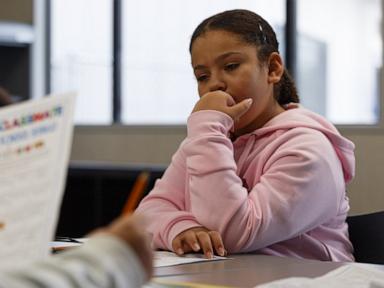
Empty desks used to mean a snow day or a flu outbreak. Today, they represent a permanent structural shift that is forcing school districts across the country to lock their doors for good. If you look past the political talking points about education reform, a harsh economic reality is taking over American public education. Classrooms are emptying out, federal pandemic relief money has completely dried up, and local school boards are facing a brutal choice between severe budget cuts and total insolvency.
Public school enrollment has been sliding for years, driven by a combination of declining birth rates, families migrating to different states, and a steady shift toward private and homeschooling options. When fewer children show up for the first day of school, local districts lose funding. Most state funding formulas rely heavily on a per-pupil head count. Fewer students literally equal fewer dollars to keep the lights on, pay teacher salaries, and maintain aging infrastructure.
The Math Problem No One Wants to Solve
Running a school building is an expensive fixed cost. Whether a hallway has ten kids or thirty kids in a classroom, the roof still needs repairs, the HVAC system still burns electricity, and the administrative staff still needs to get paid.
For years, many districts cushioned these budget holes with federal Elementary and Secondary School Emergency Relief (ESSER) funds. That safety net is gone. Now that those temporary funds have completely expired, superintendents are staring at massive fiscal cliffs. Recent data shows that more than half of district leaders identify budget shortfalls as their most pressing challenge, a staggering jump from previous years.
When districts try to balance their books, closing neighborhood schools becomes the most mathematically obvious choice, even if it is politically toxic.
Why Mergers and Consolidations Hit Communities Hard
Closing a school is never just an administrative adjustment. It changes the entire fabric of a neighborhood.
When a local elementary or middle school shuts down, children get funneled onto longer bus rides to neighboring facilities. Class sizes swell. Extracurricular programs get axed to save on stipends, and community spaces vanish. Parents who walked their kids to school every morning suddenly find themselves dealing with complicated commutes.
Real estate values in the immediate vicinity often take a hit, too. Families shopping for homes frequently prioritize neighborhoods with walkable, high-performing local schools. Strip a neighborhood of its school, and you strip away a major anchor of community identity.
Where the Financial Pain Is Heading Next
The closures happening right now are only the first wave. The underlying demographic trends suggest the financial pressure will intensify over the next several years. Birth rates across the United States dropped significantly following the economic shifts of the early 2010s and continued downward through the pandemic. Those younger cohorts are smaller. As they move up the grade levels, elementary schools will empty out first, followed shortly by middle and high schools.
Districts that rely purely on reactive measures—like cutting athletic programs or delaying textbook purchases—are only delaying the inevitable. Fixing the problem requires hard conversations about long-term consolidation, redistricting, and how public education is funded at the state level.
Until state legislatures rethink per-pupil funding formulas that penalize districts for shifting demographics, the wave of closures will keep rolling outward from major urban centers into suburban and rural school districts alike. The empty classrooms aren't a temporary anomaly. They are the new baseline, and public school systems must adapt or break under the weight of their own empty hallways.
US public school crisis | This is America
This video provides an in-depth look at how the ongoing funding crisis and declining enrollment are impacting public school systems across the country.


