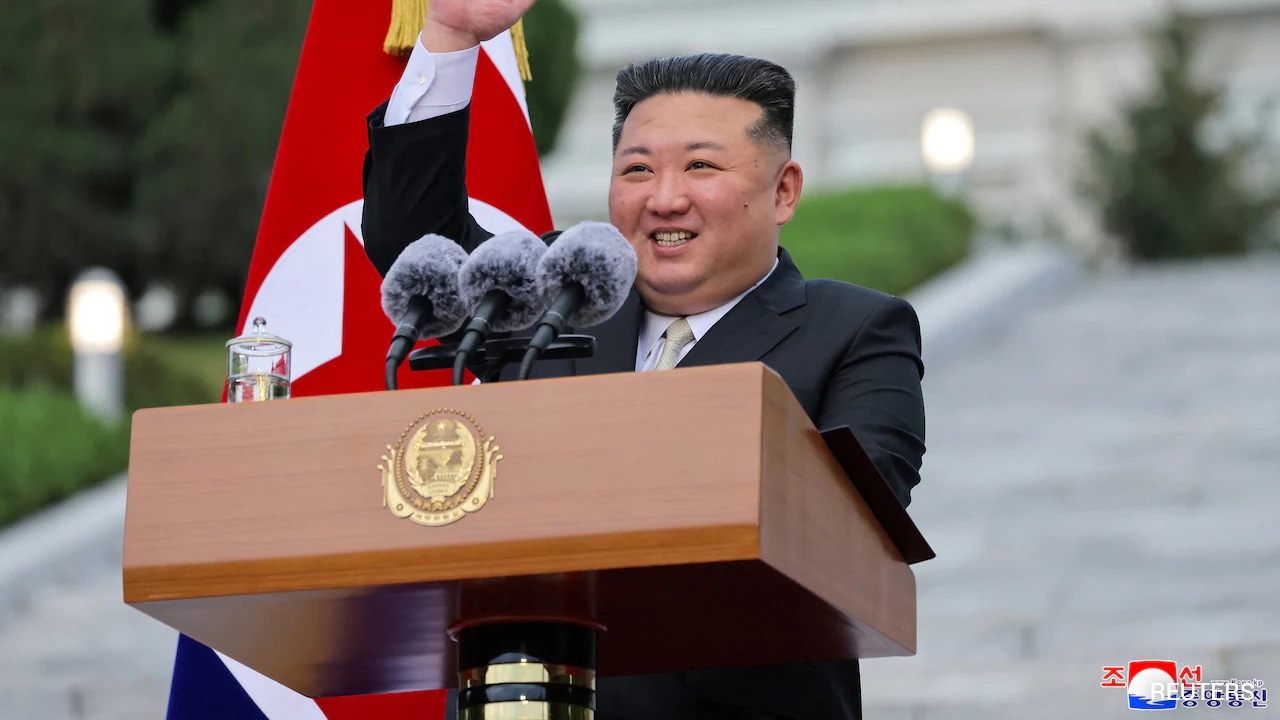
Kim Jong Un wants tactical nuclear weapons built for various missions across multiple domains, and honestly, that shift matters way more than another round of missile photos.
When state media reports that Pyongyang inspected a nuclear weapons research facility and called for diversified use of tactical nuclear weapons, casual readers often treat it like background noise. It's not. A strategic warhead aimed at a distant city is one kind of threat. Smaller, battlefield-ready warheads designed for different delivery systems and operational environments create a completely different set of headaches for military planners in Seoul, Tokyo, and Washington.
Think about what changed here. For years, outside observers argued over whether North Korea had mastered miniaturization, whether its warheads could survive reentry or harsh operating conditions, and how many devices Pyongyang actually held. That debate hasn't vanished, yet the tone from North Korea's leadership has moved from proving basic capability to expanding mission variety and locking nuclear status into constitutional permanence.
What Diversified Tactical Nuclear Weapons Actually Mean on the Ground
Let's strip away the hype first. "Tactical" doesn't mean harmless or small like a hand grenade. In defense circles, tactical nuclear weapons usually refer to lower-yield devices intended for regional or battlefield use rather than intercontinental strikes against homeland cities far away.
Still, lower yield doesn't mean low consequence. Even a relatively modest nuclear detonation over a port, airbase, rail hub, or staging area would cause catastrophic blast, thermal, and radiation effects alongside severe electromagnetic disruption.
When Kim talks about enabling tactical nuclear weapons for various missions across multiple domains, he's pointing toward flexibility across land, sea, and air or missile vectors. A conventional artillery or short-range ballistic missile force tries to hit targets hard and fast. Pairing flexible delivery options with compact warheads complicates missile defense math immediately. Defenders can't just guess which launcher carries a conventional payload and which one carries a nuclear device.
Why Blur Boundaries Between Conventional and Nuclear Forces
Here's a mistake I see people make all the time when reading defense news. They assume a regime only builds tactical nukes if it plans to fire them first in a messy brawl.
Sometimes that's part of the calculus. Other times, ambiguity itself is the weapon.
If a commander in Seoul or an allied planner has to treat more launchers, bases, or platforms as potential nuclear carriers, targeting priorities shift overnight. Preemptive strikes get riskier because hitting the wrong thing could escalate a crisis fast, while waiting too long could let mobile units disperse or fire.
That ambiguity creates what analysts call escalation traps. Every side tries to avoid nuclear war, yet tighter timelines and mixed conventional-nuclear postures leave less room for miscalculation.
Reading the Numbers Behind North Korea's Arsenal
Numbers on North Korea's nuclear stockpile are never exact, so you have to read estimates carefully rather than treating any single figure as gospel.
In the reference reporting from November 2026, U.S. President Donald Trump was cited as saying in August that North Korea had 57 nuclear weapons, while South Korean estimates placed the stockpile between 80 and 120 nuclear weapons. Even looking just at those two ranges, there's a big gap between a mid-double-digit estimate and a triple-digit upper bound.
Why do serious analysts disagree by dozens of warheads? Because North Korea operates behind tight secrecy, produces fissile material at facilities that aren't open to inspectors, and keeps warhead counts and yield designs closely guarded. Publicly released photos from state media—showing rows of devices with blurred sections, red-painted nose cones, or cylindrical units on wheeled stands—give clues about presentation and propaganda messaging, not a verified inventory audit.
As a rule of thumb when following nuclear proliferation stories, treat exact counts as ballpark ranges. What matters just as much as the raw count is fissile material production capacity, warhead reliability, and command-and-control discipline during a crisis.
Constitutional Language and the Pushback on AUKUS
Kim didn't just talk hardware during the facility inspection reported by state media. He tied nuclear weapons to North Korea's supreme law and constitution, arguing that nuclear policy is a cornerstone of state sovereignty that outsiders have no right to force Pyongyang to abandon or amend.
That constitutional framing serves a clear political purpose. It raises the domestic ideological bar against denuclearization and signals to rivals that diplomacy aimed at full disarmament is a non-starter from Pyongyang's perspective.
At the same time, Kim criticized Washington over efforts akin to the AUKUS security arrangement in Northeast Asia, pointing to regional allies pursuing nuclear-powered submarines—a clear jab linked to South Korea's ambitions for nuclear-powered sub capability.
Notice the tension there. A nuclear-powered submarine uses nuclear propulsion to stay submerged longer and move faster; it isn't automatically an armed nuclear-warhead submarine. Still, from Pyongyang's viewpoint, any step that boosts allied undersea endurance and strike reach threatens North Korea's second-strike survivability and regional leverage.
Common Misconceptions About Tactical Nuclear Postures
A few myths keep popping up whenever tactical nuclear news hits the headlines. Let's clear them up plainly.
- Myth one: Tactical nukes replace strategic deterrence. Not really. Long-range missiles and strategic deterrence still anchor how Pyongyang pressures major powers, while tactical systems target regional bases, troop concentrations, and allied reinforcements.
- Myth two: Blurred state media photos prove exact technical specs. State media releases are curated visuals. Blurring can hide sensitive design details, stagecraft, or mockups, or protect real engineering features—you can't verify yield or reliability from a photo alone.
- Myth three: Bigger numbers automatically mean instant operational readiness. Having warheads, mating them safely to delivery systems, authorizing launch under stress, and surviving counterstrikes are separate challenges.
If you're tracking this story closely, don't get pulled into sensational claims on social media every time a new photo drops. Look for patterns across weeks and months instead—missile flight tests, troop and naval movements, diplomatic signals, and official statements from defense ministries in Seoul, Tokyo, and Washington.
Practical Ways to Follow This Shift Without Getting Whiplashed
Defense headlines move fast, and it's easy to burn out or overreact to a single wire dispatch. Here's how you can keep your bearings and actually understand what's unfolding:
- Separate rhetoric from operational indicators. Treat bold slogans and constitutional statements as political signaling first, then check whether actual missile launches, force deployments, or exercises back them up.
- Compare multiple official and independent assessments. Stack statements from Washington, Seoul, and Tokyo against research from established security institutes such as the Arms Control Association or the Center for Strategic and International Studies so you don't rely on one source.
- Watch allied deterrence responses closely. Pay attention to how South Korea and the United States adjust extended deterrence commitments, missile defense coordination, and submarine or naval planning—those moves show how seriously allied commanders take the threat.
- Check dates and context on every claim. Always verify whether a cited estimate or quote comes from a recent briefing or an earlier statement months back before drawing conclusions.


