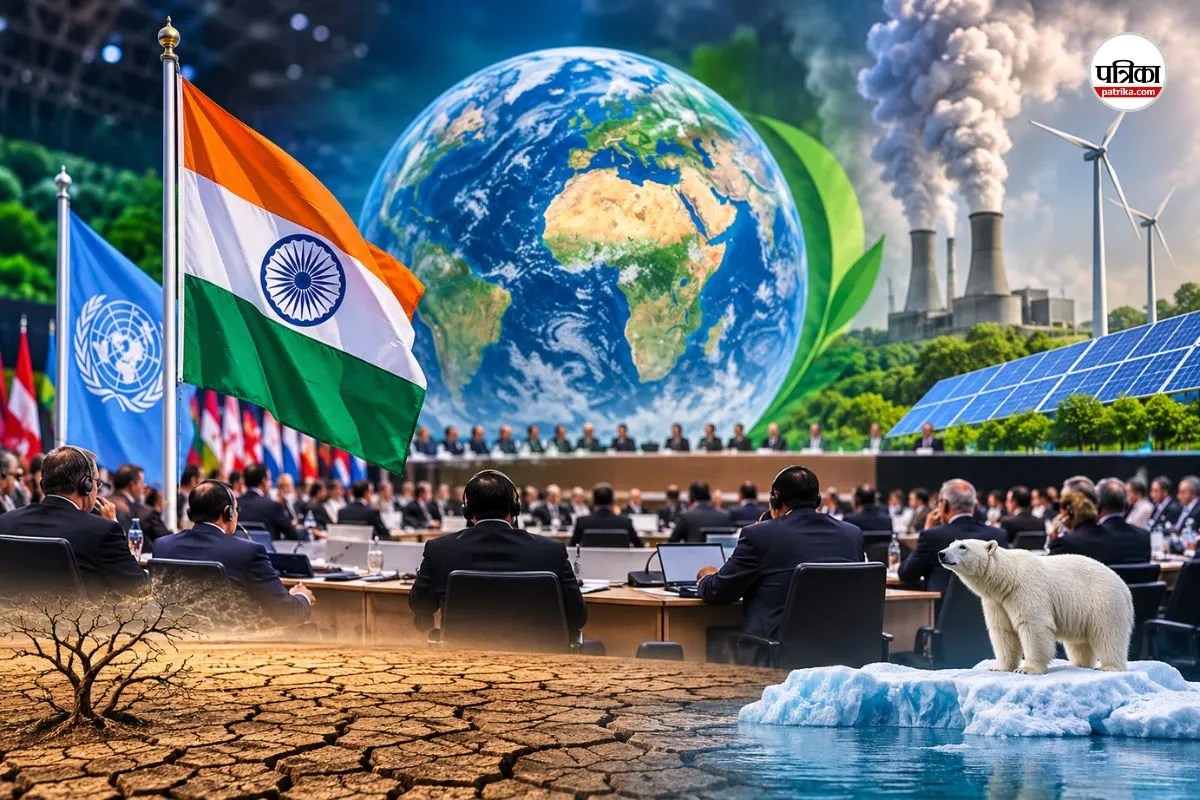
Two extra days of exhausting overtime in Antalya still couldn't save the summit. After running more than 44 hours past its scheduled Friday close, COP31 became the longest climate conference in UN history—and walked away with no overarching agreement at all.
A climate summit that couldn't even keep the words "fossil fuels" in the room. That sounds absurd on paper, yet here we are. When the draft text dropped explicit references to fossil fuels on November 19—and stripped out a proposed $120 billion annual adaptation finance target—the whole thing started unraveling. Major oil and gas producers like Saudi Arabia and Russia pushed back against stronger language on coal, oil, and gas. Meanwhile, more than 130 nations, including the European Union and small island states, refused to rubber-stamp a text that airbrushed the primary driver of global warming.
India stepped right into the middle of this fault line, raising sharp questions about historical responsibility, climate finance, and who gets stuck paying the bill. If you've been watching COP31 closely, the headlines make it look like a simple tug-of-war between green crusaders and oil states. Honestly, the real story is messier—and much more revealing about where global climate diplomacy stands right now.
Why COP31 Went Into Overtime and Broke Down
COP31 was supposed to wrap up on November 20 in Antalya, Turkey, under joint Turkish and Australian leadership. Instead, negotiators stayed locked in talks until Sunday afternoon, only for COP31 President and Turkish Environment Minister Murat Kurum to acknowledge that there was no consensus on the proposed Antalya Pact.
That collapse didn't happen by accident. Three years earlier at COP28 in Dubai, nearly 200 countries agreed to "transitioning away from fossil fuels" in energy systems. Follow-up summits kept softening that edge, and in Antalya the second draft wiped out fossil fuel mentions completely. Ireland's climate minister Darragh O'Brien, speaking for the EU, made the bloc's stance blunt: Europe wouldn't endorse a cover decision that skipped over fossil fuels.
At the same time, look at what else got tangled up in the draft:
- Adaptation money vanished from the text. Developing nations came to Antalya pushing for concrete financial backing to handle floods, heatwaves, and droughts already hitting their populations. Early draft language floated a $120 billion yearly adaptation finance target by 2035, which later disappeared. Given that UNEP estimates developing countries will need $305 billion annually for adaptation by 2035—while international public adaptation finance sat around $28.2 billion to $31.7 billion in 2024—dropping that number stung deeply.
- Carbon capture became a lightning rod. Instead of a firm fossil fuel phase-out signal, the draft elevated scaling up carbon capture, utilisation, and storage (CCUS) to gigatonne scale by 2035 alongside raising electricity's share of final energy use to 35%. Critics and climate-vulnerable nations warned that leaning heavily on carbon capture lets big emitters stretch out oil and gas production while pointing to future capture promises.
- Side initiatives got swept away with the pact. Because the cover decision wasn't adopted, extra pieces tied to it—including the Antalya–Addis Ababa adaptation finance roadmap, a two-year work programme on mountains and glaciers, and a high-level dialogue on overshooting 1.5°C—fell with it.
Even UN Secretary-General António Guterres called the outcome deeply disappointing, noting that temperatures keep shattering records while governments hesitate on tough choices. Not since Copenhagen in 2009 has a climate COP ended this fractiously without adopting an overarching deal.
India's Sharp Questions on Equity and Carbon Budgets
If you only read quick wire summaries, you might miss just how nuanced India's position was in Antalya. India wasn't simply nodding along with oil exporters—nor was it signing up for every target pushed by wealthy economies.
Speaking for the Like-Minded Developing Countries (LMDC) group, India's delegation pushed back on what it saw as a lopsided draft. The text noted that historical carbon dioxide emissions account for at least four-fifths of the carbon budget for 1.5°C, yet stayed vague about whose emissions ate up that budget. India's representative asked plainly whose emissions—past and ongoing—had exhausted the global carbon budget.
That question goes straight to the heart of common but differentiated responsibilities and respective capabilities (CBDR-RC). From New Delhi's perspective, rich nations that built their wealth on decades of high emissions were pushing new global targets while watering down their own historical obligations and financial commitments. Environment Minister Bhupender Yadav also pressed richer countries to reach net zero much sooner—arguing for 2030—while rejecting unilateral trade measures like the EU's Carbon Border Adjustment Mechanism (CBAM), which pressures Indian steel and aluminium exporters.
At the same time, India resisted a blanket fossil fuel phase-out mandate in the text, pointing to its domestic energy needs, poverty eradication, and millions of citizens still gaining reliable, affordable power. Alongside Sweden, India did launch LeadIT 3.0 in Antalya to push low-carbon industrial transition, and Yadav stressed that missing a cover deal wouldn't halt India's domestic climate work. Still, that balancing act—demanding urgency and finance from rich countries while guarding coal and energy security at home—keeps India in a tricky diplomatic spot.
What Competitor Coverage Often Misses About the Deadlock
Most brief news reports treat COP31 like a scoreboard: who won, who lost, and which country played spoiler. That misses the bigger mechanics driving the stalemate.
First, the coalitions weren't neatly split between rich and poor. The EU and small island states stood together in rejecting a deal that omitted fossil fuels, whereas developing countries didn't move as one bloc either. Some emerging economies and energy exporters had very different red lines from climate-vulnerable island nations facing rising seas.
Second, there's a growing gap between treaty text and real-world markets. Having worked on climate policy and municipal resilience plans, one thing becomes painfully obvious: diplomatic wording in a UN draft rarely translates overnight into money reaching a city engineer building flood drains or cooling centers. Even as talks stalled in Antalya, around 25 countries moved forward with national fossil fuel transition plans, and clean energy hardware kept scaling in the real economy. As Australian climate figures noted during the closing stretch, real-world energy shifts are already moving fast—even when diplomats hit a wall.
Third, process frustration is hurting trust. Several delegations complained about how late drafts were handled and how little transparency surrounded key trade-offs. When countries feel blindsided by sudden deletions of finance targets or fossil fuel clauses, consensus gets harder to rebuild next time.
Where Things Go From Here Before COP32
With Antalya wrapped up without a cover decision, the spotlight shifts toward COP32 in Addis Ababa, Ethiopia, in 2027. A year is a long time in climate politics, and leaving big questions unresolved carries real risks: delayed adaptation support for vulnerable communities, lingering friction over carbon border tariffs, and deeper skepticism about UN consensus rules.
If you're tracking this story—whether as a policy watcher, business leader, or citizen trying to cut through the noise—here are a few practical steps you can take right now:
- Read primary UN and policy analyses, not just outrage clips. Check official UNFCCC updates, UN News, and UNEP reports to separate what was proposed in a draft from what was actually adopted.
- Watch concrete finance and trade rules, not just slogans. Pay close attention to how adaptation finance gets tracked and how carbon border rules affect supply chains in steel, cement, aluminium, and clean tech.
- Follow domestic and city-level action. National grids, state heat action plans, and industrial decarbonisation projects often shape daily life far sooner than late-night plenary battles in a conference hall.