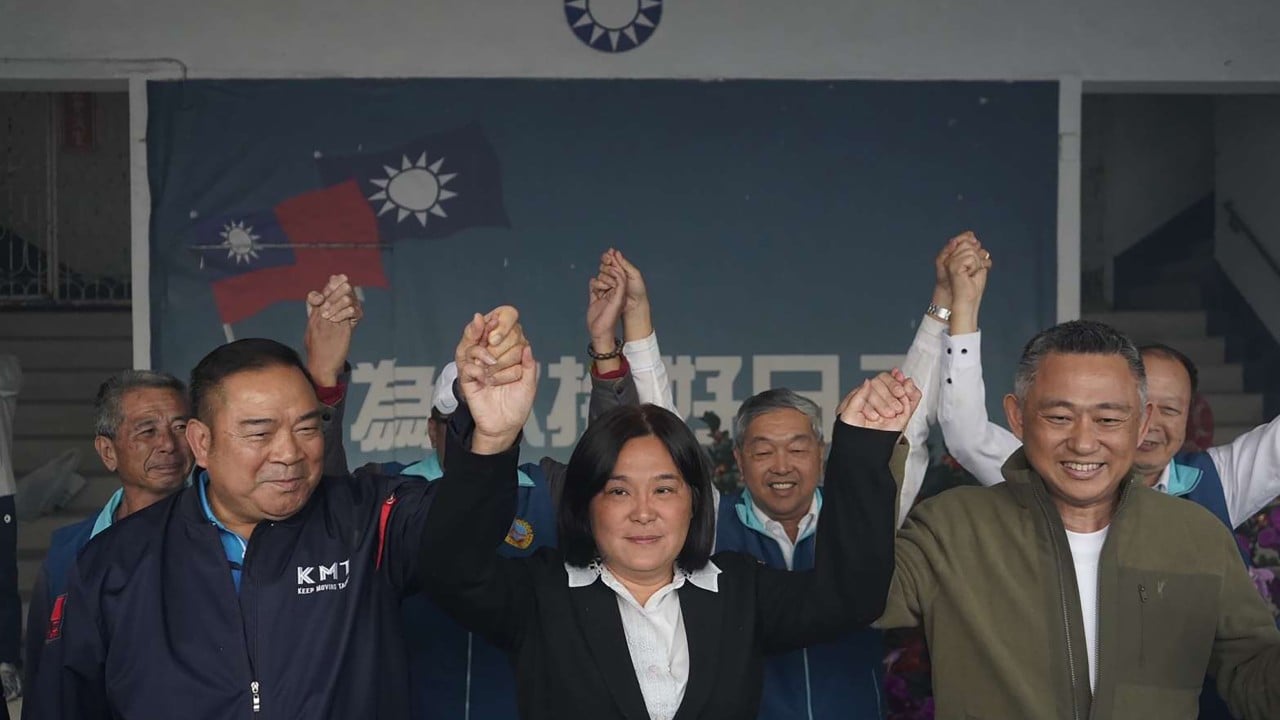
Polls closed at 4 p.m. on November 28, 2026, and Chen Yu-jen wasted zero time putting the Kuomintang on the board. The longtime KMT legislator declared victory in the Kinmen County magistrate race, better known in English as Quemoy, making her the first candidate to claim a win in Taiwan's sprawling "nine-in-one" local elections and putting her in line to become the island's first female magistrate.
If you only look at the headline, it looks like a neat opening act for the opposition. Look closer, though, and Quemoy isn't just another county line on the map. It sits right off China's Fujian coast, carries decades of frontline baggage, and tests how cross-strait pragmatism plays when ballots are cast on a windy offshore island rather than in Taipei or Taichung.
How Quemoy Flips Back to the KMT
For the past four years, Quemoy sat outside clean party boxes. Outgoing magistrate Chen Fu-hai won the 2022 election as an independent before later revealing his membership in the Taiwan People's Party (TPP). With Chen Yu-jen declaring victory in a crowded seven-way race against six independents—including former deputy county magistrate Lee Wen-liang—the KMT claims the island back for its own column.
Honestly, that shift matters for two reasons. First, local politics on offshore counties run on tight personal networks, family ties, and daily ferry and trade realities that outsiders frequently misread. Second, flipping a seat held by a TPP-affiliated incumbent gives the KMT an early bragging point in a cycle where opposition coordination has been messy, uneven, and at times downright tense.
Across the Taiwan Strait, cooperation between the KMT and the TPP has been a push-and-pull affair. After KMT chairwoman Cheng Li-wun won the party's leadership election in October 2025, talks around KMT–TPP coordination shaped races like New Taipei, where TPP chairman Huang Kuo-chang suspended his mayoral run in April 2026 so Lee Shu-chuan could run as a joint candidate. Yet the alliance hasn't held everywhere; by September 2026, the TPP ended its partnership with the KMT in Hsinchu County after the two sides couldn't agree on a joint candidate for Zhubei. Against that backdrop, a clean KMT declaration in Quemoy gives party leaders a tangible talking point right out of the gate.
Still, I wouldn't treat a Quemoy victory as a mirror of the entire island. Voters in Kinmen or neighboring Lienchiang County—the Matsu Islands, where KMT incumbent Wang Chung-ming also declared victory for a second consecutive term—live much closer to mainland Fujian than residents of Taipei or Kaohsiung. What works as bread-and-butter politics on a frontline island doesn't automatically translate to swing cities in central or southern Taiwan.
Cross-Strait Ties and Frontline Realities
Let's not sugarcoat Chen Yu-jen's profile. She's a combative lawmaker and a vocal advocate for closer ties with Beijing, not a quiet technocrat trying to stay out of geopolitical crossfire. In June 2026, she traveled to Xiamen in Fujian province for the annual Straits Forum, where she met Beijing's top political adviser, Wang Huning, and pushed for expanded mainland tourism to Quemoy alongside broader cross-strait trade.
For supporters in Kinmen, that kind of direct outreach looks practical. Tourism, ferry links, and economic exchanges with nearby Fujian aren't abstract foreign-policy debates on Quemoy; people feel them in hotel occupancy, shop foot traffic, and local livelihoods. Many islanders want stability, calm waters, and open channels that keep daily life humming.
Critics see a very different risk. Taiwan's government has repeatedly warned about Beijing's pressure campaign—from military activity near the island to what officials describe as cognitive warfare and transnational repression. As reported by Al Jazeera, Taiwan's Ministry of National Defense tracked around 33 People's Liberation Army warplane sorties toward Taiwan between Friday and Saturday, while Beijing's defence ministry insisted this week that "reunification" is an unstoppable trend.
When a prominent figure who meets senior Chinese officials takes charge of a county just miles from the mainland coast, watchdogs in Taipei and capitals abroad pay close attention. Even local county magistrates don't set national defense or foreign policy—that belongs to the central government in Taipei—but local administrations still shape cross-strait exchanges, municipal messaging, and how friction is managed on the ground.
Why Taiwan Local Elections Are Never Just Local
People outside Taiwan often ask why a county magistrate or city mayor race draws so much attention. Blame the "nine-in-one" format. Voters aren't just picking one leader; they're casting ballots across nine tiers of municipal and county offices, covering 22 mayors and magistrates, 919 city and county councillors, 204 township and city mayors plus indigenous district chief administrators, and village and borough chiefs, all serving four-year terms.
In practice, that turns local voting into a massive national temperature check. For the ruling Democratic Progressive Party (DPP), the November 28 vote acts as a midterm referendum halfway through President Lai Ching-te's term. For the KMT, it tests whether its traditional strengths in local factions and municipal governance still hold up—and sets the table for internal debates ahead of the 2028 presidential race, where names like outgoing Taichung Mayor Lu Shiow-yen, parliamentary speaker Han Kuo-yu, and chairwoman Cheng Li-wun are already part of political chatter.
Meanwhile, smaller parties and coalitions are fighting for relevance in a system dominated by the DPP and KMT. Four smaller groups—the New Power Party, Taiwan Statebuilding Party, Taiwan Obasang Political Equality Party, and Green Party Taiwan—formed the Taiwan Go Go alliance in late 2025 to pool energy in local council races, showing how smaller players try to carve out room between the two big machines.
Here's a mistake smart observers make every single cycle: assuming local election results predict the next presidential election. They don't. Four years earlier, in 2022, the KMT won 14 cities and counties, the DPP took five, and independents or other parties won three—yet national politics still produced a competitive, high-stakes presidential race in 2024. Voters split tickets. They judge mayors on traffic, housing, and local competence differently than they judge a president on national security and diplomacy.
Common Misconceptions About Quemoy and the Vote
A few myths keep popping up whenever Quemoy makes international headlines. Let's clear them up plainly.
First, a candidate declaring victory on election night isn't the final legal word. Candidates declare wins once counting trends look decisive after polls close at 4 p.m., and news outlets report those declarations, but formal confirmation rests with Taiwan's Central Election Commission.
Second, Quemoy isn't "part of China" in administrative or legal terms. It's Kinmen County, administered by Taiwan, even though its geography puts it right next to Fujian. Calling it a frontline island captures its history and location far better than vague labels that confuse sovereignty with geography.
Third, winning local office doesn't hand a magistrate a blank check on cross-strait policy. Central authorities control national defense, border and immigration rules, and official diplomatic posture. A magistrate can advocate, host exchanges, and lobby for policies, but they operate inside Taiwan's constitutional and legal system.
Practical Next Steps If You Are Following the Results
If you're tracking how the rest of the night shakes out—or trying to make sense of what comes next—skip the hot-take threads and take a few concrete steps:
- Wait for official Central Election Commission tallies before locking in final margins or seat counts across all 22 cities and counties, since early declarations happen while votes are still being tabulated.
- Compare offshore results against major urban centers like Taipei, New Taipei, Taichung, Tainan, and Kaohsiung to see whether the KMT's early momentum extends into populous metropolitan areas.
- Watch down-ballot council numbers and potential by-election chatter, including whether Chen Yu-jen's move to the magistrate's office triggers a legislative by-election contest in Kinmen.
- Track how party leaders frame the outcome over the next week, especially how the DPP responds to midterm pressure and how the KMT and TPP handle their post-election coalition math heading toward 2028.