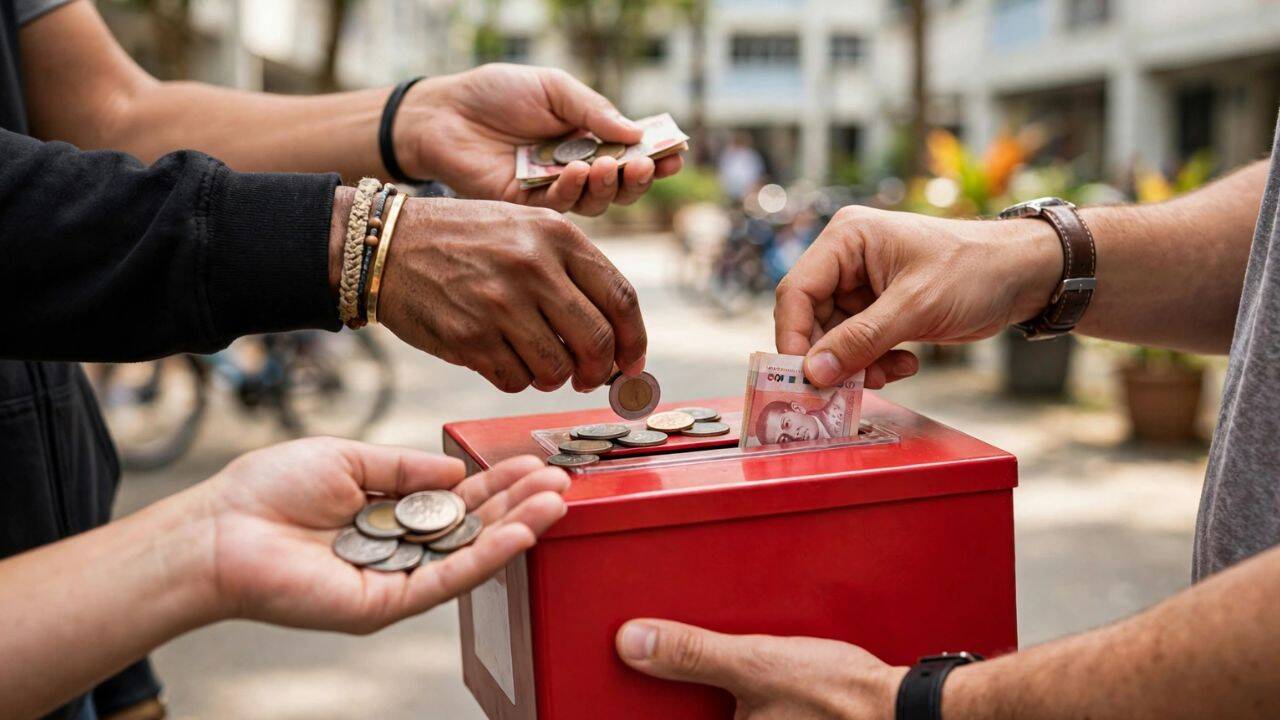
Trust is a remarkably fragile currency. When someone knocks on your door with a clipboard, a lanyard, and a story about helping the less fortunate, your first instinct is usually empathy. You don't immediately think you're funding a calculated criminal enterprise. But that is exactly what happened to more than 12,600 people across Singapore who fell victim to a massive, multi-year charitable fraud orchestrated by Lim Kah Kheng.
When the courts handed down a 46-month prison sentence to the 42-year-old mastermind, it closed the book on an operation that raked in over $106,000 through sheer deception. Yet, the story goes far beyond a single criminal behind bars. It exposes the vulnerable underbelly of door-to-door fundraising, the dangers of unverified social enterprises, and why ordinary citizens keep falling for elaborate cons.
Anatomy of a Neighborhood Scam
Charity fraud rarely looks like a movie villain hiding in the shadows. Instead, it wears a polite smile and blends seamlessly into suburban life. Between January 2020 and June 2024, Lim built an operation designed to look legitimate down to the last detail. He didn't just walk streets alone asking for cash; he manufactured counterfeit staff passes and fraudulent administrative documents that fooled everyday citizens and the very people he recruited.
He convinced seven individuals to join his cause, making them believe they were working for genuine social enterprises. These recruits became unwitting accomplices, knocking on doors in residential neighborhoods—such as Bedok North Street 3—and collecting donations with absolute sincerity. Additional analysis by TIME explores comparable views on the subject.
That is the most insidious part of modern financial crime. The perpetrators use layers of insulation. By outsourcing the actual face-to-face begging to misinformed recruits armed with fake credentials, Lim shielded himself while building volume. Over four years, his network hit 12,600 victims. Small donations add up quickly when multiplied by thousands of open-hearted neighbors giving five or ten dollars thinking it's going toward a good cause.
Why People Keep Falling for Fake Charities
It is easy to sit back and wonder how thousands of people could hand over money without verifying credentials. But human psychology works against us in these exact moments.
Door-to-door fundraisers create immediate social pressure. When a polite stranger stands on your doorstep talking about community aid or disadvantaged families, you feel an immediate desire to be perceived as generous and kind. Asking for proof feels awkward, confrontational, and rude. Scammers rely on this social friction. They know you won't demand to inspect registration documents while someone stands on your porch holding a laminated ID card.
Furthermore, people assume that street-level oversight is tighter than it actually is. We assume that if someone is walking around a neighborhood collecting funds, local authorities must have vetted them. Lim capitalized entirely on that lazy assumption of institutional safety.
The Legal Hammer and Expanded Charges
When law enforcement finally caught up with Lim—sparked by a resident's report near Bedok North in June 2024—the judicial response was swift. Convicted on four primary counts of cheating under Section 420 of the Penal Code 1871, he received 46 months behind bars.
Crucially, the sentencing magistrate didn't look at those four charges in isolation. Another eight cheating charges and three counts of theft in a dwelling under Section 380 were factored into the final sentencing calculus. Under Singaporean law, cheating carries a potential prison sentence of up to 10 years alongside heavy fines. The courts made it clear that exploiting public goodwill during times of economic anxiety is treated as a severe societal threat.
How to Protect Your Wallet and Your Empathy
The worst casualty of high-profile charity fraud isn't just the stolen money; it's the erosion of community trust. When stories like this make headlines, people become cynical. They stop answering their doors or start turning away genuine volunteers. You don't have to become hardened and suspicious to stay safe. You just need to change how you verify appeals.
First, never donate on the spot under pressure. Real charities expect questions. If someone knocks on your door, ask them precise questions: Which exact organization are you representing? How much of every dollar goes directly to the cause? Who is the ultimate beneficiary?
Second, verify before you pay cash. In Singapore, official fund-raisers must be registered or hold valid foreign fund-raising permits tracked by the Charity Portal. If a solicitor cannot point you to an official registry or official website where you can donate digitally, shut the door.
Finally, stop giving cash to doorstep solicitors. If a cause genuinely moves you, tell the collector you will donate directly through the organization's official verified website. Legitimate charities welcome direct digital contributions because it leaves an audit trail and keeps administrative costs down.
Generosity is a virtue, but in an era of sophisticated scams, it requires a shield of common sense. Don't let bad actors trick you into closing your heart, but make sure your money actually reaches the people who need it most.



