Most Canadians aren't screaming in anger about the latest federal budget, nor are they popping champagne bottles. They are shrugging. A fresh Ipsos poll lays bare a profound public fatigue gripping the country. When given a choice between obsessing over Ottawa's fiscal plans or watching the chaos south of the border, ordinary citizens are responding with a collective, resounding meh.
If you look past the standard political spin coming out of Ottawa, the reality on the ground is stark. People are tired. They are wrestling with the high cost of living, feeling squeezed by interest rates, and watching Washington play high-stakes poker with Canada's economic lifeline. Yet, instead of panic or wild optimism, there is an eerie numbness. Let's break down what this new polling data actually tells us about where Canada stands right now, why public trust has cratered, and what it means for Prime Minister Mark Carney as he tries to navigate a very hostile neighborhood.
The Great Budget Shrug And Why Ottawa Is Missing The Mark
Let's start with the numbers. According to the Ipsos data, 44 per cent of Canadians believe the federal budget will pack a bigger punch than the recent U.S. midterm elections. That sounds like engagement until you look at how people view the budget itself. A staggering 62 per cent describe it as neither good nor bad. Only 17 per cent view it positively, while 21 per cent give it a thumbs down.
When pollster Darrell Bricker talks about Canadians treating the budget like a non-event, he isn't exaggerating. Only 14 per cent of respondents think the budget will personally help them financially. Twice as many—21 per cent—expect it to actively hurt them. The remaining 65 per cent expect no change whatsoever in their daily bank accounts.
That is a massive disconnect between government PR campaigns and kitchen-table reality. For years, politicians have promised targeted investments, green transitions, and innovation hubs. But when you are standing in a grocery aisle staring at the price of chicken, venture capital funds and macro-economic projections feel entirely disconnected from your life. Canadians aren't fighting about the budget because they simply don't believe it touches their daily struggles. It feels like an accounting exercise written by people who haven't paid for their own groceries in a decade.
Broken Trust And The Trump Factor
While the domestic budget is greeted with a yawn, foreign policy brings out a different emotion entirely: deep, lingering anxiety mixed with outright cynicism.
The relationship between Ottawa and Washington has taken a permanent hit. The poll numbers on this are staggering. Fifty-five per cent of Canadians state flatly that they can never trust Americans the same way again. Let that sink in for a moment. More than half of the population views our closest ally and largest trading partner not as a dependable friend, but as an unpredictable volatile variable.
Donald Trump's return to the political center stage has reminded Canadians just how fragile our economic integration really is. When trade policy can be upended by a late-night social media post or a sudden tariff threat, long-term planning becomes an exercise in guesswork. As Bricker pointed out, Trump can wake up with one idea and go to bed with a completely opposite one. You cannot build a stable, predictable industrial strategy on top of quicksand.
Canadians know this. They watch the news. They see the threats to tariffs, the renegotiation demands, and the constant badgering over defense spending and border security. It is exhausting. It turns international relations into a daily reality show where Canadian workers are cast as collateral damage.
The Wait It Out Dilemma
Faced with a mercurial American president, what do Canadians want Ottawa to do? The answer might surprise people who think diplomacy is always about rushing to the negotiating table.
Fifty-three per cent of Canadians believe Canada should simply wait until Donald Trump leaves office before trying to lock down a major new trade deal. Half the country would rather stall, run out the clock, and manage the status quo than sign a bad agreement negotiated under duress.
This is a very pragmatic, defensive posture. People have learned from past trade battles that trying to appease a moving target rarely works out well for the smaller partner. If you rush into a deal because you are desperate, you get fleeced. Waiting it out carries its own economic risks, of course. Uncertainty freezes business investment. Companies hesitate to expand factories or hire workers when tariffs hang over their heads like a guillotine. But Canadians calculate that a delayed deal is better than a disastrous capitulation.
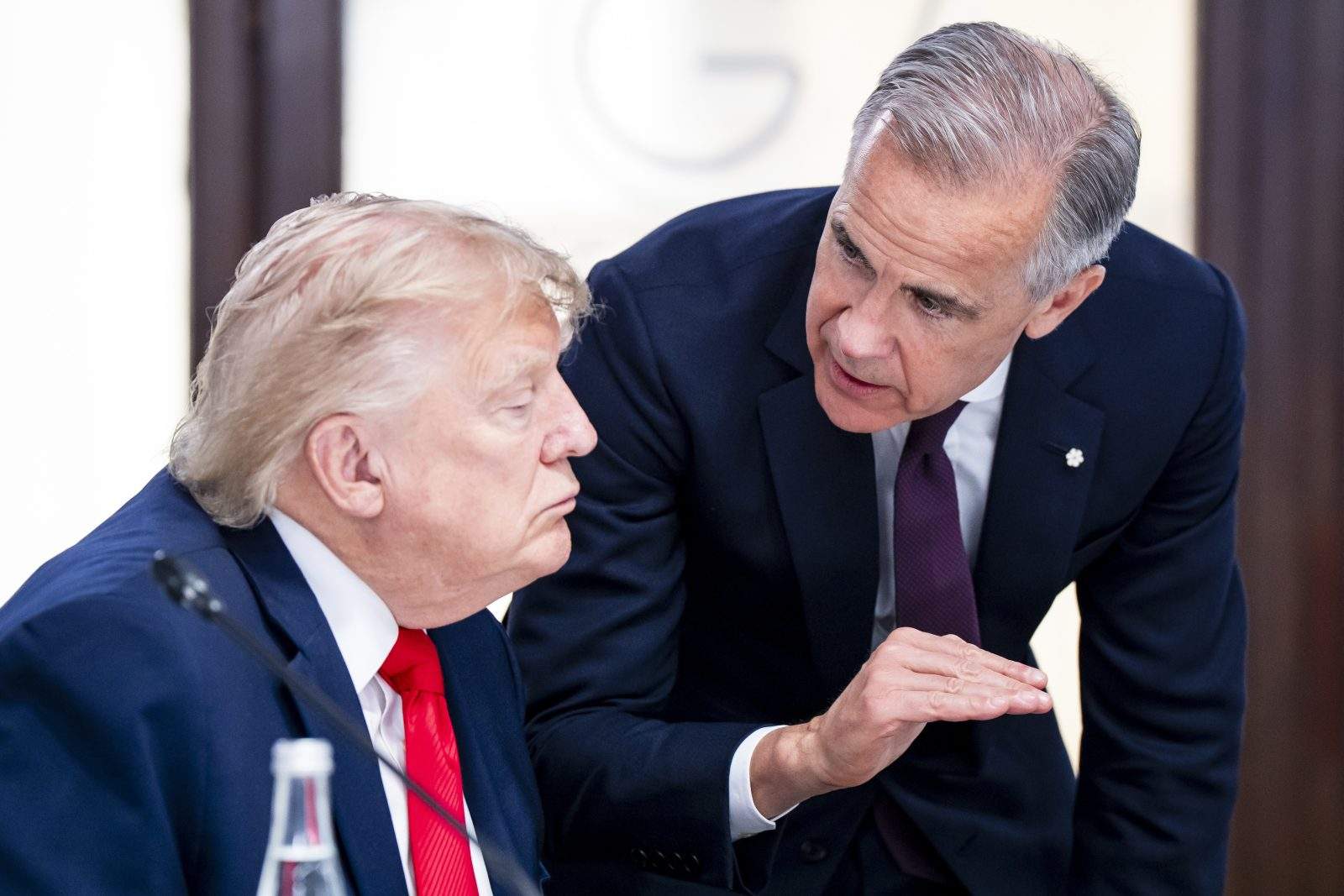
Prime Minister Mark Carney is walking a tightrope here. Only 39 per cent of Canadians believe Carney will actually succeed in negotiating a favorable trade deal with Trump. That is a low vote of confidence, though it reflects the sheer difficulty of the task rather than a personal indictment of Carney's skills. Furthermore, 64 per cent expect trade and economic disputes between the two countries to drag on for several years. Everyone is bracing for a long, grueling slog.
Why Optimism Survives Against The Odds
Despite the deep distrust of American leadership, a surprising counter-current runs through the data. A separate Ipsos finding shows that 49 per cent of respondents actually feel optimistic about reaching a trade deal that benefits Canada.
How do we reconcile 55 per cent saying they can never trust Americans again with nearly half the population feeling optimistic about a trade deal?
It comes down to economic necessity mixed with institutional muscle memory. Canadians understand that trade must happen. Our auto sectors, energy grids, agricultural markets, and manufacturing supply chains are bolted together. You cannot un-invent decades of cross-border integration overnight. Optimism here isn't warm and fuzzy affection for American politics; it is a cold calculation that business interests, corporate lobbies, and pragmatic governors in U.S. border states will ultimately exert enough gravity to prevent total self-destruction.
Carney and his trade ministers are banking on those institutional guardrails. They are working behind the scenes with U.S. business leaders, state premiers, and congressional allies who stand to lose billions if Trump blows up cross-border commerce. It is diplomacy in the trenches. It is less about charming the president in the Oval Office and more about building a firewall of self-interest among American stakeholders.
What This Means For You
If you are running a business, managing household finances, or just trying to plan your career in Canada right now, what should you take away from this political malaise?
First, stop waiting for government budgets to save you. Whether you fall into the 62 per cent who see the latest fiscal plan as a non-event or the 21 per cent who worry it will hurt, the common thread is self-reliance. Macroeconomic policy in Ottawa isn't moving the needle for everyday family balance sheets. Build your personal financial buffers independently of government credits or subsidies.
Second, factor cross-border volatility into your long-term plans. If your industry relies on U.S. exports, assume that trade friction is the new baseline, not a temporary blip. Diversification isn't just a political buzzword for trade ministers; it is a survival strategy for Canadian enterprises. Expanding markets toward Europe, Asia, or domestic provinces is no longer optional if you want to insulate yourself from Washington's mood swings.
Finally, manage your own exposure to the news cycle. The constant anxiety emanating from U.S. politics is designed to keep you on edge. But as the Ipsos poll shows, everyday Canadians are tuning out the noise because they recognize that much of it is outside their control. Focus on what you can influence: your skills, your spending, your local community, and your business adaptability.
The federal budget is a dud, trade talks are a minefield, and our southern neighbor is going through a political identity crisis. None of this is going to be solved overnight. Take a deep breath, ignore the political theater, and keep your focus where it belongs: right here at home.
Protect your cash flow, keep your debt manageable, and build operational flexibility into your work. The macro environment is messy, but your personal execution doesn't have to be.



