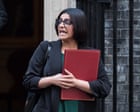
Public trust in British law enforcement is bleeding out, and the political establishment can no longer pretend otherwise. When citizens start believing that the law applies differently depending on who you are, who you protest with, or what political causes you back, the entire social contract breaks down. Home Secretary Shabana Mahmood has stepped into this minefield, addressing police chiefs with a warning about what she calls the corrosive and growing perception of two-tier policing.
It is about time. For years, critics on both sides of the political spectrum have watched street protests, public disturbances, and localized community clashes with a sinking feeling. They saw one group handled with kid gloves while another faced the full, unbending weight of the state. Whether this imbalance was systemic, accidental, or merely a product of stretched resources and panicked operational choices doesn't change the outcome. The damage to public confidence is real.
The Roots of Public Distrust
Why does this narrative stick so fiercely? Because optics matter. When people watch footage of one demonstration where offensive slogans or aggressive behavior meet zero intervention, followed by another protest where individuals are cuffed immediately for minor infractions, they draw conclusions. You don't need a degree in criminology to spot a double standard.
Mahmood’s intervention at the National Police Chiefs' Council annual event aims to pierce through that fog. She didn't just target the symptom; she went after leadership structures she labeled as inconsistent and, at times, frankly inadequate. Police forces have spent years tangled in ideological knots, trying to balance community relations, public safety, and intense political scrutiny. In doing so, they lost the one thing that actually keeps society orderly: predictable, impartial enforcement.
What Needs to Change on the Ground
Fixing a crisis of perception requires more than speeches and updated guidelines. It demands radical transparency. If a crowd blocks a highway or chants inflammatory slogans, the response needs to be uniform, regardless of the political flavor of the day. The moment discretion looks like favoritism, policing ceases to be about justice and starts looking like management.
Chief constables and police and crime commissioners are now under intense pressure to rewrite how public order is handled. Officers on the front line need clear, unequivocal backing to enforce the law without second-guessing whether their operational decisions will trigger a political storm. When officers feel hamstrung by top-down bureaucracy or fear of public backlash, they hesitate. Hesitation leads to chaos. Chaos leads to public cynicism.
Moving Beyond the Political Football
Politicians love to weaponize police performance when it suits them. Too often, opposing parties treat law enforcement as a football to kick back and forth across the House of Commons. Mahmood has taken a risk by owning the problem head-on. By acknowledging that the public feels shortchanged by uneven enforcement, she is stepping into dangerous territory. If her promised reforms produce no tangible change in how streets are managed, the cynicism will deepen into something much harder to fix.
The stakes couldn't be higher. A society cannot function long-term if its citizens believe the police protect some groups while ignoring others. Restoring faith means treating every public disturbance, every protest, and every neighborhood crime with the same baseline standard of accountability. No exceptions. No political calculations. Just the law, applied straight down the middle.
Rebuilding that trust starts with consistency, plain and simple. Police leadership must drop the defensive posturing, accept that past strategies failed the public test, and enforce public order with absolute neutrality. The alternative is a fractured public sphere where nobody trusts the badge, and everyone assumes the worst.



