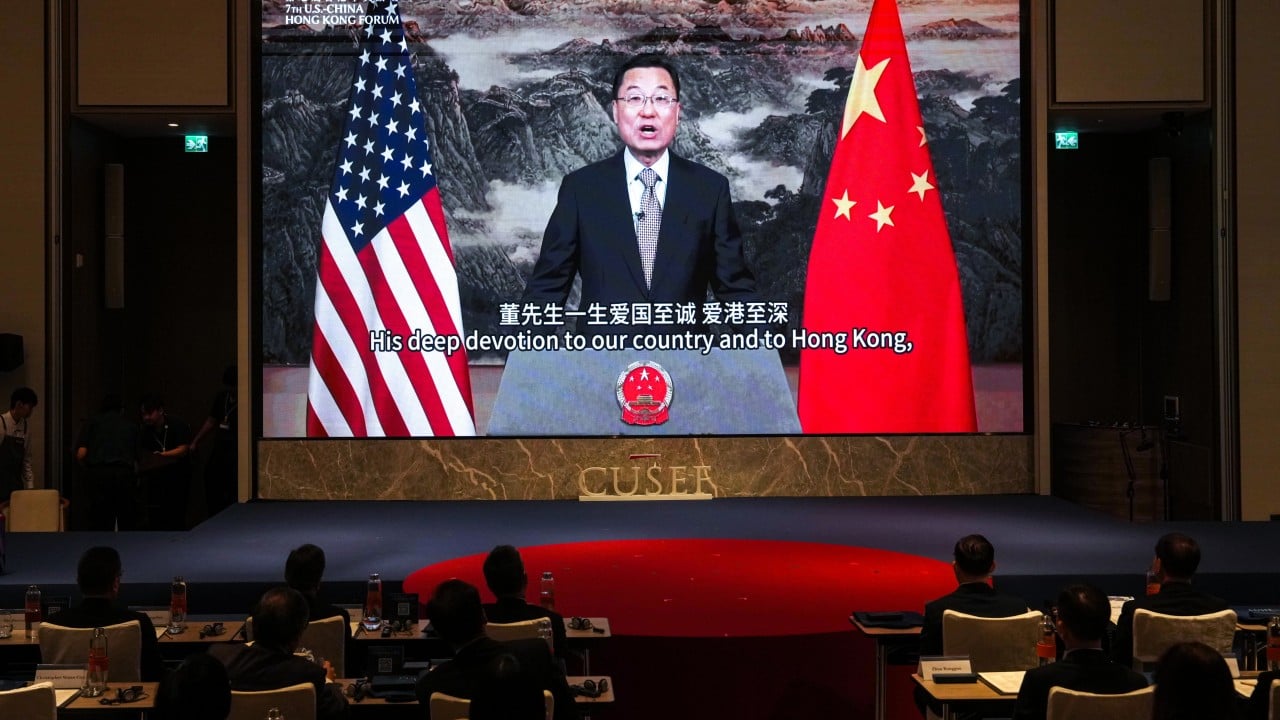
Geopolitical chess boards rarely shift overnight, but when they do, every player scrambles for position. Beijing's ambassador to Washington, Xie Feng, recently delivered a sharp message to Hong Kong: stop standing on the sidelines and start actively building bridges between the world's two biggest economic engines.
If you look past the standard diplomatic phrasing, a hard truth emerges. Beijing expects the city to leverage its unique financial ecosystem and legal framework to keep economic communication lines open with America, even as political tensions simmer.
The High Stakes of Superpower Friction
Let's be honest. Trade restrictions, tech curbs, and strategic posturing have made doing cross-border business exhausting. Every corporate board meeting in the financial hub now involves a risk assessment that would have seemed paranoid five years ago.
Yet, Xie's address at the 7th U.S.-China Hong Kong Forum laid out a starkly pragmatic counter-narrative. Win-win cooperation isn't just a catchy phrase for state media; it remains the baseline requirement for global economic stability.
When presidents exchange high-level visits, local markets feel the ripple effect instantly. Investors want certainty. They want to know that supply chains won't shatter tomorrow because of a new tariff announcement. Hong Kong has historically served as the pressure valve and the transaction hub for both sides. Now, Beijing wants that engine revved up again.
Why Hong Kong Holds the Cards
Why target Hong Kong specifically? Because no mainland city can fully replicate its structural positioning.
- Capital Mobility: Free flow of capital allows Western funds to interact with Chinese enterprises under a familiar common law framework.
- Global Networks: International Chambers of Commerce and multinational firms still use the city as a regional base.
- Institutional Memory: Decades of deal-making experience give local executives a playbook for navigating political crosswinds.
Former ambassador Cui Tiankai also weighed in during these discussions, pointing out that turning high-level visions into actual ground-level practice remains the ultimate hurdle. Changing administrations in Washington won't magically erase structural competition. Real progress requires painstaking, unglamorous economic engagement.
What This Means for Global Markets
If you're running a multinational or managing an investment portfolio, you can't afford to ignore this shift. The message from Beijing signals a calculated push to insulate trade and commercial dialogue from total political decoupling.
Expect regional leaders to double down on financial outreach. We are likely to see renewed efforts to connect Gulf and Western capital pools through local listings and infrastructure financing, proving that commerce can outpace geopolitical friction.
Pay attention to how local institutions adapt their compliance frameworks over the next few quarters. The window is open to lock in deals before the next wave of policy shifts hits.


