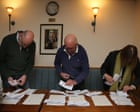
Two hundred and fifty-seven villagers in Barnham just voted to leave the United Kingdom. Sixteen voted no. One ballot was spoiled.
It sounds like a joke from a British comedy, right? It isn't. On Saturday, November 21, 2026, residents of this small Suffolk village marched to the village hall to cast a non-binding, symbolic vote to become a crown dependency—similar to Jersey, Guernsey, or the Isle of Man—in protest against government plans to house around 930 asylum seekers at the nearby RAF Barnham site.
Let's be honest about what this vote actually does. Legally, zero. A parish referendum on leaving Westminster doesn't redraw Britain's constitutional map or strip away Home Office authority. Yet dismissing it as a mere publicity stunt misses the real story. Barnham is the second English village in two months to stage an "independence" protest over large-scale asylum accommodation at a former military base, following Piddington in Oxfordshire back in September. When rural communities feel completely shut out of decisions that could double or triple their local population overnight, symbolic secession becomes their megaphone.
What Happened at Barnham and Why It Matters
The immediate trigger is a Home Office proposal to house roughly 930 to 931 single adult men aged between 18 and 65 at RAF Barnham, located between Bury St Edmunds in Suffolk and Thetford in Norfolk. That figure is actually down from an initial concept of around 1,250 people when the government floated three former military sites—Barnham, Bicester in Oxfordshire, and Linton-on-Ouse in North Yorkshire—in June 2026 as part of a push to end hotel use and save money on asylum accommodation. Additional reporting by NBC News highlights comparable perspectives on this issue.
For a small rural community with around 500 to 600 residents, bringing in over 900 men feels disproportionate. Local resident Ms Beck told Sky News after the poll that a "fair share" for a village of Barnham's size would be closer to five people, arguing that integration works at small scale while a site of nearly a thousand residents changes the character of the area and leaves locals worried about infrastructure and safety. Barnham Parish Council chair John Bauer, speaking ahead of the vote organized by the Barnham Residents' Association, framed the ballot around seeking crown dependency status to retain loyalty to the Crown while escaping Home Office jurisdiction, joking that a "Yes" vote would make it the "bailiwick of Barnham" rather than copying Piddington.
National politics jumped into the fray almost immediately. Conservative leader Kemi Badenoch backed the villagers, arguing that placing large numbers of undocumented young men next to small villages is inappropriate and accusing the government of spreading the problem around instead of stopping small-boat crossings. Meanwhile, local voices and commentators have pushed back against how the debate is being framed. The local MP warned that legitimate questions about the site's suitability are being co-opted by political opponents stirring up racial discord, noting that people arriving on small boats are seeking asylum and pointing out practical flaws with RAF Barnham itself—such as a remote location with no pedestrian access and a hazardous main road.
The Bigger Picture Behind the Village Revolt
If you look only at the headline about a village "leaving the UK," you miss the tug-of-war happening across Whitehall and rural England right now. The government says it has saved over £1 billion since the election by moving away from expensive hotels toward alternative sites like former military bases, promising 24/7 security, CCTV, and self-contained facilities to limit local disruption. Figures reported by ITV News show that as of March 2026, 20,885 asylum seekers were in hotels alongside another 72,768 in other accommodation awaiting decisions.
From a policy standpoint, ministers face a brutal math problem. Hotels in urban areas have drawn fierce criticism over cost and local strain, while inner-city postcodes have often seen heavy concentrations of houses in multiple occupation. Moving people onto ex-military estates looks tidy on a spreadsheet. In practice, rural villages lack buses, pavements, GP capacity, and policing numbers, which is why West Suffolk Council unanimously passed a motion opposing RAF Barnham as unsuitable due to its rural setting and constrained transport links.
There's also a growing constitutional friction over how central government pushes these plans through. Reports around the proposals have highlighted concerns that ministers could rely on fast-track planning routes or crown-related powers to bypass normal local council approvals, just as communities in Oxfordshire have clashed with central decision-making over ex-Ministry of Defence sites. Watching Piddington vote to leave in September and Barnham follow suit in November shows a clear pattern: when residents feel ignored by planning rules, they reach for theatrical protest because ordinary channels feel blocked.
Common Myths and Practical Realities
A few misconceptions tend to get tangled up in stories like this, so it helps to separate constitutional reality from political slogans.
First, a village cannot vote itself into a crown dependency. Jersey, Guernsey, and the Isle of Man have distinct historical and constitutional relationships with the Crown—they aren't English parishes that opted out via a local ballot. A referendum organized by a residents' association or parish council can express strong local feeling, and it might attract national cameras, but it doesn't remove RAF Barnham from Home Office oversight or planning law.
Second, self-contained doesn't mean invisible. Even when the Home Office promises on-site security, CCTV, and essential services inside a former military base, reports note that residents aged 18 to 65 would be permitted to leave the site. Locals aren't imagining walls around a fortress; they're thinking about road safety, walking routes, and how a small rural parish absorbs sudden population pressure.
Third, opposing a specific site isn't the same as every argument being identical. Some villagers and opposition politicians talk about stopping small boats and questioning whether large male-only centers fit small villages. Others focus on pedestrian access, road hazards, and proportional numbers relative to village size. Lumping every local resident into one caricature—whether "heroic rebels" or "villains"—makes the debate dumber than it actually is.
What Happens Next for Barnham and Similar Communities
Nothing is settled overnight. As of Saturday's vote, media reports noted that a final decision on the RAF Barnham proposal had not yet been made, even as planning and feasibility steps around former military sites continue.
If you live in Barnham or another community facing a similar proposal, here are practical steps that actually carry weight compared to a symbolic ballot:
- Submit evidence to your local council and planning process. Councils like West Suffolk have built formal opposition around concrete factors—transport, infrastructure, and site suitability. Specific, documented evidence on road safety or local services carries far more weight in planning reviews than general slogans.
- Track official Home Office factsheets and ministerial statements. Policy numbers and site scopes shift—Barnham's proposed figure dropped from around 1,250 to just over 930—so check official updates rather than relying on rumors.
- Press your MP on concrete site issues and wider asylum processing. Ask elected representatives direct questions about pedestrian access, security arrangements, local policing, and how faster asylum decisions reduce accommodation demand in the first place.
- Keep local meetings focused on facts and community safety. Constructive, well-documented community organizing protects credibility far better than heated rhetoric or unverified claims.
Village Votes On Leaving UK Over Asylum Seeker Camp gives helpful context on how Barnham residents organized their symbolic independence vote in response to the proposed RAF base asylum accommodation.