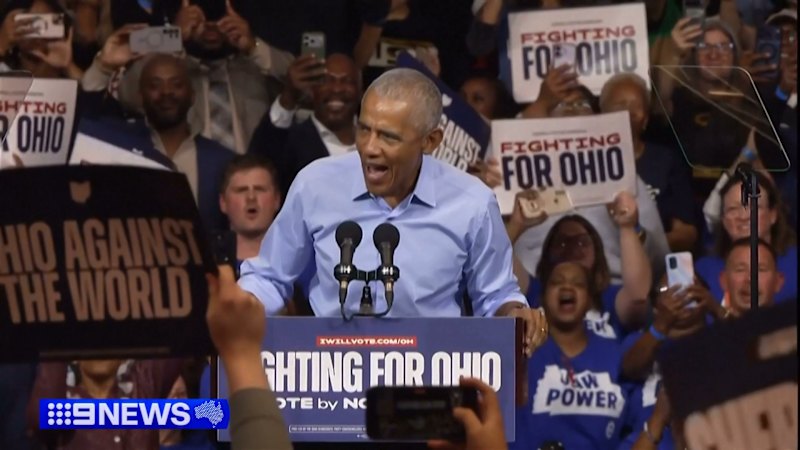
When a former president steps back onto the campaign trail to deliver an unsparing critique of his successor, nobody blinks. We've grown used to the spectacle. But when Barack Obama takes direct aim at Donald Trump's governance, accusing him of systemic cruelty and corruption, he isn't just throwing standard partisan punches. He's trying to diagnose an entire shift in the American political psyche.
Let's be honest about what's happening here. The traditional rules of political engagement broke down long ago. Former presidents used to maintain a polite distance from day-to-day partisan bickering, preferring quiet retirement, libraries, and memoirs. Obama shattered that norm during his own time out of office because he believes the stakes are different now. When he labels Trump an agent of chaos and cruelty, he isn't speaking to the hardcore base on either side. He's talking to the exhaustion of the exhausted middle.
The Rhetoric Of Division And What Drives It
You don't get millions of voters fired up by talking about policy spreadsheets. Both sides know this. Trump mastered the art of grievance politics, turning public frustration into an electoral powerhouse. In response, critics like Obama have had to find a way to cut through the noise without sounding like typical Washington insiders lecturing from ivory towers.
When Obama uses words like corruption, he isn't just talking about backroom deals or shady financial disclosures. He's pointing to a deeper erosion of democratic norms. He is arguing that institutions designed to protect citizens have been weaponized for personal or political loyalty tests. It's a heavy accusation. Yet, it resonates with millions who feel like the system stopped working for them years ago.
Consider how these speeches are built. They rely on stark contrasts. On one hand, you have the democratic ideal of public service as a public trust. On the other, you have a populist movement that treats government as a spoil of war.
- The institutionalist view: Rules matter, procedures matter, and norms keep the republic from sliding into authoritarianism.
- The populist view: The institutions are corrupt beyond repair, and only an outsider can smash them to rebuild something better.
That fundamental disagreement is why speeches condemning cruelty and corruption spark such fierce reactions. They strike at the core of how Americans view their own country.
Why Midterm Rhetoric Changes The Game
Campaign speeches ahead of midterms carry a different weight than presidential election cycles. People are tired. Turnout is traditionally lower. Parties need a mobilizing force that goes beyond party loyalty. That's why high-profile surrogates get deployed to paint the picture in black and white.
When Obama steps up to a microphone to critique Trump's legacy, he's mobilizing the Democratic base by offering a clear moral choice. He frames elections not as a simple disagreement over tax rates or infrastructure spending, but as a referendum on national character.
It works both ways, of course. When Trump responds or rallies his own crowds, he uses Obama as a foil—a symbol of the very establishment he claims to be fighting against. This cyclical antagonism keeps both political machines well-funded and highly motivated.
The Cost Of Perpetual Campaigning
We are living in a permanent campaign state. The rhetoric never cools down. Every speech is scrutinized for soundbites, every slip of the tongue is weaponized on social media, and the temperature keeps rising.
If you look past the headlines and the fiery quotes about cruelty and corruption, you see an electorate split down the middle, largely living in separate media realities. One side sees an existential threat to democracy; the other sees a fighter standing up against a corrupt elite.
Until political leaders find a way to bridge that gap—or until voters demand a different kind of conversation—we're stuck in this cycle of scathing speeches and endless outrage. The real challenge isn't whether Obama can deliver a sharp critique. It's whether any speech can change a single mind in a country that has already made its choice.



