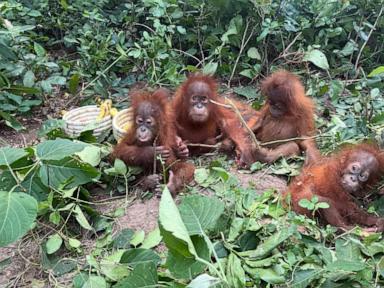
Villagers walking through a casuarina plantation in eastern India didn't expect to find foreign wildlife. They just saw five small infants with reddish hair and unfamiliar faces sitting alone on the ground. Those five baby orangutans, aged between six and eight months, had been dumped thousands of miles away from their native rainforests in Borneo and Sumatra. Their sudden appearance thousands of miles off-course wasn't an isolated anomaly. It dragged a multi-million-dollar international shadow economy right into the open.
When criminals traffic great apes, the human cost of the operation is masked by layers of cruelty. Experts note that infant orangutans don't just wander off. To steal a baby, poachers have to kill the mother. In the wild, these infants cling to their mothers for up to nine years, learning how to survive in the canopy. Orphaned babies dumped on foreign plantations usually mean the protective adults were slaughtered.
India has turned into a major destination for smuggled primates. Wealthy exotic pet collectors and social media influencers are driving a booming underground economy where rare animals serve as ultimate status symbols. Traffickers exploit porous borders and fast commercial flight routes through travel hubs like Bangkok and Kuala Lumpur. The profit margins are so steep that criminals write off occasional animal deaths as a mere cost of doing business.
Legal loopholes and monitoring gaps inside South Asian wildlife regulations make things worse. Following pandemic-era concerns over zoonotic diseases, India introduced registration portals allowing private owners to log exotic pets without proving their exact origins. Enforcement agencies lack the manpower to audit every private collection or verify whether an exotic animal was legally captive-bred or brutally smuggled. Corruption creeps into these regulatory cracks, letting traffickers slip foreign primates past customs with forged paperwork. As highlighted in latest reports by Reuters, the implications are worth noting.
The crisis extends far beyond street-level smuggling networks. High-profile private facilities and elite zoos face intense scrutiny over how rare, endangered species enter their gates. Wildlife trafficking researchers point out that international oversight treaties like CITES struggle to track every transfer, especially when animals move through multiple transit countries before landing in private hands. When rare great apes like the critically endangered Tapanuli orangutan end up in private collections via questionable routes, it exposes systemic weaknesses in global wildlife protection frameworks.
Rehabilitating these smuggled infants is an uphill battle. At local rescue centers, keepers play classical music to soothe stressed, traumatized primates while veterinarians treat respiratory infections and severe malnutrition. Getting them back to their natural habitat requires delicate international diplomacy. Indonesia's Ministry of Forestry frequently steps in to repatriate victims, but sending an orangutan home involves wading through mountains of red tape, diplomatic permissions, and specialized medical transport.
Fixing this mess takes more than empty political rhetoric or superficial border checks. Governments need to close registration loopholes that let illegal pets launder their status as legal captives. Border patrols require real-time intelligence sharing to cut off smuggling routes before infants leave Southeast Asian forests.
Stop treating exotic animal ownership as a harmless quirk of wealth. Every smuggled primate represents a destroyed family group and a push toward extinction. Support local conservation groups working on the ground in Indonesia and demand stricter oversight on exotic pet registries before more vulnerable infants end up abandoned on foreign soil.



