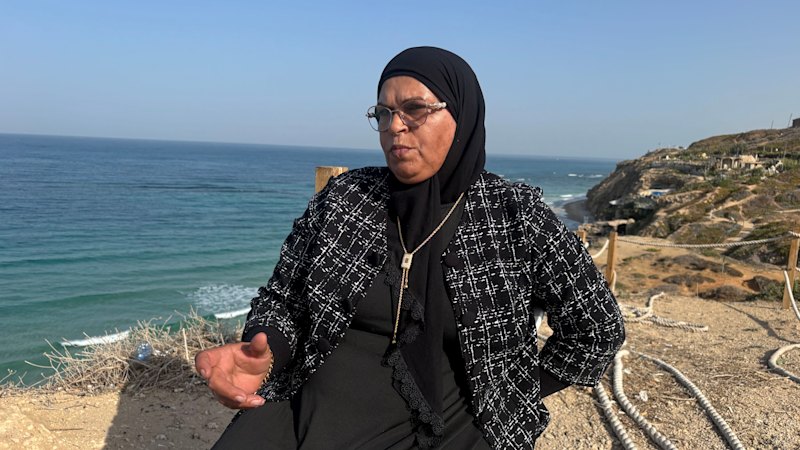
When Watfa Jebali watched her 26-year-old son Saad get murdered through her home security cameras in November 2018, her world stopped. The shooting took all of 30 seconds inside their family grocery store in the Arab town of Tayibe. What followed wasn't just personal grief—it was the start of a grueling grassroots movement. Jebali and other grieving mothers walked for six days from Haifa to the Israeli president's residence in Jerusalem, demanding that authorities stop ignoring the rampant wave of violent crime tearing through Arab communities.
They walked, they pleaded, and basically, they were ignored.
Arab-Israeli citizens—many of whom identify as Palestinian citizens of Israel—make up 20 per cent of the country's total population. Yet, they account for an astonishing 80 per cent of its murder victims. That terrifying disparity has worsened dramatically under Prime Minister Benjamin Netanyahu and his hardline coalition. When Netanyahu appointed far-right agitator Itamar Ben-Gvir as national security minister, the situation shifted from bad to catastrophic. Gun ownership policies expanded, firearms flooded the black market, and the annual murder rate in Arab towns surged past historic highs, reaching 241 victims recently.
Voter turnout among Arab-Israelis has historically hovered near 53 per cent—well below the national average of 70 per cent. Some stay home out of deep-seated apathy, feeling that mainstream Israeli politics has never represented them. Others refuse to vote on principle, arguing that participating in Israeli elections only legitimizes a system stacked against them.
The Political Paradox of Being Shunned
Mainstream Zionist opposition parties frequently make a massive tactical error: they treat Arab voters and politicians as toxic assets. While secular and centrist politicians desperate to unseat Netanyahu need every seat they can get, they often distance themselves from Arab political parties out of fear of alienating Jewish nationalist voters. It's a cowardly balancing act that backfires.
By shunning Arab voters or treating them as second-class political participants, the center-left opposition hands Netanyahu an easy wedge issue. Netanyahu's campaigns have repeatedly relied on anti-Arab rhetoric to galvanize his base, portraying any coalition involving Arab factions as an existential threat to the state.
Meanwhile, everyday citizens in towns across "The Triangle"—the concentration of Arab communities near the West Bank border—are living through a real-life security crisis. History teachers, small business owners, and local residents describe their neighborhoods as the Wild West. Gangs run protection rackets, stray bullets fly through residential windows, and local police forces look the other way.
Why This Election Cycle Feels Different
Despite the historical disillusionment, anger is hitting a boiling point. Pollsters and grassroots organizers estimate that Arab voter turnout could surge anywhere from 65 to 70 per cent in upcoming elections. People who haven't cast a ballot in decades are reconsidering their stance because the cost of sitting out has become too high.
When you have ministers in power who are openly hostile to your existence, staying home stops being a form of protest and starts looking like surrender.
Consider the sheer demographic weight. If Arab turnout spikes by even 10 or 15 percentage points, it completely redraws the electoral map. Right-wing coalitions rely on a fractured or low-participating Arab electorate to maintain their Knesset majority. A unified, highly motivated voting bloc can starve Netanyahu's coalition of the seats it needs to form a government, effectively engineering his political demise from the ballot box.
What Needs to Change in Israeli Politics
If the opposition wants to win, they have to stop playing timid politics. Appeasing right-wing voters by ignoring the largest untapped voting bloc in the country is a losing strategy. Real leadership requires building genuine coalitions based on civil rights, public safety, and equal protection under the law.
Stopping violent crime in Arab towns isn't just a minority issue; it's a litmus test for the entire nation's democracy. If a state cannot protect 20 per cent of its citizens from organized crime and state neglect, its entire institutional foundation is rotting from the inside out.
The upcoming vote offers a stark choice. Either mainstream politicians summon the courage to embrace Arab citizens as equal partners in the democratic process, or they continue down the same self-defeating path that keeps Netanyahu firmly in power. The voters are ready. The real question is whether the political establishment is brave enough to meet them halfway.



