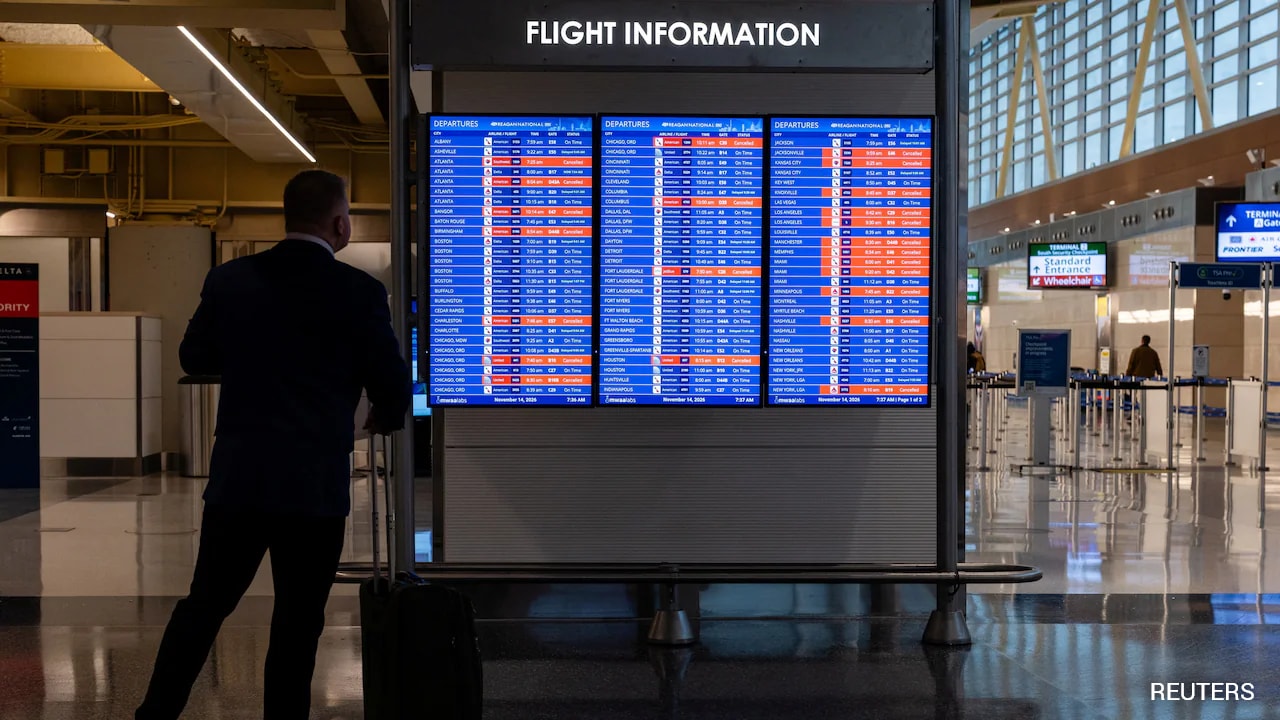
You have probably experienced the absolute misery of being trapped in an airport terminal while departure boards flip to red and gate agents shrug. Now scale that frustration across an entire continent. A routine wire replacement in Arkansas triggered a cascading network collapse that grounded flights nationwide, exposing a terrifying reality about American infrastructure. Much of the nation's air traffic system runs on technology that belongs in a museum rather than a modern cockpit.
Transportation Secretary Sean Duffy is now pushing for a staggering fifty billion dollars to completely rebuild the architecture from scratch. President Donald Trump weighed in on social media, arguing that patching things up in drips and drabs won't cut it anymore. But Capitol Hill is pushing back hard. Lawmakers want to know where the previous billions went and why the aviation agency is coming back with a massive new price tag before the old checks have even cleared.
The breakdown that paralyzed US travel started innocently enough. A contractor swapped out an aging section of copper wire for modern fiber optics in El Dorado, Arkansas. When they fired up the local router, a remote facility in Amarillo, Texas, went haywire. The Federal Aviation Administration later reported an aggressive flood of excessive data hitting the network at a rate of one thousand connection attempts every four to five seconds. That deluge overwhelmed radar feeds and aircraft communications, forcing an emergency ground stop that stranded hundreds of thousands of passengers.
Security officials quickly ruled out a cyberattack, finding none of the digital footprints or threat chatter typical of foreign interference. Instead, the culprit was simple, brittle obsolescence.
Funding aviation upgrades is never a clean political process. Under the previous administration, Congress approved billions for airport terminals, runways, and general infrastructure improvements. More recently, a Republican-led Congress allocated twelve and a half billion dollars specifically to modernize outdated radar networks and air traffic control centers dating back to the nineteen sixties. That multi-year modernization plan was scheduled to run through late twenty twenty-eight.
Then came Senator Eric Schmitt’s proposal asking for roughly thirty billion dollars more, which includes a second phase of tracking upgrades. Duffy’s new fifty-billion-dollar demand dwarfs those figures, and congressional Democrats are furious about the lack of itemized details. House transportation leaders are demanding explanations, pointing out that huge chunks of previously appropriated money remain unspent.
The core friction comes down to statutory restrictions. Duffy argued that the agency was legally barred by Congress from spending previous telecommunications funds on the specific network infrastructure that failed. Critics counter that throwing fifty billion dollars at an agency without a clear, transparent execution plan is a recipe for waste.
Aviation experts point out that rebuilding the national airspace architecture requires more than just a massive cash injection. It demands an overhaul of how federal contracts are managed and how legacy systems are retired without disrupting daily commercial operations. Private carriers and corporate flyers absorb massive financial losses every time a router crash triggers a national halt.
If Congress approves the new funding, telecom giants like AT&T, Verizon, and Lumen claim they can deploy modern network architectures rapidly. Until then, millions of travelers remain vulnerable to a fifty-year-old grid holding the country's aviation system hostage.