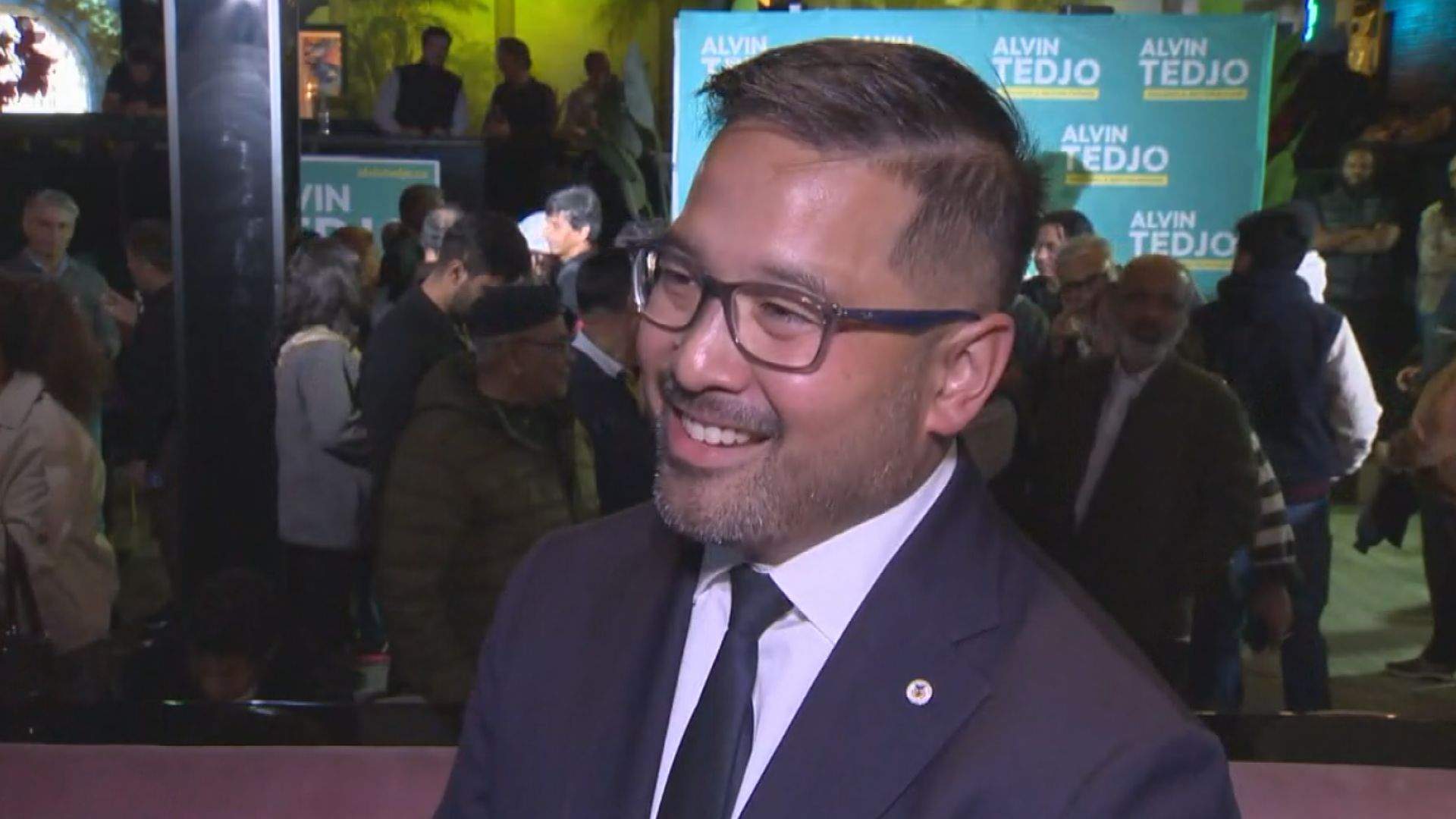
Political dynasties don't usually crumble overnight. Yet, Mississauga just watched the impossible happen.
Voters went to the ballot boxes and handed a resounding victory to Alvin Tedjo in the mayoral race. He didn't just win. He crushed two heavyweights who carried massive name recognition, decades of political baggage, and fierce personal rivalries. Incumbent Carolyn Parrish and former mayor turned Ontario Liberal leader Bonnie Crombie both bit the dust.
If you watched the campaign trail, you knew the tension was palpable. But few predicted a landslide of this magnitude. Tedjo pulled in 74,479 votes, leaving Parrish trailing with 51,853 and Crombie locked out at 43,191.
Let's break down how a rookie city councillor managed to outmaneuver political royalty.
The Three-Way Clash That Defined the Race
To understand why Alvin Tedjo won the Mississauga mayoral race, you have to look at the sheer chaos of the ballot. It was a heavyweight clash. You had an incumbent mayor trying to defend a turbulent record. You had a former mayor attempting a dramatic political comeback after jumping into provincial politics. And then you had Tedjo, pitching a fresh direction.
Voters grew exhausted by the revolving door of political veterans.
During the campaign, the mudslinging got loud. Debates turned personal. Parrish even made headlines by claiming city hall staff were terrified of a Crombie return, while Crombie slammed the incumbent for failing to leave her office and court investors.
Mississauga residents tuned out the noise. They looked at the candidates and realized they wanted a clean break. Tedjo capitalized on that exact sentiment. He positioned himself as the antidote to political fatigue.
Why the Polls Got It Wrong Until the Very End
Polling numbers leading up to election night showed a tight race, with late surges hinting at a chaotic finish. Just days before ballots closed, data showed Tedjo sitting behind Crombie with roughly 31 percent support.
Political analysts often underestimate the power of ground game momentum. Tedjo ran hard during the 2024 byelection, where he finished second behind Parrish. That dry run wasn't a loss. It was practice. He built an organization, learned where voters lived, and refined his message.
When election night rolled around, the unofficial results weren't even close. Tedjo's camp surged past expectations as the evening progressed.
Parrish admitted defeat with a mix of defiance and resignation, telling supporters that tough times plagued her short tenure and that her team should have simplified their messaging. Crombie offered gracious concession remarks, pointing out that a new generation was finally taking the reins at city hall.
What This Means for the Future of Mississauga
Winning the election is the easy part. Governing Canada's seventh-largest city is where the real headache begins.
Tedjo inherits a municipality facing severe budgetary pressures, housing demands, and infrastructural growing pains. For years, Mississauga lived in the shadow of Hazel McCallion's legendary multi-decade reign. The city spent recent years trying to figure out its identity post-Hazel. Parrish gave it a populist, outspoken edge. Crombie gave it corporate networking.
Tedjo brings a policy-driven, regional councillor's perspective. He served on the Region of Peel Council and various committees, giving him a working knowledge of how the gears actually turn behind closed doors.
He promised a distinct shift in how city hall operates. Now, he has to deliver.
The Real Lesson for Municipal Politics
If there is a takeaway from this election cycle, it is this: brand fatigue is real. Incumbency used to be an unbreakable armor in municipal politics. Voters now care more about momentum and forward vision than past titles.
Tedjo ran on a simple premise. Mississauga needed change. The electorate agreed.
The hard work starts now. Keep an eye on how quickly the new administration tackles local zoning, transit integration, and city hall spending. The honeymoon period will end fast.



