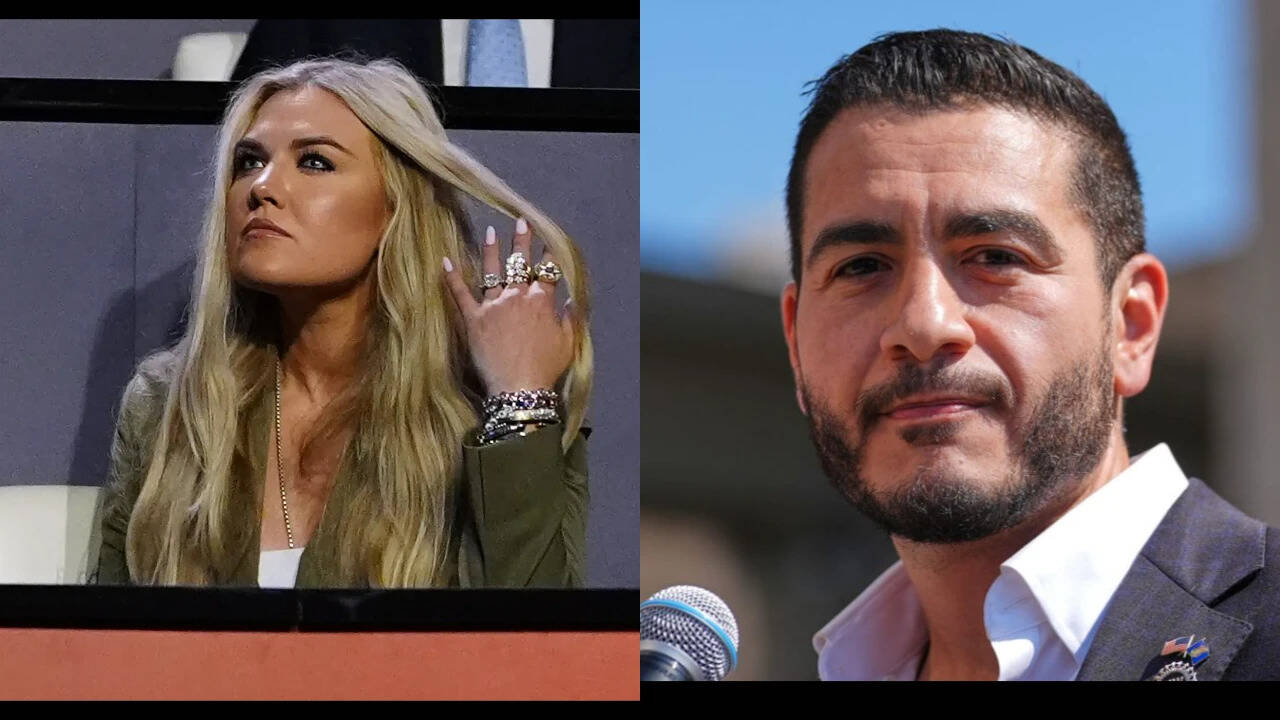
Language matters in politics. When newly elected US Senator Abdul El-Sayed took the stage at an Arab American leadership summit and called Michigan the "capital of Arab America," he probably knew it would draw attention. He just didn't expect the immediate, fierce pushback from conservative figures like Erika Kirk.
The remark lit up social media within hours. Kirk fired back on X with a sharp correction, stating that there is no "Arab America," only the United States of America. This clash isn't just a petty online spat. It touches on deep, unresolved questions about assimilation, hyphenated identities, and what it actually means to belong in modern America.
The Context Behind the Historic Senate Win
To understand why this phrase triggered such a heated response, you have to look at the political landscape. El-Sayed just pulled off a monumental victory in Michigan's Senate race, defeating Republican challenger Mike Rogers. In doing so, he made history as the first Muslim elected to the United States Senate.
That kind of breakthrough carries immense weight. For communities that have historically felt marginalized or scrutinized in American politics, seeing one of their own reach the highest legislative body in the country is a massive milestone. El-Sayed addressed this directly at the CONNECT Arab America Empowerment Summit in Chantilly, Virginia. He spoke about identity, noting that some critics often try to place an asterisk on the American identity of citizens who grew up speaking different languages or whose parents immigrated from overseas.
His point was meant to be unifying. He argued that despite diverse backgrounds, what binds Arab Americans together is America itself. But using the phrase "capital of Arab America" gave critics an opening to attack.
Why Erika Kirk and Conservatives Drew a Hard Line
Erika Kirk, CEO of Turning Point USA and the widow of prominent conservative activist Charlie Kirk, represents a very different strain of political thought. For many on the right, hyphenated identities or regional claims that emphasize ethnic or cultural groups over national unity are viewed with immediate suspicion.
When Kirk posted that there is only the United States of America, she was tapping into a long-standing nationalist viewpoint. This perspective holds that any public framing dividing the populace into distinct cultural enclaves weakens the national fabric. To critics sharing this view, calling any geographic region the capital of a specific diaspora group sounds less like cultural pride and more like balkanization.
It exposes a fundamental philosophical split in the country. One side sees cultural distinctiveness and hyphenated pride as core strengths of a multicultural democracy. The other side views national identity as singular and indivisible, arguing that emphasizing sub-groups erodes the shared civic bond required to keep a republic functioning.
Michigan and the Realities of Cultural Enclaves
Michigan sits right at the center of this cultural tug-of-war. The Detroit metropolitan area—specifically cities like Dearborn—hosts one of the most vibrant and established Arab American communities in the entire country. People tracing their heritage to Lebanon, Yemen, Iraq, Egypt, and beyond have built deep roots, local institutions, and thriving businesses there over generations.
Local residents don't see a contradiction in being fiercely proud of their heritage while remaining deeply patriotic Americans. Communities across America have long maintained cultural hubs, from Little Italy to Chinatown. These enclaves offer community support, religious institutions, and familiar food, while their residents participate fully in civic and economic life.
Yet, political figures walking onto national stages must navigate these symbols carefully. What sounds like a proud nod to a loyal constituency at an empowerment summit can easily be weaponized by political opponents looking to frame a candidate as more loyal to a diaspora than to the country at large. El-Sayed faced intense scrutiny throughout his campaign regarding his background and religion, making his choice of words a gift to critics looking for proof of divided loyalties.
The Broader Meaning for American Politics
This quick exchange on social media highlights how fragile political harmony remains around identity politics. As the country grows more diverse, the friction between wanting cultural visibility and maintaining a cohesive national identity is going to get louder, not quieter.
Politicians will keep walking this tightrope. They need to energize specific voting blocs by acknowledging their unique struggles and triumphs, but they also have to appeal to a broader electorate that gets deeply uneasy when national unity feels secondary to regional or ethnic branding.
The debate won't end with this single headline. Expect the tension between melting-pot nationalism and mosaic multiculturalism to shape campaign trails for years to come.



