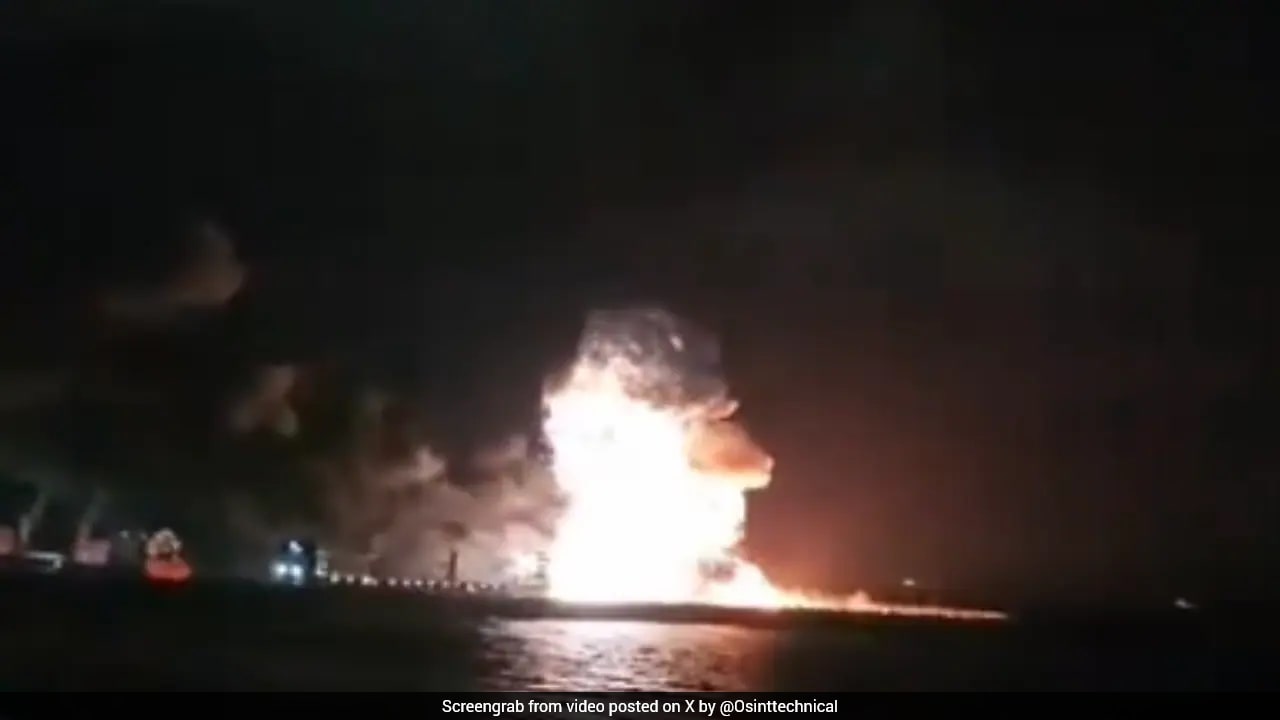
A Russian warship burning in Libya isn't just a shocking clip on social media. It's a wake-up call that the naval war linked to Ukraine now reaches right across the Mediterranean.
On November 22, 2026, explosions hit a Russian Navy corvette docked at Benghazi in eastern Libya, leaving the vessel capsized and mostly sunk in satellite imagery reviewed by outlets including Al Jazeera and The Guardian. Libyan officials pointed to a suspected sea drone strike while the ship was taking on fuel and supplies. Neither Moscow nor Kyiv has officially claimed responsibility, yet the footage and satellite frames tell a bigger story than a quick wire item ever could.
If you've watched those clips wondering how an unmanned boat blew up a modern warship hundreds of miles from the Black Sea, you're asking the right question. Most short wire pieces stop at the headline and a few sketchy eyewitness lines. Let's look closer at what actually happened, what the video and satellite evidence show, and why Libya sits right in the middle of this fight.
What the Video and Satellite Images Actually Show
Early reports from local outlets were messy. First came talk of a blast at an ammunition depot near a naval base. Soon after, eastern Libyan authorities said the explosion happened on board a Russian ship moored in the port.
Satellite imagery from Vantor, reported by news agencies including Reuters and Al Jazeera, identified the struck warship as the Merkury, a Project 20380 Steregushchiy-class corvette. Images from Sunday, November 22, showed smoke rising from part of the superstructure, debris scattered along the pier, and most of the hull rolled over and submerged—with only the bow still sticking out of the water.
Clips circulating online and discussed in reporting showed an explosive-laden unmanned surface vessel heading straight toward the hull before a massive blast erupted. Officials speaking to the Associated Press indicated that several drones were intercepted off Benghazi while two struck the warship, triggering the detonation.
Watch out for one common trap when scrolling war clips on X or Telegram. People frequently recycle old footage from completely different theaters—the Black Sea, the Red Sea, or earlier port fires—and slap a fresh caption on it. Even when a real clip surfaces, low-resolution night video can make a small fire look like a total wreck, or make a distant dock look closer to civilian neighborhoods than it is. Pairing ground clips with timestamped commercial satellite imagery is how analysts separate real damage from recycled noise.
How a Suspected Ukraine Drone Attack Reached Benghazi
For years, naval drones were mostly associated with strikes around Crimea and the western Black Sea. Seeing suspected Ukrainian sea drones hit a warship in eastern Libya shows how far unmanned maritime warfare has stretched.
According to Associated Press reporting citing officials, Ukrainian sea drones were launched at the vessel from a base operated by Ukrainian forces in western Libya. Earlier in 2026, in March, Libyan officials told the Associated Press that Ukrainian drone specialists had been operating mainly out of an air base in Misrata, as well as facilities near Tripoli and Zawiya, and had previously struck a Russian tanker in the Mediterranean near Maltese waters.
That's a huge detail most quick summaries gloss over. A sea drone doesn't have to cross the entire Mediterranean from Odesa in one shot if launch teams or support nodes are closer to the target zone. Small, cheap, explosive-packed surface craft are tough for traditional radar and legacy harbor guards to spot early, especially around busy ports where commercial traffic and coastal clutter blend together.
And this wasn't a one-off flare-up on November 22. Later that same Sunday evening, reports emerged of a separate sea drone strike hitting a commercial vessel—described in reporting as a Maltese-flagged ship and identified in open-source reporting as the cargo vessel Ascalon—off Benghazi. Local television channels such as Almasar reported that forces destroyed at least 12 sea drones off the city. Meanwhile, across Europe that same weekend, Russian-linked cargo and naval vessels in the Baltic and Gulf of Finland were also hit or reported in distress during separate drone incidents.
Why Libya Is Caught Between Rival Governments and Foreign Powers
Honestly, Libya hasn't had a normal sovereign security environment for over a decade, and foreign powers keep treating its coastline like an open chessboard.
Eastern Libya—including Benghazi—is controlled by forces aligned with General Khalifa Haftar's eastern administration, which maintains ties and cooperation agreements with Moscow. According to eastern Libyan officials, the Russian warship had docked in Benghazi to refuel and take on supplies on its way back toward Russia.
Western Libya, centered around Tripoli, is home to a rival government that reacted sharply to the strikes. Authorities in Tripoli warned against dragging Libyan ports and civilian infrastructure into foreign wars, insisting Libya shouldn't be turned into a stage for outside powers to settle scores. Even the eastern administration called the strike a violation of sovereignty and port security, announcing plans for a joint investigation with Russian authorities.
If you're a Libyan port worker, a local fisherman, or someone living near the waterfront, those political lines don't stop shrapnel or fuel slicks. A strike inside or just outside a working port puts nearby ships, dock workers, and coastal infrastructure at risk—even when a warship is the primary target.
What Is Confirmed vs. What Remains Unclear
When breaking news moves fast, good analysis means admitting what we don't know yet instead of filling in the blanks with guesswork.
Here is what is backed by strong reporting and satellite imagery right now:
- An explosion hit a Russian Navy corvette, the Merkury, at Benghazi on November 22, 2026, leaving the vessel capsized and largely sunk in Vantor satellite imagery.
- Eastern Libyan officials attributed the blast to a suspected drone attack while the vessel was refueling and resupplying.
- A second incident involving a sea drone and a commercial or cargo vessel off Benghazi was reported later the same day, alongside reports of multiple drones intercepted off the coast.
Here is what still lacks full public verification:
- Neither Russia nor Ukraine has issued an official claim or detailed confirmation of responsibility.
- Casualty counts and nationalities remain incomplete, with mixed local reports of fatalities among Libyan and Russian personnel alongside official statements noting rescued crew members and minor injuries.
- Exact tactical details—such as the precise drone model used and how all launch paths were coordinated—depend on ongoing investigations and intelligence assessments.
Practical Ways to Track This Story Without Getting Fooled
You don't need an intelligence clearance to follow maritime drone incidents smartly. A few habits will save you from bad rumors every time:
- Check timestamps and landmarks first. Look for shadows, crane shapes, breakwater geometry, and daylight conditions in any clip, then cross-check against verified reporting from outlets like Reuters or Al Jazeera.
- Separate the warship strike from the second vessel report. Two maritime incidents in one day in the same area can get tangled together fast in social threads; track each ship's status separately.
- Watch official statements from both sides of Libya. Pay attention to how eastern authorities and Tripoli frame port security and foreign involvement, since Libyan politics will shape whether foreign naval access tightens or escalates.
- Look for broader maritime patterns. Keep an eye on shipping advisories and reports from the Mediterranean to the Baltic—unmanned surface and aerial strikes against logistics and naval vessels are no longer confined to a single sea.
The big takeaway is simple: modern naval conflict doesn't stay neatly inside a war zone anymore. Wherever military logistics and fractured local politics meet a coastline, unmanned weapons can turn a routine port stop into an international crisis overnight.