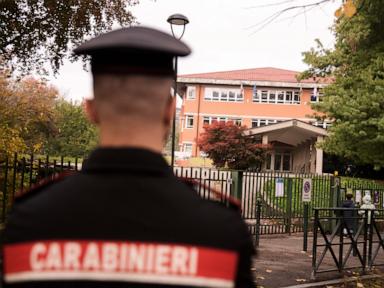
Panic swept through Italian towns and cities as at least 300 Italian schools were forced into sudden evacuations following a coordinated wave of bomb threats sent via email.
Picture the scene at Rome's historic Mamiani high school. Students poured onto the streets under the chaotic assumption that a blaring alarm signaled the start of recess, only to discover moments later that law enforcement had ordered an emergency evacuation. The threatening emails, bearing violent warnings and traced back by government sources to fictitious aliases like "Mikhail Andropov," targeted educational institutions from Rome and Naples to Florence, Pisa, and Venice.
Prime Minister Giorgia Meloni and Education Minister Giuseppe Valditara quickly stepped forward to calm the public. Authorities confirmed that the widespread alerts showed no signs of a genuine, concrete danger. Officials classified the incident as a calculated psychological disruption rather than an authentic security breach. Yet, the real-world friction was immediate. Parents rushed to school gates, classes ground to a halt, and local police branches spent hours scouring buildings for non-existent explosive devices.
The Anatomy of Modern Hybrid Warfare
Why target classrooms with fake explosives? Security experts point straight to the rising tide of hybrid warfare tactics plaguing Europe. These campaigns go beyond traditional geopolitical conflict. They weaponize digital anxiety to paralyze everyday civil infrastructure.
Supermarkets, blood banks, air traffic networks, and TV broadcasters have all faced similar disruptions across the continent. By flooding hundreds of institutions with terrifying emails simultaneously, bad
Why 300 Italian schools facing bomb threats is a wake-up call about digital security
news
Panic swept across Italy when roughly 300 schools received sudden bomb threats, sending students streaming into courtyards and forcing frantic emergency responses. It is the kind of massive disruption that paralyzes communities instantly. When classrooms empty out and police tape blocks off entrances, life stops.
Yet, beneath the initial shock lies a more insidious reality. These threats rarely involve actual explosives. Instead, they rely on a weapon that costs nothing to deploy and requires zero physical infrastructure: psychological terror delivered via digital channels.
The anatomy of a mass digital threat
Coordination is everything in modern disruption. When an attacker targets a single building, police handle it locally. When someone blasts identical or sequential threats across 300 institutions in multiple regions simultaneously, local response plans break down.
Italy's recent wave of school evacuations demonstrates a grim operational playbook. Threat actors often use spoofed email addresses, encrypted messaging apps, or automated scripts to blast warnings to administrative offices before anyone opens their morning inbox.
The goal isn't destruction. The goal is chaos.
Think about the logistical nightmare. Hundreds of headmasters must make split-second decisions with incomplete information. Do you risk student safety by ignoring a message, or do you clear the building and disrupt thousands of families based on an anonymous email that is almost certainly a hoax?
Administrators always choose caution. Attackers know this, weaponizing institutional responsibility against the very people tasked with protecting kids.
Why schools remain vulnerable targets
Schools are soft targets. Open doors, public-facing contact directories, and decentralized management structures make them remarkably easy to target from halfway across the world.
If you want to paralyze public life without firing a shot, you don't attack a heavily guarded military base. You target a kindergarten or a high school.
Italy isn't alone in facing this specific brand of digital harassment. Similar waves of swatting and mass hoax threats have plagued educational systems across Europe and North America over the past few years. The barrier to entry for causing widespread panic has dropped to zero. Anyone with an internet connection and a grudge can marshal the resources of an entire nation's emergency services with a few keystrokes.
Security budgets in public education are notoriously thin. While banks and tech firms spend millions on threat intelligence and perimeter defense, public schools often struggle to afford basic IT infrastructure, let alone advanced email filtering and crisis response training for administrative staff.
The cost of crying wolf
Every time a mass threat turns out to be a hoax, officials breathe a sigh of relief. But the damage doesn't vanish when the all-clear sounds.
First, there is the economic drag. Police officers, bomb squads, and firefighters waste precious hours clearing buildings that pose no actual danger. That is manpower pulled away from genuine emergencies.
Second, disruption compounds over time. When students face weekly evacuations, education grinds to a halt. Exams get canceled, lesson plans fracture, and kids learn to treat severe safety protocols with cynical indifference.
When the boy who cried wolf becomes a daily routine, people stop running. That fatigue is dangerous. If a real threat ever accompanies the noise, the hesitation caused by past hoaxes could prove fatal.
How to build resilience against digital terror
We cannot stop bad actors from sending malicious emails. The architecture of the global internet makes total prevention nearly impossible. What we can change is how institutions absorb the blow.
Institutions need standardized threat-assessment protocols that allow authorities to vet digital messages rapidly before ordering a full-scale evacuation. If law enforcement can trace a pattern or identify a signature hoax format within minutes, schools can shelter in place or maintain operations under heightened security rather than dumping thousands of children onto public streets blindly.
Furthermore, governments need to treat digital harassment targeting public infrastructure with the same severity as physical sabotage. Anonymity online shouldn't shield people who terrorize hundreds of thousands of families.
Until law enforcement agencies globally develop faster attribution methods and harsher penalties for cyber-disruption, schools will remain on the front lines of an asymmetrical war fought entirely through fear.



