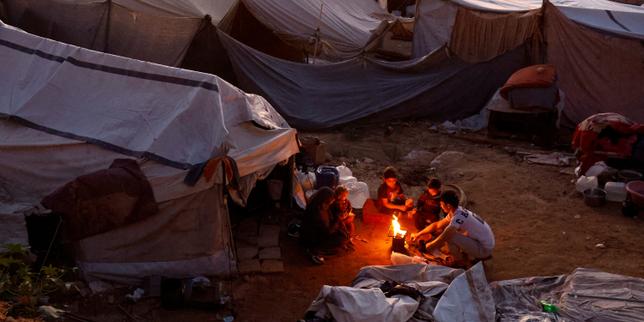
The rain didn't just fall in Khan Younis; it drowned what little shelter remained. Families woke up to freezing water flooding every corner of their makeshift camps, but the worst horror struck one father who discovered his nine-month-old baby, Kinan Ahmed Arqiq, had stopped breathing in the biting cold. Medical sources and rescue workers confirmed the infant died of hypothermia inside a tent completely stripped of heating or insulation.
It's a brutal reality that defines the humanitarian crisis in Gaza right now. When temperatures plunge and relentless downpours swamp tens of thousands of displacement tents, the elements become as lethal as any weapon.
The Human Cost Behind the Statistics
You hear numbers tossed around in global news reports, but they rarely capture what it feels like to watch your child turn blue in the middle of the night. Kinan's father rushed him to the Nasser Medical Complex, where doctors fought in vain to revive the infant. Hypothermia doesn't wait for international committees to debate logistics. It sets in fast when canvas walls offer zero barrier against freezing winds and soaked ground.
The UN children's agency, UNICEF, has warned repeatedly that this is only the beginning. Winter hasn't even officially arrived, yet unprecedented cold fronts and torrential rains are already punishing a population where roughly 1.7 million people live in makeshift shelters or damaged buildings.
Why Tents Fail Against the Elements
Most people outside the region assume a tent provides basic refuge. It doesn't. These aren't camping gear designed for alpine conditions; they're flimsy sheets of plastic and fabric stretched over salvaged poles.
- Zero insulation: Ground temperatures seep straight through thin blankets and plastic sheeting.
- Flooding hazards: Heavy storms turn camp floors into mud pits, soaking mattresses and clothing.
- Total lack of fuel: Blockades and severe shortages mean families burn plastic or scraps just to stay warm, risking toxic fumes because proper heating equipment is blocked or unavailable.
Aid organizations like OCHA point out that tens of thousands of households are affected by these storms. Shelters collapse under the weight of water, embankments give way, and children bear the brunt of the physiological shock.
The Broader Humanitarian Breakdown
The tragedy in Khan Younis isn't an isolated accident. It's the predictable outcome of a shattered infrastructure where basic survival needs are unmet. Medical teams report surging cases of respiratory infections, severe hypothermia, and waterborne illnesses among infants and toddlers.
Hospitals like Nasser are overwhelmed, operating under constant strain with critical shortages of medicine and equipment. While international agencies attempt to coordinate winterization supplies—bringing in thousands of tents and blankets—the sheer scale of need leaves massive gaps. Thousands of patients still wait for medical evacuations that rarely come fast enough.
When a nine-month-old baby dies in his father's arms from simple exposure, it exposes the absolute failure of the global community to secure basic human dignity for millions of displaced civilians. Winter is here, and survival is a daily gamble.



