The lines between public assembly and municipal gatekeeping just got a whole lot sharper in New South Wales. If you've been following environmental direct action around Australia's coastline, you already know that Newcastle occupies a massive strategic and symbolic footprint. As home to the world's largest coal port, the city serves as a primary pressure point for climate advocacy. Now, local authorities have drawn a definitive line in the sand by barring the activist organization Rising Tide from using council-managed land for future protests.
It's a move that forces a messy conversation about public space, civil disobedience, and where local government authority ends and democratic expression begins. When councils start issuing blanket bans against specific activist networks, they aren't just managing local parks or waterfront boardwalks. They are actively reshaping how dissent operates in public view.
The Mechanics of Municipal Bans
Municipal land is traditionally viewed as common ground. Parks, reserves, and foreshores belong to the community, which theoretically includes citizens who want to assemble and voice grievances against corporate or government policies. By cutting off access to these spaces for Rising Tide, the Newcastle council is utilizing administrative policy to curb high-visibility demonstrations.
Critics argue that administrative bans set a dangerous precedent. If a council can block a specific group based on past disruptions or political friction, what stops them from targeting other activist movements tomorrow? On the flip side, local leaders and municipal stakeholders frequently point to the immense logistical burdens, safety risks, and economic disruption associated with massive blockades at critical infrastructure hubs.
Port operations of this scale aren't just local economic engines. They are multi-billion-dollar cogs in global commodity chains. When protests shut down shipping lanes or coal loaders, the financial and security repercussions ripple outward immediately. Municipal authorities often find themselves caught directly in the middle, pressured by state governments, police forces, and corporate operators to maintain order at all costs.
Why Protests at Newcastle Matter So Much
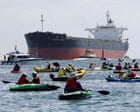
You can't understand this ban without looking at the scale of what Rising Tide has built in the Hunter Region. Over recent years, mass paddle-outs and land-based blockades targeting the Port of Newcastle have drawn thousands of participants from across the country. These aren't small, fly-by-night operations. They are meticulously organized, highly visible spectacles designed to capture national and international headlines.
The strategy relies entirely on geography. As long as the world's largest coal export port sits right there on the NSW coast, it will act as a lightning rod for climate action. Activists know that targeting financial and logistical bottlenecks forces corporations and lawmakers to confront emissions metrics in a way that petitions and parliamentary lobbying simply cannot replicate.
Yet, the escalation of tactics tends to breed an escalation of countermeasures. Governments across Australia have progressively tightened laws surrounding public protests, introducing steeper penalties for blocking traffic, ports, and rail lines. Banning a group from council land is simply the latest tool in that expanding legislative and administrative toolkit.
The Free Speech Versus Public Order Debate
At its core, this situation exposes a permanent friction point in modern democracies. Where is the legal and moral boundary between disruptive protest and public nuisance?
Governments have an obligation to keep critical infrastructure running and ensure public safety. Citizens have a recognized, albeit increasingly regulated, right to peaceful assembly. When those two imperatives crash head-on, compromise often evaporates. Blanket bans on specific organizations tend to radicalize rather than resolve underlying tensions. When peaceful avenues and visible public spaces are closed off, movements rarely disappear. They simply mutate, finding new, less predictable ways to make noise.
Municipal land bans might offer short-term relief to local councils and port operators looking to clear the waterfront. But they do nothing to address the core grievances driving thousands of people to risk arrest on the Newcastle coastline. As climate pressures intensify globally, local councils will find that administrative walls are a weak substitute for actual engagement with the future of energy and industry.