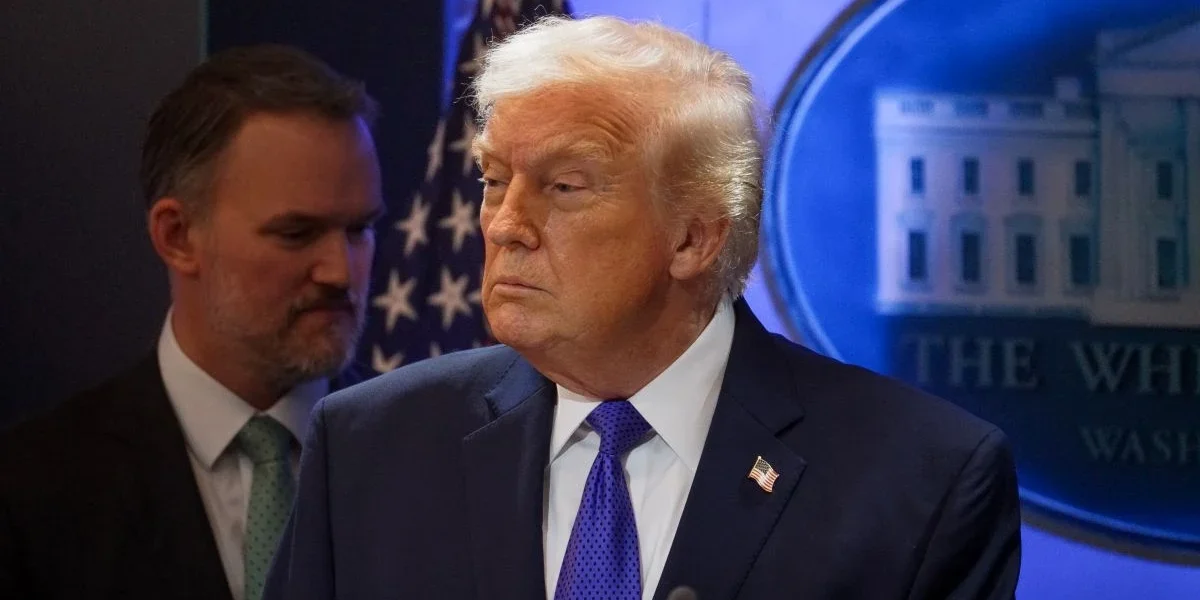
History rarely happens cleanly. Most of the time, it stumbles forward in messy rooms filled with competing egos, shifting alliances, and unyielding geopolitical ambitions. Next week, the world's most influential and controversial leaders will step into a single room in Shenzhen. US President Donald Trump, Chinese President Xi Jinping, and Russian President Vladimir Putin are set to convene for the first trilateral summit of its kind.
If you glance at mainstream coverage, you will see plenty of hand-wringing about shifting global orders and dramatic predictions of a new bipolar world. Strip away the media noise, however, and a much sharper reality emerges. This meeting isn't about finding sudden global harmony. It’s a high-stakes collision of self-interests happening because the old rules of international security have completely shattered.
Why Shenzhen is Hosting the Most Dangerous Table in Modern Politics
The venue itself tells a story. Set against the backdrop of the Asia-Pacific Economic Cooperation (APEC) summit in Shenzhen, these talks bring together three leaders who represent economies accounting for roughly 62 percent of global GDP and half of global trade. Shenzhen is a fitting canvas. It is a sprawling tech capital that symbolizes China’s meteoric rise, manufacturing might, and digital dominance.
When Trump arrives in Shenzhen late Wednesday following bilateral coordination, he walks into a dynamic that looks nothing like the Cold War architecture older analysts love to reference. Back then, alliances were rigid and ideological lines were drawn in concrete. Today, transactional diplomacy rules the day. Trump wants specific economic concessions and arms control frameworks. Xi wants strategic breathing room, technological protection, and recognition of China's core sovereign red lines. Putin wants legitimacy, sanctions relief, and a seat at the table where the world's heavyweights dictate terms. Additional information regarding the matter are explored by NBC News.
Nobody is walking into this summit to make friends. They are showing up because ignoring each other carries a catastrophic cost.
The Nuclear Elephant in the Room
The primary substantive anchor for this meeting is nuclear arms control, and for good reason. Earlier this year, the last major nuclear arms treaty between Washington and Moscow quietly expired. For the first time in more than fifty years, the world’s two largest atomic arsenals operate without legal caps or verification frameworks.
That terrifies strategic planners on both sides of the Atlantic. But the United States isn't just worried about Russia anymore. Washington’s calculus now centers heavily on Beijing. Pentagon estimates place China’s nuclear stockpile at well over 600 warheads. While that number still trails the five thousand plus warheads held by the US and Russia, China’s arsenal is expanding faster than any other on Earth.
American officials have made it clear behind closed doors that it is time for Beijing to step up to the adult table of global strategic stability. China has historically resisted joining bilateral US-Russian frameworks, arguing that its stockpile is defensive and vastly smaller. Whether Xi is willing to entertain multilateral arms talks in Shenzhen remains an open question. Don't expect a signed treaty on day one. Simply getting the three powers to acknowledge a shared responsibility to prevent nuclear proliferation at the same table is a victory in itself.
Why Ukraine is Noticeably Missing from the Agenda
If you assume the brutal war in Ukraine will dominate the conversation, think again. Senior administration officials have already signaled that the conflict in Eastern Europe will not feature in the trilateral talks.
That decision surprises many casual observers, but it makes cold, hard diplomatic sense. Washington maintains a completely separate, dedicated negotiation track with Moscow regarding Ukraine, engaging through specialized diplomatic channels. China has positioned itself as a sympathetic neutral actor toward Moscow while officially avoiding direct military entanglement, meaning Beijing is not a primary party to those specific ceasefire mechanics.
Dragging the Ukraine crisis into a messy three-way summit with Xi would only dilute the core agenda. US planners know that mixing regional European land disputes with global nuclear deterrence and Pacific trade friction creates a recipe for gridlock. By carving Ukraine out of the room, the participants keep the focus sharp enough to maintain a functional dialogue.
The Iran Crisis and Regional Realities
While Ukraine stays off the table, the widening war in Iran will not. The Middle East is bleeding into global supply chains, energy markets, and shipping lanes. Washington is intensely focused on curbing regional escalation that threatens global economic stability.
China relies heavily on Middle Eastern energy imports, giving Beijing a direct stake in regional containment. Russia, meanwhile, maintains deep military and intelligence ties with Tehran. Trump intends to press both leaders on regional stability, demanding a clearer accounting of how their partnerships affect international security. It's a classic pressure play. Trump uses economic leverage and bilateral leverage with Xi—whom he has already met multiple times since returning to office—to test whether Beijing is willing to act as a stabilizing restraint on unruly regional actors.
The Elon Musk Subplot in the Background
No major international visit involving the current American administration happens without a corporate heavyweight trailing close behind. Billionaire entrepreneur Elon Musk is expected to accompany Trump on his journey to China.
Before you start imagining tech moguls sitting across from Vladimir Putin to negotiate geopolitical treaties, pump the brakes. US officials have explicitly clarified that Musk will not participate in the trilateral meeting. His presence is tied to broader economic ecosystems, commercial interests, and technological touchpoints. At the same time, Washington has maintained a firm wall separating these commercial delegations from sensitive national security talks. Export controls on advanced semiconductor technology and microchip restrictions—at the heart of fierce global trade battles—remain non-negotiable policy items. Musk is on the plane, but he isn't holding the pen on nuclear doctrine.
Managing Expectations for a Historic Photo-Op
History teaches us to be deeply suspicious of summits that promise the world and deliver a handshake. Senior US diplomats have spent the days leading up to the Shenzhen gathering dampening expectations. They aren't expecting a breakthrough. They are expecting a baseline.
For years, great power competition has trended dangerously toward open confrontation. Lines of communication have frayed. Miscalculations in the South China Sea, Eastern Europe, or the Middle East carry the risk of cascading into total conflict. A trilateral meeting forces top decision-makers to look each other in the eye, test their adversary's bottom lines, and establish personal channels that bypass bureaucratic filters.
When Trump, Xi, and Putin sit down on November 19, look past the grand rhetoric and the predictable media spin. Watch the subtle shifts. Watch whether Beijing agrees to even preliminary discussions on strategic stability. Watch how Washington balances economic rivalry with existential security.
The old global order is dead. What replaces it is being hammered out right now behind closed doors in Shenzhen.