For the first time in history, the world's highest court has held a state responsible for committing genocide. On November 19, 2026, the International Court of Justice ruled in a 9-6 decision that Myanmar committed genocide against its Rohingya minority during the 2017 military operations in northern Rakhine State, violating the 1948 Genocide Convention.
Let's be honest about what that means. A binding ruling from The Hague isn't a magic wand that opens borders tomorrow or puts generals behind bars overnight. Yet writing it off as "just paper" misses how international law actually moves. When judges in The Gambia v. Myanmar concluded that the "only reasonable inference" from the military's campaign was an intent to destroy a substantial part of the Rohingya population, they crossed a threshold that no state had ever crossed before at the ICJ.
Why the Myanmar Genocide Ruling Hits Different
Most breaking news summaries stop at the headline verdict. They tell you Myanmar lost, mention the 2017 crackdown, and move on. That leaves out the legal mechanics that make this judgment a genuine turning point—and the hard realities that keep people from celebrating too soon. Further analysis by Reuters delves into related perspectives on this issue.
When The Gambia filed this case back in November 2019, plenty of seasoned international lawyers figured proving dolus specialis—the specific intent to destroy a protected group in whole or in part—would be an uphill slog. Past ICJ cases involving former Yugoslavia set a notoriously high bar. Military regimes routinely hide behind "counter-insurgency" excuses, claiming brutality was a side effect of fighting armed groups rather than a deliberate plan to wipe out a community.
President Yuji Iwasawa and the majority rejected that excuse flatly. The court pointed to patterns that went far beyond ordinary military operations: an estimated 10,000 Rohingya killed during clearance operations, widespread sexual violence, extreme violence against children, attacks on people fleeing toward Bangladesh, and the systematic destruction of villages followed by bulldozing and rapid construction of new infrastructure and security sites.
If you want to understand why this matters beyond Southeast Asia, look at timing. Judges at the ICJ are also weighing genocide claims in other high-stakes disputes, including cases involving Gaza and Ukraine. How the court treats circumstantial proof, military justifications, and third-party investigative reports here sets real doctrinal markers.
The Votes Behind the Verdict
The core finding on committing genocide passed 9-6, showing real friction even among a 15-judge bench that included prominent international jurists like Navi Pillay. Other parts of the ruling carried wider margins.
The court found by 11-4 that Myanmar failed in its duty to punish genocide, and by 14-1 that it failed to enact domestic legislation giving effect to the Genocide Convention. By 13-2, judges ordered Myanmar to take immediate, effective steps to investigate suspects, while the order to offer guarantees of non-repetition and prevent further violations passed 9-6.
What the Court Actually Ordered Myanmar to Do
A moral condemnation feels good in a press release, yet legal remedies are where the rubber meets the road. The ICJ didn't just scold Myanmar; it laid out concrete obligations under international law.
First, Myanmar must investigate all persons reasonably suspected of committing acts contrary to the Genocide Convention. Second, the court ordered restitution for Rohingya victims and their community—and where full restitution isn't possible, compensation. Myanmar has two years from the judgment to report back to the court on steps taken toward restitution or compensation.
Gambia's broader push for justice also highlighted what real redress looks like on the ground: safe, voluntary, and dignified return for displaced people, restoration of citizenship and freedom of movement, property recovery, family reunification, physical and mental rehabilitation, and respectful recovery and reburial of the dead.
Three Myths About International Justice That Trip People Up
Whenever a big court ruling drops, I see the same misconceptions pop up across social feeds and dinner-table debates. Clearing them up saves a lot of false hope—and misplaced cynicism.
- Myth one: The ICJ puts individual generals in prison. Wrong court. The International Court of Justice settles disputes between states. Individual criminal responsibility belongs to bodies like the International Criminal Court or national courts acting under universal jurisdiction (for instance, an Argentine court issued arrest warrants in 2025 against dozens of figures, including Min Aung Hlaing).
- Myth two: A binding ruling enforces itself. ICJ judgments are final and binding with no appeal, yet the court has no police force or army of its own. Enforcement leans heavily on political pressure, UN Security Council action, sanctions, and diplomatic leverage.
- Myth three: Refugees can pack their bags and head home right away. Sending people back into active conflict without security guarantees or legal rights isn't justice; it's a trap. UN High Commissioner for Human Rights Volker Türk stressed that returns must wait until conditions are genuinely safe and sustainable, alongside restoring citizenship.
The Messy Reality on the Ground in 2026
Here's the part you can't ignore if you care about what happens next. Myanmar isn't a neat, unified state waiting to obey a court order from The Hague.
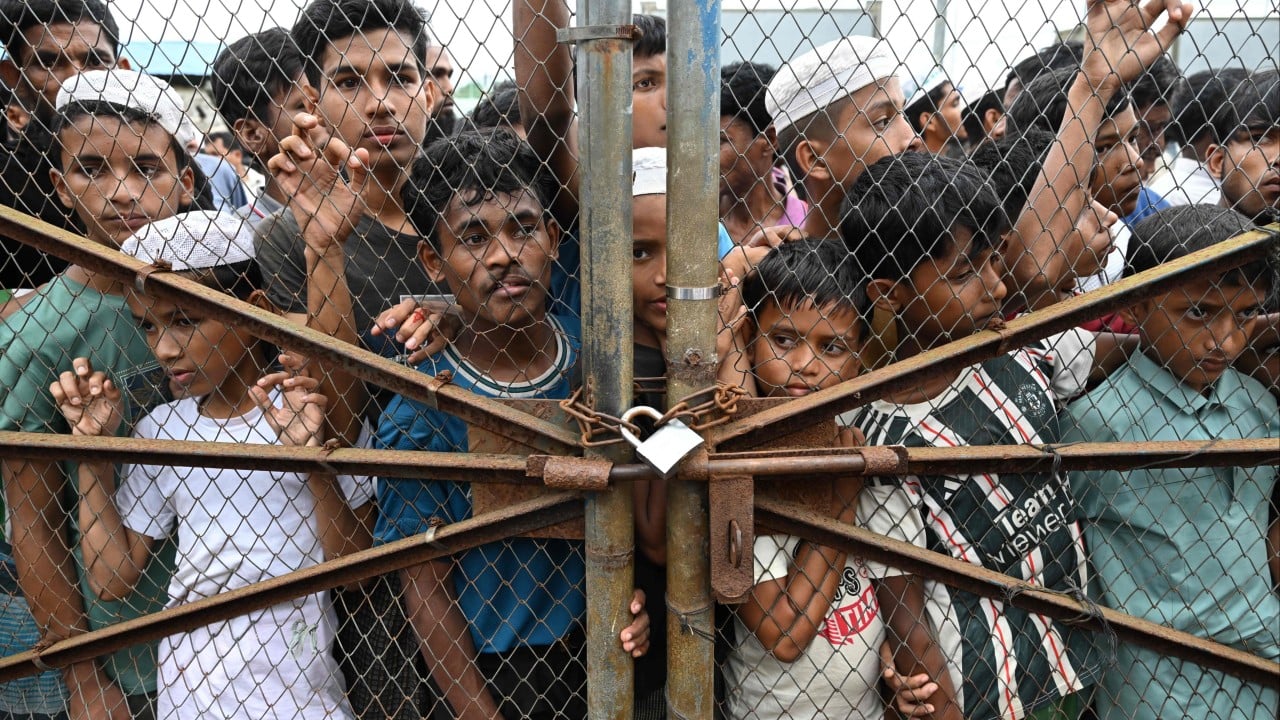
Fighting and shifting territorial control across Rakhine State complicate everything. Human rights voices—including members of the Special Advisory Council for Myanmar—have pointed out that the Arakan Army controls much of Rakhine State, while Myanmar's military junta and opposition bodies like the National Unity Government operate in a fractured landscape. More than 700,000 Rohingya fled in the 2017 wave alone, and over one million refugees remain displaced in camps like Cox's Bazar in Bangladesh, often facing tight funding and aid strain.
In other words, legal accountability and physical safety don't move at the same speed. Governments like the United Kingdom moved quickly after the verdict—expelling Myanmar's defense attaché and pushing for urgent UN Security Council discussion—yet turning diplomatic heat into durable protection inside Rakhine State will take years of grinding work.
What You Can Actually Do Next
If you're reading this because you want to stay informed or help rather than just doomscroll, skip vague hashtags and pick one concrete move:
- Read the primary sources. Check the International Court of Justice press releases and full judgment text alongside reporting from UN News so you don't rely on second-hand hot takes.
- Track compliance, not just headlines. Watch the two-year reporting clock on reparations and compensation, plus any UN Security Council follow-up and sanctions moves.
- Support vetted humanitarian and legal work. Look into established human rights and refugee organizations—such as Human Rights Watch or Amnesty International—and verify how aid funds reach Rohingya communities in Bangladesh and across the region.
- Push back on online hate speech. As UN rights officials have warned, online incitement fuels real-world harm; call out falsehoods and dehumanizing rhetoric when you see them spreading.