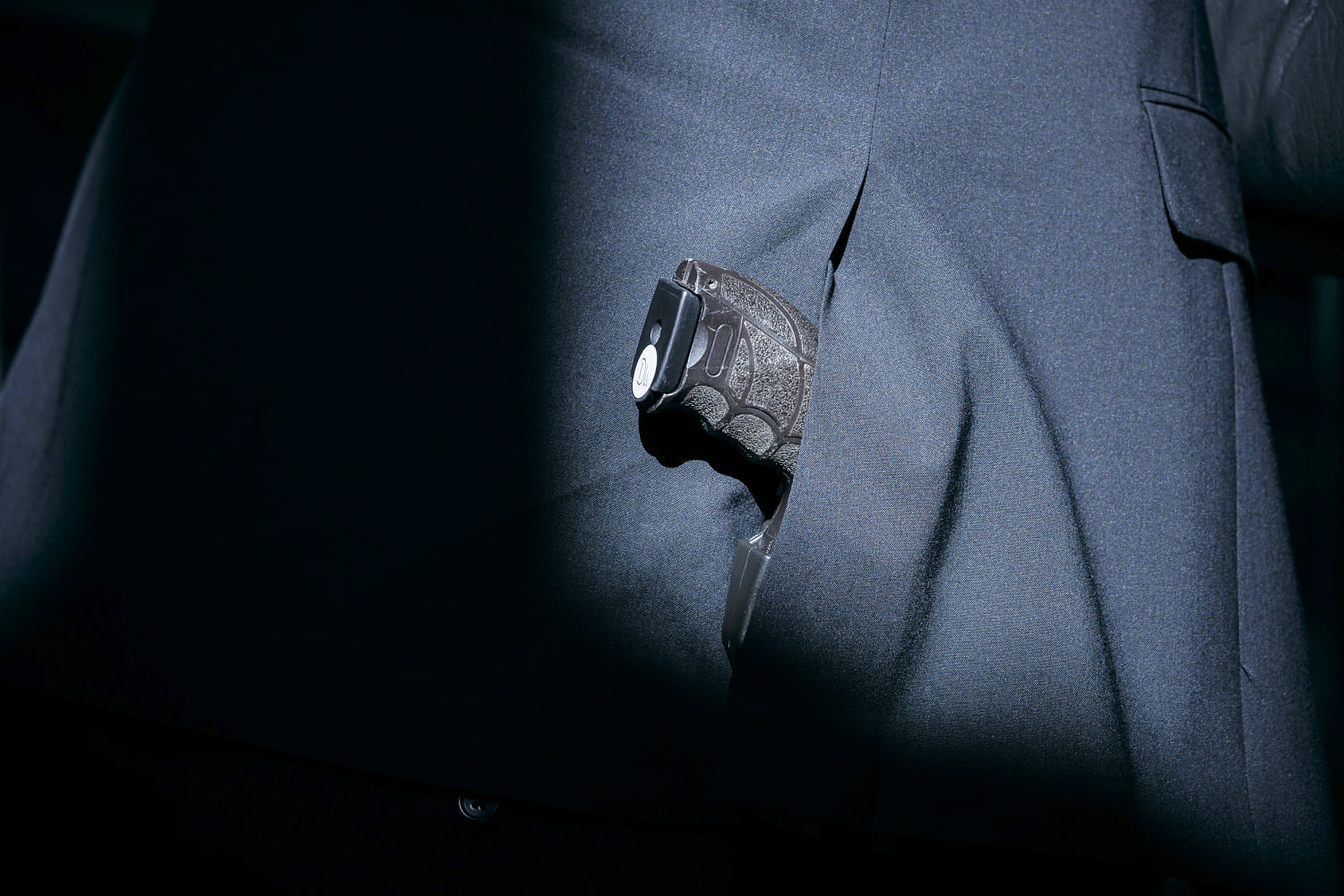
When the Supreme Court turned away a challenge to Maryland's strict firearm restrictions, it sent a quiet but unmistakable message to gun owners and state legislators alike. The high court declined to hear a lawsuit challenging prohibitions on carrying firearms in so-called sensitive places like schools, public transit, and parks. Instead of wading into another high-stakes Second Amendment battle, the justices let a lower-court ruling stand.
If you expected a definitive nationwide rule on where you can legally pack heat, you're out of luck. The refusal leaves a patchwork of state-level restrictions completely intact, fueling a legal battleground that is getting messier by the day.
The Real Battleground Behind the Supreme Court's Silence
Maryland is far from alone in trying to carve out restricted zones. Following the landmark Bruen decision that expanded public carry rights nationwide, several blue states scrambled to redefine what constitutes a "sensitive place." Lawmakers drafted sweeping bans covering everything from bars and healthcare facilities to sprawling state parks and amusement parks.
Gun rights advocates immediately sued, arguing that these restrictions swallow the Second Amendment whole. If you can't carry a firearm in a park, on a bus, or anywhere alcohol is served, the right to bear arms becomes practically meaningless in daily life.
The U.S. Court of Appeals for the Fourth Circuit mostly sided with Maryland, upholding bans in government buildings, schools, transit systems, and recreational areas while striking down a few overreaches like unauthorized private property bans. When the case reached the Supreme Court, petitioners wanted the justices to draw a hard line in the sand.
The court said no. At least for now.
Why the Justices Passed on the Case
Supreme Court watchers shouldn't mistake a denial of cert for an endorsement of Maryland's laws. The justices receive thousands of petitions every term and take only a fraction. Passing on a case lets lower courts wrestle with the fallout of the Bruen historical test a bit longer.
Justice Clarence Thomas made sure everyone knew where he stood, signaling deep skepticism toward sweeping locational bans. He pointed out that historical traditions from the 18th and 19th centuries don't easily support banning firearms across
Why the Supreme Court just dodged the Maryland gun ban fight and what it means for your rights
news
The Supreme Court had a chance to settle the chaotic battle over where you can legally carry a firearm. They passed.
By refusing to step into the fray regarding Maryland's strict sensitive places gun ban, the high court left a massive legal puzzle completely unsolved. If you live in Maryland or follow the shifting landscape of Second Amendment law, you know this isn't just about legal theory. It affects everyday life, local business owners, and gun owners trying to figure out where they can walk without risking arrest.
Lower courts are currently writing the rules on the fly. The Supreme Court's silence signals a messy trial-and-error phase that will take years to clear up. Let's break down what actually happened, why the justices stayed out of it, and how this impacts you right now.
The core conflict behind the Maryland sensitive places gun ban
Maryland passed sweeping legislation designed to keep firearms out of spots like schools, government buildings, health facilities, and private properties unless the owner explicitly opts in. Gun rights groups immediately sued. They argued that turning half the map into a gun-free zone violates the landmark Bruen decision, which stripped away subjective licensing schemes and expanded public carry rights nationwide.
The legal battle centers on a simple question. Can a state declare almost every public space off-limits under the guise of historical tradition?
Gun owners argue that historic firearm restrictions applied to very narrow locations like polling places or courthouses during specific events. They contend that modern laws labeling whole commercial districts, parks, and healthcare centers as sensitive places cross a constitutional line.
State officials counter with a different theory. They claim the state has a fundamental duty to protect public safety in crowded venues, protests, and children's areas. They believe the Second Amendment never meant citizens could bring a Glock into a hospital waiting room or a playground.
Why the Supreme Court refused to step in right now
Everyone expected the Supreme Court to grant certiorari and take up the case. They didn't.
Why? Judicial timing plays a massive role here. The case arrived at the Supreme Court before lower federal courts had fully hashed out preliminary injunctions and final evidentiary hearings on the merits. The justices frequently prefer to let lower appellate courts sweat through the granular details of a law before they issue a final constitutional ruling.
It is basically a procedural punt. The Supreme Court isn't saying Maryland's law is constitutional. They are saying it is too early for them to rule on it.
This hesitation creates a legal purgatory. Gun owners are stuck waiting while circuit judges across the country issue completely contradictory opinions on what constitutes a valid sensitive place.
What happens next on the ground
If you carry a firearm for self-defense, you basically need a law degree just to run errands now.
You cross a municipal line and suddenly find yourself walking past a newly posted gun-free zone sign outside a public park or a privately owned restaurant that hasn't opted in. The patchwork of rules makes accidental violations terrifyingly easy.
The practical reality forces gun owners into extreme caution.
- Check local statutes before traveling: State laws interact with local ordinances in confusing ways. What is legal in one county might land you in handcuffs three miles away.
- Watch private property rules: Maryland's shift toward an "opt-in" default for private businesses means you assume a property bans firearms unless there is an explicit sign or permission allowing them. That flips traditional property norms upside down.
- Expect more litigation: This fight will eventually wind its way back up to the Supreme Court. Until then, every single injunction denial or approval in the district courts acts as a temporary battlefield.
The Supreme Court can dodge the docket today, but they cannot hide from this constitutional clash forever. The Second Amendment fight moved from whether you can get a permit to where you are allowed to stand with it. That conflict is only getting uglier.



