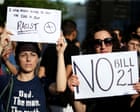
Canada’s top court just drew a sharp line between minority rights and state power. In a 6-1 ruling on Friday morning, the Supreme Court of Canada largely upheld Quebec’s controversial secularism law, Bill 21, keeping its ban on conspicuous religious symbols for public sector workers intact.
If you wear a hijab, turban, kippah, or cross on the job as a teacher, judge, police officer, or Crown lawyer in Quebec, the law still blocks you from doing so in authority roles. Honestly, the decision didn't surprise seasoned constitutional watchers. Yet the way the court split on secondary points, and how governments across Canada will read the fine print, makes this 520-page ruling a massive turning point.
Why This Ruling Matters Beyond Quebec
At its core, this case isn't just about dress codes in Montreal or Quebec City. It's a stress test for the Canadian Charter of Rights and Freedoms and the power of legislatures to sidestep court review.
When Quebec passed Bill 21 in 2019, it pre-emptively invoked Section 33 of the Charter, widely known as the notwithstanding clause. That mechanism lets Parliament or a provincial legislature override certain Charter guarantees—including freedom of religion, expression, and equality—for renewable five-year stretches. Back in the 1980s, constitutional negotiators baked that compromise into the Charter so elected lawmakers could push back against perceived judicial overreach without scrapping the entire constitution. Voting rights and certain language rights stayed off-limits, and governments still had to face voters every five years to renew the override.
What made Bill 21 different was the timing. Instead of waiting for a court to strike a law down and then invoking the override, Quebec used it upfront like a shield. The province repeated that move with Bill 96 on French language protections. Critics argued that pre-emptive use guts constitutional accountability before a citizen can even get a real remedy. Supporters argued it's a legitimate democratic tool grounded in laïcité, Quebec’s model of state secularism.
Writing for the majority, Chief Justice Richard Wagner stated that Bill 21 is rooted in Quebec’s legitimate and historical commitment to state laïcité in a free and democratic society. For Premier Paul St-Pierre Plamondon and the governing Parti Québécois, which has looked for friction points with Ottawa and Prime Minister Mark Carney, the outcome lands as a major political win. Even after voters in Alberta recently pushed back against early separatist momentum, tension between Quebec sovereignty goals and federal institutions remains high.
The Hidden Catch Inside the 520-Page Decision
People who only skim headlines will assume Bill 21 won a total sweep. It didn't.
First, the court pushed back on barring elected members of Quebec’s National Assembly who wear religious face coverings from taking part in the legislative process. Democratic participation rights carry heavy constitutional weight, and lawmakers who represent constituents have a distinct role compared to civil servants or judges.
Second, in a tighter 4-3 split, the Supreme Court backed the authority of lower courts to issue judicial declarations on laws shielded by the notwithstanding clause. Think about what that means in practice. Even when a statute stays on the books because of a Section 33 override, judges can still formally declare that the law breaches Charter rights. That doesn't immediately erase the statute, yet it creates a public, authoritative record of rights violations that voters, civil society groups, and future courts can point to.
I've watched legal battles over minority accommodations play out across North America and Europe for years, and this tension always comes back to one question: who gets the final word when deep cultural values collide with individual rights? In Quebec, many residents view strict state neutrality in public institutions as a hard-won safeguard against past church dominance and a shared civic baseline. Meanwhile, teachers, civil liberties advocates, and religious minorities experience the ban as exclusion that pushes qualified people out of public service. Back in 2021, a Quebec Superior Court judge called the law's human impact "cruel" and "dehumanizing" while still concluding the notwithstanding clause blocked striking it down. That gap between moral impact and constitutional power is what makes this fight so raw.
What the Court Rejected and Why It Was Historic
The Supreme Court rejected most arguments that Bill 21 violated Charter provisions immune to the notwithstanding clause, including guarantees around equality between men and women and minority-language education rights for Quebec’s English-speaking community.
The scale of the case alone shows how high the stakes were. Four days of hearings earlier in 2026 made it one of the longest in the court's 151-year history, drawing 51 interveners—including six attorneys general—and crashing the court's website when the ruling dropped. That level of institutional pile-on tells you every province with a politically sensitive policy is paying attention.
Common Misconceptions About This Ruling
- The Supreme Court approved the ban because it thinks religious symbols are harmful. Not quite. Constitutional validity under a Section 33 override isn't the same thing as an endorsement of every policy outcome. The court focused heavily on the legal mechanics of Charter shields and non-overridable provisions.
- The notwithstanding clause lets a government erase human rights forever. False. It applies only to specific Charter sections, lasts five years per invocation, and requires political renewal. Voters still have a say at the ballot box.
- Affected groups have zero legal or public recourse left. Wrong. Affected workers, unions, and rights groups can still bring targeted challenges where non-overridable rights or democratic rules are implicated, and courts can still issue declarations naming Charter breaches.
Practical Next Steps Depending on Your Role
If you're trying to make sense of where things go from here, don't wait for vague punditry. Take concrete steps based on how this affects your work or advocacy:
- If you're a public employee or job seeker in Quebec: Review your specific role and workplace rules with your union or employment legal clinic before making career moves, since exemptions, grandfathering rules, and role definitions vary across public bodies.
- If you're a policy watcher or legal researcher: Read the majority and dissenting opinions on the Supreme Court of Canada site alongside coverage from The Guardian, paying close attention to the 4-3 split on judicial declarations and how it shapes future Charter litigation.
- If you're an advocate or community organizer: Shift focus from assuming courts will automatically strike down Section 33 laws to building public education, municipal support, and electoral accountability around the five-year renewal cycle.
Constitutionally, the gavel came down on Friday. Politically, the argument over who belongs in the public square has only just entered its next chapter.



