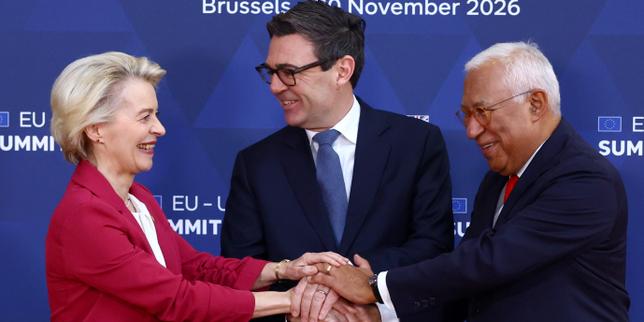
The Brussels summit announcement sounds like a clean reset, yet nobody crossing a border or shipping cheese is getting instant relief tomorrow morning. Prime Minister Andy Burnham, European Commission President Ursula von der Leyen, and European Council President Antonio Costa sealed a post-Brexit agreement on November 20, 2026, targeting food and animal trade checks, carbon pricing links, and youth mobility. Still, political headlines move faster than customs law and national permit rules.
Here is the straight story on what was agreed, what got kicked down the road, and why a deal struck five years after full Brexit rules took effect in January 2021 still leaves real friction on the ground.
Why This UK EU Agreement Matters Now
Ten years after the June 2016 referendum and five-plus years since the Trade and Cooperation Agreement began governing day-to-day trade on January 1, 2021, both capitals are dealing with a stubborn reality. Hard separation created recurring costs for exporters, households, and young travelers that neither side can simply wish away with a press conference.
Public mood has shifted hard against the way Brexit played out. A YouGov poll published in mid-November 2026 found that 63% of Britons view Brexit more as a failure than a success, while only 9% call it a success, and 58% say voting to leave was the wrong call. Even with that frustration, Burnham is holding to Labour's manifesto pledge not to rejoin the EU or re-enter the single market or customs union right now, even though he has openly floated the idea of a future referendum on membership down the road.
From a practical standpoint, the summit is a sector-by-sector repair job rather than a return to square one. It tries to lower specific friction points—food checks, carbon markets, and youth movement—without blowing up red lines on sovereignty or free movement.
What Was Actually Agreed in Brussels
Strip away the diplomatic superlatives and three headline tracks anchor the deal.
Food, Plants, and Carbon Markets
The biggest economic pitch centers on cutting agri-food friction through a sanitary and phytosanitary (SPS) arrangement and linking the UK and EU emissions trading schemes. Since 2021, exporters of animal and plant goods have faced health certificates, paperwork, and physical border checks that hammered small food producers and raised compliance costs.
Downing Street estimates the food and drink deal could add up to £5.1 billion a year to the British economy, while linking carbon markets could add roughly £3.8 billion annually, with Treasury figures pointing to an overall GDP lift of around 0.5%, or roughly £17 billion. Lower export friction on groceries and tighter alignment on carbon pricing are meant to ease costs over time, including potential relief on food and energy bills.
Youth Mobility and Erasmus+
Young people got two big signals in Brussels. Officials confirmed Britain will rejoin the Erasmus+ student exchange scheme and agreed on a youth mobility framework allowing young adults from each side to live and work in the other's territory for up to three years across activities like work, study, volunteering, au pairing, or travel.
Watch the numbers and the timeline closely, though. Reports around the draft text show debate over caps—with London pushing for limits in the 50,000 to 80,000 range to keep a lid on net migration figures, while Brussels has pushed for at least 100,000. Even more importantly, work permits sit with national governments, meaning youth mobility opportunities may not actually open until closer to 2028 or even January 2030.
The Gaps and Timelines Nobody Should Ignore
If you run a food business, book European tour dates, or plan a trip with a dog or cat, the fine print matters way more than the headline.
First, nothing flips overnight. The SPS food agreement is slated to take effect on March 1, 2028, because the UK needs primary legislation and dynamic alignment with relevant EU standards before border checks drop. A political agreement in November 2026 is a starting gun for legal ratification and rulemaking, not a free pass at the port tomorrow morning.
Second, tough issues remain unfinished. University tuition fees for EU students studying in the UK were left open, with both sides giving themselves six months to keep negotiating—weighing options between a discount off international rates and parity with domestic students. Talks on Britain's role in the EU's internal electricity market are expected to stretch into 2027, and touring artists still only have a commitment to explore mutually beneficial solutions rather than a finished visa-and-carnet fix.
Third, pet passports remain a sore spot. Because pet travel rules are tied to the SPS framework, British pet owners should expect existing health certificate and paperwork hurdles—which can cost up to £200 per trip—to stick around until the broader regime changes. Reform UK leader Nigel Farage has already attacked the deal as naive and one-sided, showing just how fiercely contested every compromise remains at home.
What You Should Do Next
Don't change contracts, pricing, or travel bookings on the assumption that Brexit border rules vanished on November 20. Treat this agreement as a multi-year transition roadmap and take concrete steps based on how it affects you:
- If you export food, drink, or agricultural goods: Track the legislative schedule toward the March 1, 2028 SPS implementation date, keep current export health certification workflows running smoothly, and check UK-EU dynamic alignment rules as draft legal texts are published (see the UK Parliament House of Commons Library and Al Jazeera coverage of the EU-UK reset deal).
- If you are a student or young worker: Watch the six-month talks on university tuition fees and verify exact eligibility ages, caps, and start dates before building study or work plans around youth mobility or Erasmus+.
- If you travel with pets or tour Europe: Budget for current pet health documentation and existing cross-border rules in the near term, and check official guidance before every trip rather than relying on summit headlines.



