Videos change everything. For years, civilian accounts of law enforcement overreach were easily dismissed as biased or exaggerated. Then smartphones captured the reality. A shocking incident outside the Stanislaus County Jail in Modesto, California, highlights the volatile nature of modern immigration enforcement.
Lizbeth Vargas Andrade, a 23-year-old United States citizen, found herself pepper-sprayed, shoved to the pavement, and handcuffed face-down by federal immigration agents. Her crime? Documenting and monitoring federal enforcement activity outside a local facility alongside her family. She warned the officers repeatedly that she was pregnant. They did not stop.
What Actually Happened Outside the Modesto Jail
The confrontation began on a Sunday afternoon. Vargas Andrade and her family members were monitoring ICE activities near the Stanislaus County Jail, a common practice for community defense networks tracking local enforcement actions. Tension spiked when immigration enforcement vehicles blocked a car driven by Vargas Andrade’s sister-in-law, Monica Alvarado.
Agents forced their way into Alvarado's vehicle under the assertion that she was transporting undocumented individuals. That move prompted Vargas Andrade's husband, Adolfo Talavera, to pull out his phone and record the interaction.
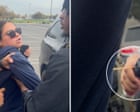
Footage provided by their attorney, Patrick Kolasinski, shows an agent backing up and bumping into Vargas Andrade. Moments later, the situation escalated rapidly. An agent pointed a chemical spray canister directly at Vargas Andrade and her husband, deploying pepper spray.
In the video, Talavera can be heard screaming frantically, "She's pregnant with child!" Vargas Andrade echoed those warnings directly to the officers. Despite these warnings, multiple agents threw her onto the pavement, pinning her on her stomach to apply handcuffs.
The Aftermath and the Medical Reality
Following the chaotic arrest, Vargas Andrade was taken into custody and detained for several hours. She described the terrifying physical effects of the chemical irritant to reporters, noting that the spray went up her nose, making it hard to breathe while a burning sensation engulfed her face. Another agent eventually provided water to wash her face, but the damage and panic were already done.
Her family called emergency medical responders, and she was eventually taken to a hospital where medical professionals confirmed her baby was unharmed. She was released later that day without facing any criminal charges, though Immigration and Customs Enforcement officials baselessly accused her of assaulting officers—an allegation flatly denied by her legal representation and contradicted by the context of civilian monitoring. Neither Department of Homeland Security nor ICE officials provided immediate answers when pressed by local news outlets for comment.
Why This Case Matters for Local Communities
Incidents like this expose the friction points between federal agencies operating locally and community groups attempting to exercise their First Amendment rights. Community monitoring organizations argue that their presence keeps vulnerable populations informed and deters abuses of power. When enforcement actions turn aggressive toward citizens who are merely observing or recording, the boundary between public safety and state overreach blurs dangerously.
For residents in California and beyond, this event raises uncomfortable questions about operational protocols. When federal agents interact with crowds, the baseline expectation is restraint and adherence to constitutional safeguards. Pepper-spraying and physically pinning a pregnant U.S. citizen to the pavement—especially after being explicitly warned about her pregnancy—points to a profound failure in tactical de-escalation.
Accountability rarely happens automatically. It requires public scrutiny, legal pressure, and unyielding documentation of police and federal misconduct. As this case moves forward, the demand for transparency from federal immigration authorities grows louder.