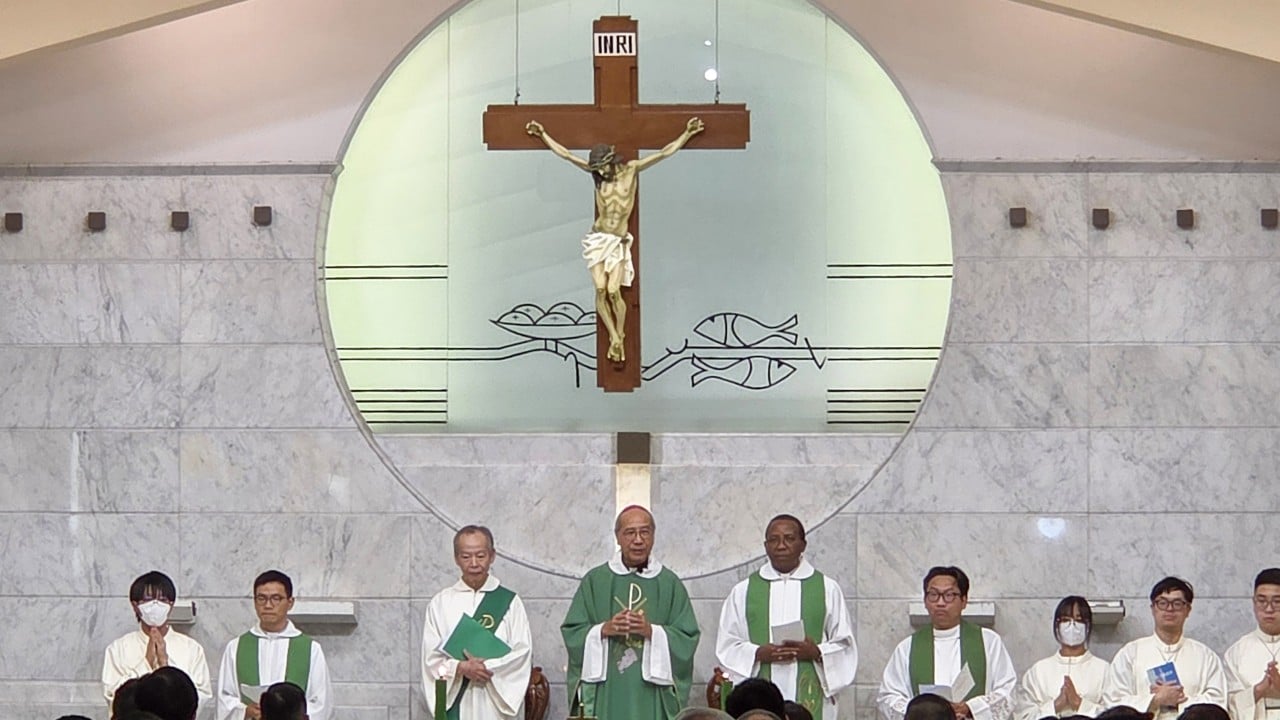
Grief doesn't vanish on a calendar schedule. A year has nearly passed since the catastrophic blaze at Wang Fuk Court in Tai Po shocked Hong Kong to its core, yet the emotional fallout remains raw. That fire on November 26, 2025, claimed 168 lives, displacing thousands and exposing systemic failures in building safety across the city. When hundreds of people recently packed local pews for a memorial mass, they weren't just attending a religious service. They were marking a collective trauma that the city's establishment is eager to move past, but cannot.
Every public gathering in Hong Kong carries weight right now. Rumors and suspicion tend to fill any vacuum left by official communication. When a local church in Tai Po altered the wording of its memorial service after police inquiries, eyebrows shot up instantly. People immediately wondered if external pressure had forced the change.
Understanding why a simple church mass sparked such intense speculation requires looking closely at the climate of distrust that has gripped the city since the disaster.
The Wording Shift That Triggered Public Suspicion
Details matter when public grief intersects with institutional oversight. The Tai Po church originally announced it would offer a memorial mass dedicated specifically to the victims of the deadly fire. Days later, the parish updated its announcement. The service was reframed to honor "all those who died this year and victims of the Wang Fuk Court fire."
Naturally, observers noticed the adjustment. Local commentators and former residents began asking questions. Was the police inquiry a polite request or a subtle warning? Did authorities want to tone down a high-profile gathering that could draw unwanted attention to government shortcomings?
You can't blame citizens for being skeptical. The aftermath of the Wang Fuk Court fire laid bare decades of bureaucratic buck-passing. Four separate government departments were slammed in an independent committee report for failing to share safety information that could have prevented the tragedy. When trust is broken, every administrative tweak looks like censorship.
Bishop Stephen Chow Clears the Air on Church Independence
Cardinal and Bishop Stephen Chow didn't hide behind diplomatic silence. He addressed the speculation head-on, dismissing talk of political pressure entirely. He insisted that the decision-making power regarding how masses are organized rests firmly with individual parishes, not diocesan headquarters or government offices.
He also provided a pragmatic view on police involvement. When large crowds gather in Hong Kong, authorities track attendance numbers for logistical and public safety reasons. If a religious service draws hundreds of grieving residents, police inquiries are standard procedure rather than political intimidation.
It is a plausible distinction. Safety and crowd management are real challenges in a densely populated city. Yet, the fact that police presence at a memorial mass becomes a headline tells you everything about the fragile state of public relations in Hong Kong right now. People are on edge, and every interaction between civil society and official bodies gets hyper-analyzed.
The Long Shadow of the Government Accountability Crisis
To understand why a church service generates this level of anxiety, you have to look at the political earthquake triggered by the fire. The judge-led independent committee report didn't mince words. It exposed a broken system where safety risks went unchecked because officials exploited an outdated honor system in building maintenance.
The political fallout was immediate, even if critics argue it didn't go far enough. City leader John Lee and top officials bowed their heads in a public apology, while housing chief Winnie Ho resigned to take political responsibility. Security authorities promised sweeping overhauls of fire departments, tougher penalties for bid-rigging, and smarter alarm installations in aging buildings.
Despite these official moves, public confidence remains fragile. When mourners gather to pray for 168 victims, they are doing more than remembering the dead. They are registering their ongoing demand for true accountability. Every memorial event serves as an unspoken indictment of the systemic failures that allowed the fire to happen in the first place.
The Legal and Human Toll Facing Survivors
Mourning is only one piece of a complex puzzle. Survivors and former residents face grueling legal battles as they attempt to pick up the pieces of their lives. The Hong Kong judiciary has urged mediation before court actions clog the system, but financial and emotional settlements are painfully slow. Families who lost everything are fighting for fair compensation while dealing with persistent trauma.
The church masses serve as an anchor for a community that still feels unmoored. Whether the liturgy mentions the fire victims explicitly or groups them with all souls lost during the year, the emotional resonance remains identical. People simply want a safe space to grieve without second-guessing every administrative decision made by local institutions.
The establishment wants to turn the page. Officials are eager to showcase new safety policies, upgraded tracking systems for firefighters, and stricter contractor regulations. But a disaster of this scale leaves permanent marks on a city's conscience. Sweeping structural reforms are necessary, but they cannot replace genuine empathy and transparency.
Honoring the victims of Wang Fuk Court requires more than policy overhauls and committee apologies. It demands that institutions respect the public's right to remember, mourn, and speak freely without breeding unnecessary suspicion. The church has held its mass. The crowds have prayed. Now, the real test is whether Hong Kong's leadership can follow through on every promised reform until safety and trust are fully restored.



