Big banks live by compliance slogans until real money shows up on the table. When the stakes get high enough, risk management usually takes a back seat to revenue.
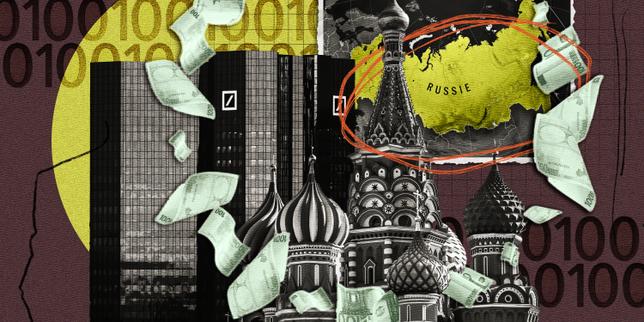
A massive leak of 15 million internal documents, analyzed by an international consortium of over 200 journalists under the project title "Inside Deutsche Bank", exposes how Germany’s largest lender tried to protect and even expand its lucrative Russian business despite severe geopolitical warnings and regulatory red flags.
If you thought financial institutions cut all ties with Moscow the moment tanks rolled across borders, you haven't been paying attention to the back-office maneuvering.
The Swiss Hub for Russian Billionaires
Long before the full-scale invasion of Ukraine rattled global markets, Deutsche Bank carved out a cozy niche servicing Kremlin-connected oligarchs. The strategy wasn't run out of a shady back alley in Frankfurt. It was heavily concentrated in Swiss hubs like Zurich and Geneva, leveraging the privacy protections of Swiss banking secrecy.
Internal files reveal that in 2014 alone, the bank managed hundreds of millions or even billions for high-profile figures. Viktor Vekselberg had at least 870 million euros parked with the institution, while Mikhail Fridman accounted for roughly 1.4 billion euros. Other sensitive names, including Suleyman Kerimov, populated client rosters that compliance teams repeatedly flagged as high-risk.
Management knew the optics were terrible. They knew anti-money laundering controls were strained. Yet, the temptation of ultra-high-net-worth fees overrode institutional caution.
Double Down While Warnings Piled Up
What makes the latest disclosures damaging isn't just that Deutsche Bank had Russian clients in the past. Every major European lender held legacy accounts. The real story is the deliberate attempt to preserve and scale that exposure right up to the edge of catastrophe.
As late as late 2020—years after the annexation of Crimea and mounting sanctions pressures—internal plans drafted within the bank aimed to aggressively grow its Russian operations. Executives shrugged off warnings from their own internal compliance units, who voiced severe concerns over Kremlin ties and financial crime exposure.
When war finally broke out in Ukraine, the institution found itself trapped in a web of its own making. Exiting the market wasn't a clean break. It turned into a messy, multi-year wind-down involving stranded tech hubs in Moscow and St. Petersburg, hundreds of layoffs, and complex legal battles over seized assets and canceled ventures with entities like Gazprom.
Why Compliance Failures Keep Repeating
It's easy to blame bad actors at the top, but the structural issue runs deeper. Large investment banks operate as sprawling empires where revenue-generating divisions and compliance watchdogs speak entirely different languages.
When front-office bankers promise record profits, compliance warnings are frequently treated as speed bumps rather than hard roadblocks. Even under CEO Christian Sewing, who spent years trying to clean up the bank's reputation following past scandals involving money laundering controls and illicit transactions, old habits died hard.
The market reaction was swift. Shares plunged following the publication of the 15-million-document leak, proving that investors still harbor deep anxiety over the bank's inability to fully escape its past.
Banks don't reform overnight because the financial incentive to look the other way remains too powerful. Until regulators impose existential penalties that outweigh the short-term profits of servicing high-risk authoritarian capital, internal leaks will keep exposing the exact same playbook.