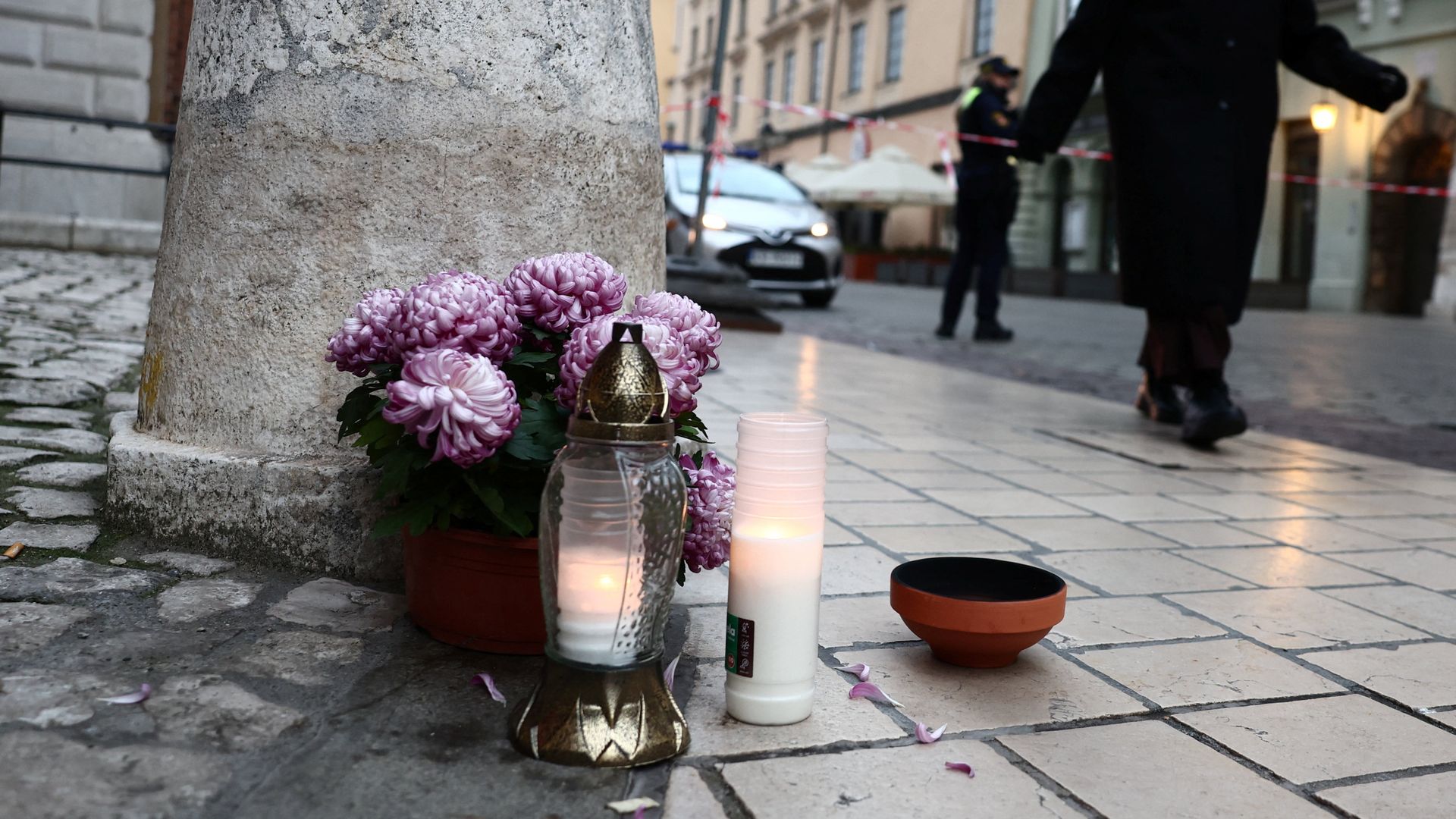
Mass shootings in Poland are exceptionally rare. That statistical reality makes what happened in Kraków's historic Main Market Square on a Saturday afternoon all the more jarring. When a 24-year-old local man drove a vehicle directly into a bustling tourist hub wearing military-style fatigues and a bulletproof vest, he didn't just shatter an afternoon of weekend leisure. He pierced a deep sense of security that Central Europe has long taken for granted.
The attacker, armed with a military-type long gun, opened random fire on civilians, ending six lives—including a 32-year-old British man and a 51-year-old Austrian woman, alongside four Polish citizens—and injuring more than a dozen others. Police officers engaged the gunman and wounded him during a fierce shootout, but the tragic toll didn't stop in the public square. Investigators tracing the shooter's background uncovered the bodies of his mother, father, and sister at the family home in Ostrowiec Świętokrzyski, all bearing fatal gunshot wounds. Now, with the primary suspect having died in the hospital from his injuries, investigators are left piecing together an ideological puzzle that points heavily toward radicalization.
The Ideological Roots and Red Flags
Authorities and security ministers have labeled the incident an act of terror, pointing directly to the gunman’s deep-seated far-right and ultra-nationalist views. In a country where strict gun licensing laws usually keep mass casualty firearms off the streets, the fact that the 24-year-old held a legal firearms licence—despite having no prior criminal record—raises uncomfortable questions about institutional oversight.
How does a young man slip through the cracks of background checks while radicalizing into an extremist mindset? Experts studying European security note that lone-actor attacks driven by online extremist echo chambers are the hardest plots for intelligence agencies to intercept. Unlike organized cells that chatter across encrypted networks, lone actors often consume toxic ideologies in total isolation, moving from passive internet radicalization to kinetic violence with terrifying speed. The presence of multiple weapons and ammunition stockpiled in his car and home suggests premeditation, turning what might have looked like an impulsive rampage into a planned assault.
The Human Cost and the Resilience of Kraków
The immediate aftermath brought scenes of cinematic horror to real life. Tourists and locals scrambled for cover, diving behind display counters in shops or fleeing down cobblestone alleys while bullets ricocheted off centuries-old stone facades. For a city like Kraków, which draws millions of visitors globally for its rich heritage and vibrant cultural atmosphere, the psychological shockwave is profound.
Yet, the response from emergency services and civic leaders highlights extraordinary bravery. Two police officers—Jakub Kulik, a former paratrooper and volunteer firefighter, and Artur Morański—charged toward the threat, sustaining severe injuries before being placed in medically induced comas. Their swift intervention undoubtedly saved dozens of lives, preventing a far worse catastrophe in a packed public square.
In a poignant tribute that underscores the historical weight of the moment, the traditional St. Mary’s Trumpet Call—a famous five-note melody played hourly from the highest tower of St. Mary’s Basilica—was silenced overnight. It was the first time that historic tradition had been paused since the Second World War, signaling a nation brought to a collective standstill.
Where Europe Goes From Here
Two days of national mourning and lowered flags across Poland offer space for grief, but they don't solve the underlying vulnerabilities exposed by the tragedy. Security analysts are already calling for a tighter review of legal gun ownership criteria, specifically regarding psychological evaluations for license applicants who display obsessive extremist tendencies online.
Kraków Mayor Łukasz Gibała vowed that the city's iconic square would reclaim its spirit, refusing to let terror dictate public life. But as fringe ideologies continue to fester across digital platforms globally, the tragedy serves as a brutal reminder that no region is entirely immune to the violent real-world consequences of radicalization.
Check your local security policies, support public safety infrastructure, and remain vigilant about the extremist narratives circulating online unchecked.



