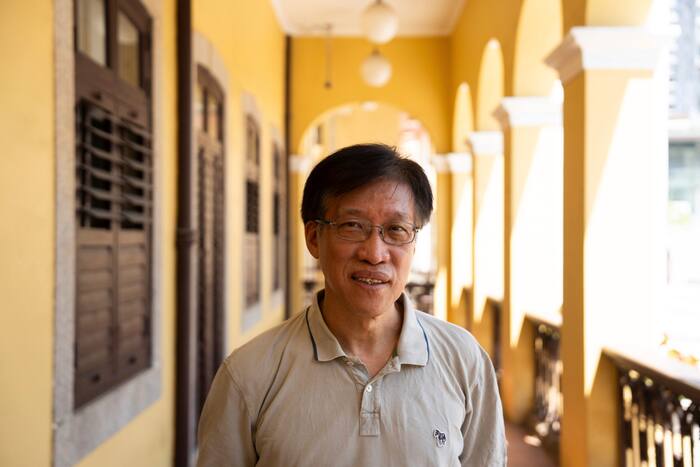
Macao just crossed a line that changes its political reality forever. Au Kam San, a veteran former pro-democracy lawmaker, received a twelve-and-a-half-year prison sentence in the casino hub's first major national security trial. For years, people viewed Macao as a quieter, less turbulent neighbor to Hong Kong. That illusion is officially gone.
The trial happened behind closed doors, sparking sharp criticism from human rights groups and international lawyers who argue the proceedings lacked basic due process. When a jurisdiction locks the courtroom doors for a landmark political case, nobody outside the inner circle gets to see how justice is actually administered.
Behind the Closed Doors of Macao
Authorities arrested Au in July 2025, sending shockwaves through the tiny territory. For nearly a year, details trickled out slowly, while his family struggled to secure independent legal representation. His daughter, living in London, voiced deep frustration over blocked communications and barred defense lawyers.
The court ultimately found Au guilty of colluding with overseas groups. Prosecutors alleged he helped external organizations spread distorted information between 2023 and 2024 to provoke foreign hostility against China and Macao. Additional charges stemmed from allegations that he leaked confidential information back in 2021 regarding the renewal of lucrative gaming licenses—the lifeblood of the local economy run by massive international resort operators.
At the same time, judges acquitted him on two counts of subversion due to insufficient evidence. Yet the cumulative penalty still landed heavily, falling within a statutory range that ensures a lengthy prison stay.
A Chill Across the Gambling Hub
Macao operates under the same "one country, two systems" framework as Hong Kong, returning from Portuguese administration to Chinese rule in 1999. Historically, local politics remained far more subdued compared to the fierce street protests seen across the Pearl River Delta in 2019. Au himself was widely seen as a mild critic, someone who used Facebook and local interviews to point out daily governance flaws rather than tear down the system.
His roots in political dissent trace back to the 1989 Tiananmen Square pro-democracy movement, which inspired him to advocate for a more open society. For decades, that advocacy was tolerated within narrow local boundaries. This verdict signals those boundaries have vanished entirely.
Human Rights Watch pointed out that the sentence sends an unmistakable warning to any remaining peaceful critics in the territory. Meanwhile, Beijing's Hong Kong and Macao Affairs Office defended the decision, stating it demonstrates firm resolve in safeguarding national security and keeping the public vigilant.
International Fallout and the Family's Fight
International reaction was swift and critical. Michael Polak, an international lawyer representing Au, argued that a Portuguese citizen should never face imprisonment for non-violent beliefs. He urged Portugal and the European Union to intervene and demand Au's release.
Back home, family members face an agonizing new reality. Virginia Cheang, Au's wife, condemned the process as a groundless political persecution designed to humiliate his character. She is pushing simply for regular, unconditioned mail exchanges and prison visits. For his family abroad, returning to Macao is no longer an option, turning a local legal dispute into a permanent family separation.
As Macao doubles down on enforcing its security laws, the era of open political critique in the territory has officially closed. The casino hub remains wealthy and bustling, but its political atmosphere now mirrors the strict orthodoxy seen across mainland jurisdictions.