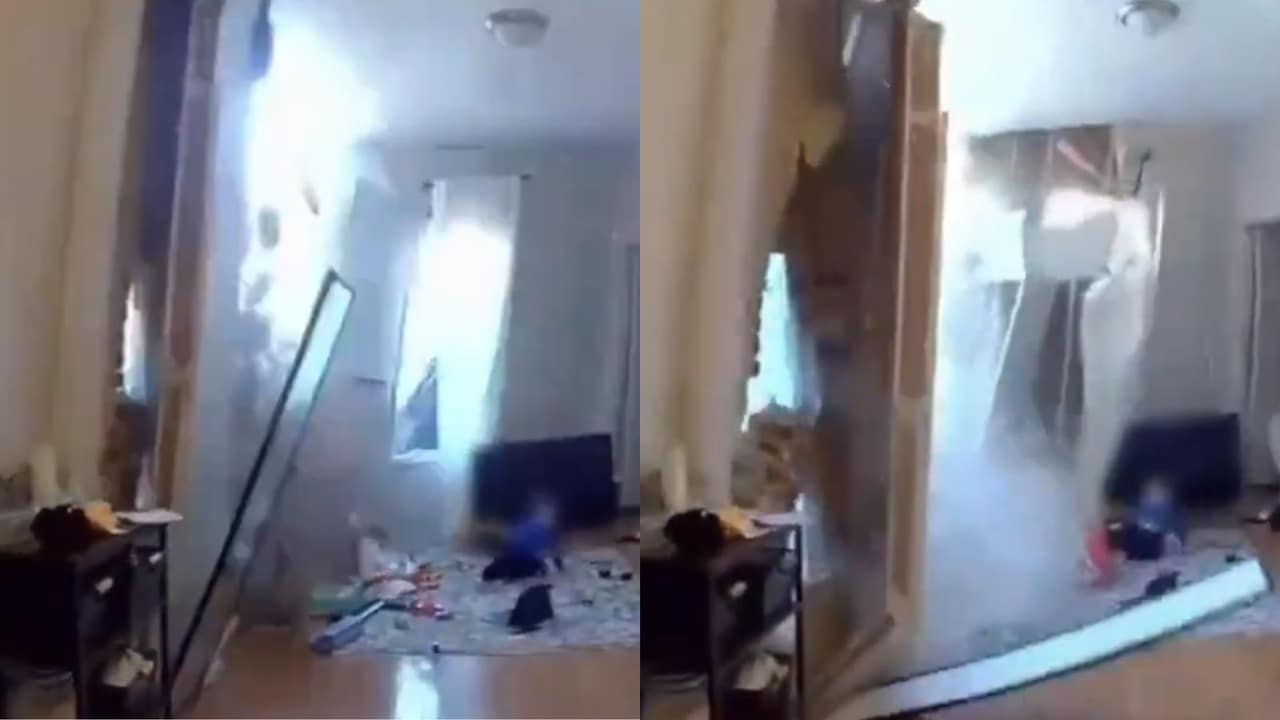
A routine Tuesday evening inside a third-floor apartment on Flatbush Avenue changed forever in roughly six seconds. If you have seen the viral surveillance footage from 1321 Flatbush Avenue in Brooklyn, you know the terror. A young boy grabs milk from the fridge. His mother screams from the hallway. Moments later, the apartment wall violently caves inward, swallowing a toddler into a terrifying cloud of falling debris.
Eight people died in this tragedy, and 18 others sustained injuries. Yet amid the grim statistics and the frantic search efforts of over 250 firefighters, the footage of Anderson Velez's family highlights a much deeper, more systemic urban crisis. We need to talk honestly about how aging city infrastructure collides with aggressive, unregulated, or poorly monitored neighboring excavation projects.
The Reality Behind the Flatbush Avenue Disaster
When buildings fail catastrophically in dense neighborhoods like Flatbush, people immediately look for a simple villain. Was it bad concrete? Did a landlord cut corners? City records quickly pointed investigators toward a different culprit: an adjacent construction and excavation site.
Excavation changes the structural integrity of neighboring soil and foundations instantly. When heavy machinery digs deep trenches right next to older standing structures without adequate shoring or underpinning, the margin for error shrinks to zero. In New York City, where historic row houses and older apartment blocks stand shoulder-to-shoulder with modern high-rise foundations, this risk is constant.
Velez and his family had moved into that third-floor apartment earlier that exact month. They had just clawed their way out of a homeless shelter, searching for stability for their two young boys. Instead, they found themselves staring down a structural collapse that nearly wiped out their family. The nine-year-old sprinted toward his mother's voice, while the two-year-old vanished under tons of masonry and dust. Miraculously, both boys survived—the youngest pulled out with dirt packed into his nose, ears, and mouth, while his older brother underwent intensive surgery.
Why Urban Infrastructure Keeps Failing Us
It is easy to blame a single contractor or write off an incident as an unpredictable freak accident, but safety experts know better. Urban construction oversight often operates reactively rather than proactively. Inspectors are overworked, permits are rubber-stamped, and violations pile up in online databases long before inspectors ever step foot on a dangerous site.
Look at what happens when excavation begins next to occupied residential properties. Ground vibrations loosen decades-old mortar. Retaining walls shift by millimeters—which is all it takes to trigger a progressive collapse. When you pack thousands of people into tight blocks, construction safety isn't just about hard hats and safety harnesses on site. It is about protecting the people living right next door who didn't sign up to live inside a structural experiment.
What Needs to Change Right Now
If cities want to stop tragedies like the Flatbush Avenue collapse, the playbook has to shift.
- Mandatory seismic and vibration sensors must be legally required on every adjacent building before deep excavation begins. If ground movement hits a red-line threshold, work stops automatically.
- Aggressive stop-work enforcement needs teeth. Too many developers treat fines as the cost of doing business, racing to finish foundation work before inspectors catch up with safety complaints.
- Tenant notification laws need an overhaul. Families renting apartments next to major construction zones deserve to know every single violation filed against the developer, clear and unredacted.
Anderson Velez is trying to stay strong for his surviving sons from a temporary hotel room provided by the city. His wife is recovering from severe trauma to her spine, ribs, and collarbone. They lost everything they owned just weeks after finally finding a real home.
Next time you walk past a deep construction pit wedged tightly between residential apartment blocks in any major city, remember how fragile that separation really is. It doesn't take an earthquake to bring a building down. Sometimes it just takes a neighbor digging too close, too fast, with too little oversight.



