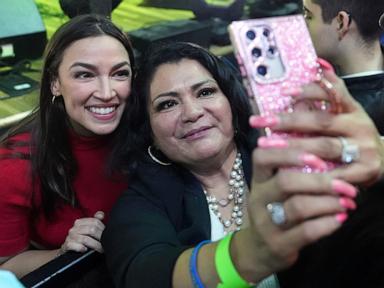
Packed rooms across deeply Republican terrain don't happen by accident. When Alexandria Ocasio-Cortez steps up to a microphone in places like Michigan's Upper Peninsula or California's Central Valley, people show up by the thousands.
For years, critics claimed her brand of democratic socialism played well only in deep-blue districts like New York's 14th. But as the 2026 midterms unfold, she isn't just preaching to the choir. She's touring swing districts, campaigning for competitive nominees, and quietly testing a massive question for American politics: can left-wing economic populism win over voters outside coastal enclaves before a potential 2028 presidential bid?
The Progressive Playbook Moves Into Swing Country
You can't understand modern American politics without looking at how the left is trying to rewrite its own geographic limits. At 37, Ocasio-Cortez has evolved from a disruptive freshman insurgent into a national powerhouse capable of drawing massive crowds anywhere she goes.
During her final campaign swing ahead of the 2026 elections, she appeared in Iron Mountain, Michigan—a town in a county that Donald Trump won by more than thirty percentage points. Her message there wasn't about traditional partisan boundaries. Instead, she leaned heavily into economic frustration. Further journalism by Al Jazeera delves into similar views on the subject.
"Our problems are less left and right," she told the crowd. "They're top and bottom."
This framing is deliberate. By shifting the focus away from cultural wedge issues and toward corporate power, wealth inequality, and rising costs, she is trying to forge a cross-partisan appeal that reaches working-class voters who feel abandoned by both parties.
Putting the Progressive Brand on the Line
Not everyone in the Democratic Party thinks this strategy works in tight races. Washington consultants often panic when a progressive firebrand shares a stage with a vulnerable nominee in a purple district.
Take Maine, where Senate nominee Troy Jackson faced fierce pressure to keep his distance. Instead, he welcomed Ocasio-Cortez to a packed concert hall in Portland filled with students and retirees. When asked about foreign policy and domestic spending—including sharp critiques of military budgets versus programs like Medicare for All—Jackson didn't flinch. He embraced the alignment.
Veterans of establishment politics remain skeptical. Former Republican Representative Fred Upton argues that while Ocasio-Cortez can easily lock down urban districts in New York or California, winning a national majority requires capturing independent voters in swing states who might be wary of progressive economic policies.
Yet Ocasio-Cortez insists the party has underdelivered by ignoring its populist flank. "We have written a check on the left, saying if you champion these policies that have popular support, we can win," she noted at a recent fundraiser. "Now it is time to cash in."
Testing Ground West and South
Her travel schedule tells its own story about long-term ambition. Stops in California's competitive 2nd District and trips through Nevada—the crucial early-voting state—show an eye toward a broader national coalition. In Nevada, she rallied alongside local leaders near historic neighborhoods to connect with working-class voters and trade union members who anchored past progressive victories.
Behind the scenes, her calculus involves more than just campaign stops. Earlier this year, her public decision to freeze her eggs brought rare, candid visibility to the personal hurdles women face when balancing high-stakes political careers with family planning. She pointed out the double standard head-on, noting that male candidates never face quiet speculation about when they might start a family while running for office. It was a calculated humanizing moment that resonated deeply with younger voters and reinforced her independent cultural footprint.
What Comes After the Midterms
The midterm results will provide a cold, hard ledger for her political future. If the candidates she backs pull off upsets in tough terrain like Michigan and California's Central Valley, her leverage within the Democratic Party skyrockets. If they crash and burn, establishment skeptics will use those losses to argue that the party must tack to the center to survive.
Either way, ignore the noise and watch the map. The results of these races won't just decide control of Congress. They will determine whether the most recognizable progressive in America has a viable roadmap to 2028, or if her ceiling is locked firmly in place.



