"We worry. We worry." That quiet repetition from Taiwan's Deputy Foreign Minister Chen Ming-chi at the Halifax International Security Forum says more about Ottawa's China pivot than a dozen diplomatic cables. Prime Minister Mark Carney has spent November 2026 pushing for fresh trade openings in Shenzhen at the APEC summit—securing tariff relief on pork, seafood, steel, and agricultural goods while floating possibilities on autos and clean energy. Taipei isn't cheering from the sidelines. Taiwan has lived with Beijing's commercial leverage for decades, and officials there warn that Canada could walk straight into the kind of economic coercion Carney himself has spent years flagging.
Here's the blunt truth behind the warning. When a government treats trade with Beijing as just another commercial spreadsheet, it forgets that Chinese market access often comes attached to political strings. Carney argues that exporting canola, pork, halibut, oil, or liquefied natural gas isn't the same as handing over cutting-edge semiconductors, and he insists Ottawa can walk and chew gum at once—trading with Beijing while eventually signing a long-delayed trade cooperation arrangement with Taiwan. Honestly, that sounds neat on paper. In practice, middle powers rarely get to pick their leverage points in isolation when supply chains, tariffs, and security pressures collide.
Why Taiwan Warns Canada About China Trade Risks
If anyone knows what happens when a smaller economy leans too heavily on China for growth, it's Taiwan. Speaking in Halifax, Chen pointed out that Taiwan deliberately spent years unwinding its over-reliance on Beijing. According to Taiwanese government figures cited in reporting on the forum, Taiwan's outbound investment share going to China dropped from over 80% in 2010 to 3.8% last year. Over that same stretch, exports to China and Hong Kong slid from nearly 44% of total exports in 2020 down to roughly 27% last year.
That wasn't a whim. It was survival arithmetic. Taipei watched how easily trade flows can tighten or stall when political friction rises, and how quickly a concentrated export dependency turns into a pressure point. When Chen asked in Halifax, "Who do you want to choose as your partners?" he wasn't lecturing Canadians out of spite. He was pointing to a hard-won lesson: diversification isn't a slogan you recite at summits; it's a buffer you build before you need it.
The Squeeze Between Washington, Beijing, and Taipei
To be fair to Carney, Ottawa isn't operating in a vacuum. Washington's tariff friction and rocky trade negotiations have squeezed Canadian exporters and pushed policymakers to look beyond the U.S. border. When auto parts cross the U.S.–Canada border an average of six times before final assembly, any friction in North America hits Canadian factory floors fast. Looking for relief elsewhere makes commercial sense on the surface.
Some analysts argue that even talking openly about Chinese automakers or new trade tracks gives Ottawa bargaining weight in stalled talks with U.S. President Donald Trump's administration. Yet that balancing act carries sharp backlash. White House trade adviser Peter Navarro publicly blasted the idea of Canada playing China off the U.S., warning that Beijing would "eat Canada alive". Meanwhile, opposition lawmakers and critics in Ottawa—alongside Taiwanese diplomats—have questioned why a Trade Cooperation Framework Arrangement with Taiwan, finalized back in March 2025, has sat waiting for a signature while Ottawa courts Beijing.
Carney has said he's "hopeful" the Taiwan arrangement will be signed soon and insisted his government isn't afraid to pursue ties with both sides. Still, timing matters. When one file moves swiftly with tariff concessions and another stalls for over a year, skepticism isn't hard to find.
What Carney Gets Right and Where the Blind Spots Sit
Let's give credit where it's due. Carney isn't naive about Beijing. As a former central banker who has spent years analyzing financial stability, systemic risk, and geopolitical shocks, he knows better than most what concentrated exposure looks like. He has explicitly drawn a line between traditional commodities and sensitive military technology, and he has spoken about frank discussions with Chinese President Xi Jinping over past disputes and limits to the relationship.
Yet there's a big difference between drawing a line in a speech and enforcing it in real supply chains. Even agricultural and resource exports aren't immune to political moods. Canadian farmers and exporters have seen before how quickly market access can become a diplomatic bargaining chip. And once you start opening doors in sectors like clean energy, financial services, or autos, untangling standards, subsidies, and dependency gets messy fast.
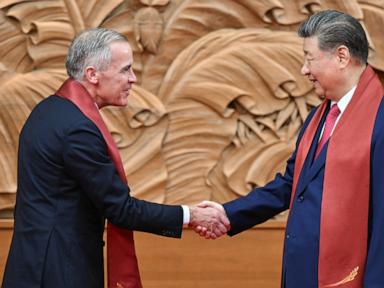
There's also a messaging trap that Chen flagged in Halifax. Summits in places like Shenzhen are built for optics. When leaders gather for big photo moments, Beijing excels at turning attendance and engagement into proof of global momentum and legitimacy. Even if Ottawa views a meeting as narrow, practical business, the political signal travels much farther than the press release.
Beyond Trade: Security, Optics, and Democratic Alignment
Trade numbers don't sit on a shelf by themselves. In Halifax, Chen paired his economic caution with security warnings, noting intensified Chinese military activity around Taiwan and the risk of maritime quarantine rehearsals, even as Beijing weighs the massive costs of an outright invasion. For democratic partners, every commercial step with Beijing gets weighed against those broader regional tensions.
That doesn't mean Canada should pretend China's economy doesn't exist or cut off every single transaction. Pragmatic engagement with major powers is part of statecraft, and countries like Australia have frequently navigated complex trade ties with China while still pursuing broader regional partnerships. The real test isn't contact; it's proportion and principle.
There is another side to this debate worth stating plainly. Some Canadians argue that when U.S. trade policy feels unpredictable or punitive, Ottawa has no luxury to turn away relief for pork producers, steelmakers, or coastal fisheries. From that viewpoint, refusing every opening with China while waiting on Washington isn't a strategy—it's self-inflicted pain. Both arguments reflect real pressures, which is why the policy debate in Ottawa feels so tense right now.
Practical Next Steps for Canadian Businesses and Policymakers
If you're running a Canadian business, managing supply chains, or following Ottawa's trade strategy closely, waiting around for grand diplomatic clarity isn't a plan. Here are concrete moves that make sense right now:
- Stress-test single-market exposure. If more than 15% to 20% of your revenue or inputs relies on a single foreign market—whether the U.S. or China—map out alternative suppliers and buyers before a tariff or customs bottleneck hits.
- Watch the Taiwan framework signature. Track whether Ottawa actually moves its Trade Cooperation Framework Arrangement with Taiwan from "under consideration" to signed, and look into sector partnerships in clean tech, AI, and precision manufacturing.
- Keep dual-use and data risks tight. Even if your product isn't defense hardware, review software, components, and partner rules early so a routine commercial deal doesn't create regulatory or reputational headaches later.
- Build real Indo-Pacific alternatives. Don't treat diversification as a box-checking exercise; look across multiple Asian markets—including Taiwan, Japan, South Korea, and Southeast Asia—so no single capital holds veto power over your business.
Taiwan warns Canada's Carney that deeper ties with China come with risks highlights Taiwan's direct warning at the Halifax security forum about the economic and strategic risks of deepening ties with Beijing.