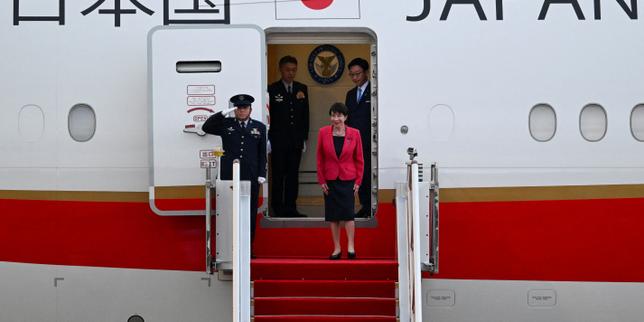
I wasn't able to read the Le Monde op-ed directly because it sits behind a paywall, so I'm working from the headline, the context of late 2026 Asian diplomacy, and real-world facts without guessing what was inside that specific piece. If you want to paste the text of the article here, I'm happy to dig into its exact claims and counter-arguments with you. Even without that text, the headline itself hits a nerve. Japan diplomatic isolation isn't a neat academic theory anymore—it shows up in awkward seating charts, frosty handshakes, and regional summits where Tokyo feels less like a central architect and more like a guest watching neighbors negotiate around it.
Here's the bottom line right up front. When a senior Japanese figure like Sanae Takaichi—long associated with hawkish national security instincts, assertive sovereignty rhetoric, and tight alignment with Washington—runs into stiff resistance or cold shoulders in a Chinese tech and trade hub like Shenzhen, people see two things at once. Critics in Beijing and skeptical observers in the region read it as Tokyo reaping what it sowed through tough talk and security alignments. Supporters and realists in Tokyo see something else entirely: the predictable friction of standing firm on principles when regional power dynamics tilt toward China's economic gravity.
Let's be honest about the word "humiliation" in headlines like that. Newspapers love drama. Diplomats rarely get slapped across the face in public; real diplomatic setbacks look quieter and sting longer. A canceled bilateral meeting here, a chilly press line there, a summit communique that waters down language Tokyo wanted, or a reminder from the host city that trade access and regional clout run through Beijing's backyard. None of that is a Hollywood humiliation, yet all of it signals pressure.
Why Japan Diplomatic Isolation Keeps Coming Up in Regional Talks
Whenever tensions flare between Tokyo and Beijing, commentators reach for the word "isolation" a little too fast. Japan isn't North Korea. It's a major economy, a G7 member, a treaty ally of the United States, and a top source of advanced manufacturing inputs and capital across East Asia. You don't casually isolate an economy of that size without hurting yourself in the process.
Still, there's a real strain underneath the exaggeration. Over the past decade, Japan's foreign policy has grown sharper and more security-focused—boosting defense spending, expanding cooperation with the U.S., strengthening ties with the Philippines and Australia, and speaking openly about stability around Taiwan. From Tokyo's perspective, those moves are basic self-defense in a rougher neighborhood. From Beijing's perspective, they look like containment dressed up in polite language.
Shenzhen matters here because it isn't just another city on a map. Built into a showcase of China's modern economy, tech ambition, and cross-border integration with Hong Kong, Shenzhen represents the material weight Beijing brings to regional diplomacy. Any Japanese leader or conservative heavyweight operating in or around that space walks into an environment shaped by China's narrative control, economic leverage, and prickly sensitivity to perceived slights.
The Gap Between Hawkish Rhetoric and Diplomatic Room to Maneuver
I've watched foreign policy debates long enough to notice a recurring trap. Tough rhetoric plays great at home. It sounds decisive, loyal to core principles, and immune to appeasement. Abroad, though, hard-edged messaging narrows your options before you even step off the plane.
Sanae Takaichi has built a clear political identity around national strength, historical firmness, and skepticism toward compromises with Beijing. When someone with that profile shows up in a Chinese city—whether at an official forum, a side event, or a broader regional gathering—the room is already charged. Hosts don't need to yell to make a point. Cool formality, tight schedules, or pointed framing in state media do the heavy lifting.
That doesn't automatically mean Tokyo is boxed into a corner. Often, what looks like isolation on one track is actually movement on another. While friction with China grabs headlines, Japan has spent years knitting together economic and security links with Southeast Asian nations, India, and European partners. Yet regional countries rarely want to pick a clean binary side between Washington and Beijing. They trade with China, worry about Chinese pressure, and value Japanese investment without wanting to join an anti-China crusade.
Real diplomatic pressure rarely looks like a dramatic walkout. It usually looks like polite smiles, shorter meetings, and quiet reminders of who sets the agenda in the room.
Misconceptions Around Shenzhen, Tokyo, and Regional Power
People love simple stories about international politics. Story one says China is effortlessly pushing Japan to the margins of Asia. Story two says Japan is standing tall and unbothered while Beijing fumes. Both stories are kinda lazy.
First, Japan diplomatic isolation is often confused with bilateral friction with China. Those aren't the same thing. Having rough, tense, or frosty relations with your biggest neighbor is a serious headache—especially when supply chains, rare materials, tourism, and regional crisis management intersect—but bilateral tension isn't total isolation. Japan still has deep commercial ties across Asia and crucial security backing from the United States.
Second, observers sometimes treat every awkward moment at a summit or conference as a permanent shift in the balance of power. Diplomacy is messy and cyclical. Yesterday's cold shoulder can turn into next month's pragmatic phone call when trade numbers dip or a maritime incident reminds everyone how dangerous miscalculation can be.
Third, it's a mistake to assume all Japanese politicians approach China the same way, or that Tokyo has a single rigid script. Japan's foreign ministry, business federation (Keidanren), defense establishment, and ruling-party factions all weigh different risks. Business leaders worry about supply chain shocks and market access; security hawks worry about deterrence and credibility. Balancing those instincts takes constant juggling.
What Washington's Role Changes—and What It Doesn't
Whenever Tokyo's regional standing comes up, the U.S.–Japan alliance sits right at the center of the conversation. Having the world's largest military backstop gives Japan confidence it wouldn't have on its own. At the same time, relying heavily on Washington creates its own dilemmas.
American political shifts keep allies guessing. Even when U.S. policy stays broadly supportive of deterrence in the Indo-Pacific, Washington's trade priorities, tariff moves, or domestic distractions can leave Tokyo carrying awkward diplomatic weight in its own neighborhood. Being a close ally of a superpower protects you in some ways and complicates your independent room to maneuver in others.
Practical Next Steps for Tracking Asian Diplomacy Without Getting Fooled by Hype
If you follow East Asian politics—whether for work, investing, or just trying to make sense of the news—headlines about "humiliation" and "isolation" can easily send you chasing noise. You can cut through that noise with a few practical habits:
- Separate symbolic friction from material shifts. When a politician faces a cold reception in a place like Shenzhen, ask what actually changed afterward: Did trade rules shift? Did defense coordination speed up? Did third countries change their behavior? If nothing concrete moved, treat the dramatic framing with a grain of salt.
- Watch third countries in ASEAN, not just Tokyo and Beijing. Southeast Asian states are the clearest weathervane in the region. Look at how Vietnam, Indonesia, Malaysia, or the Philippines balance Japanese infrastructure and security ties against Chinese trade and diplomatic pressure.
- Read multiple languages and perspectives. Don't rely on a single national media lens or a single ideological camp. Compare how outlets in Tokyo, Beijing, Washington, and Europe describe the same event—the gaps between those accounts usually reveal where the real stakes sit.
- Track business and supply chain signals alongside speeches. Diplomatic tough talk happens every week, while corporate capital allocation tells you what executives genuinely expect over the next three to five years.
Diplomatic clout in Asia isn't won in a single trip or lost in one frosty exchange. It's built—and tested—slowly, across trade, deterrence, credibility, and timing.