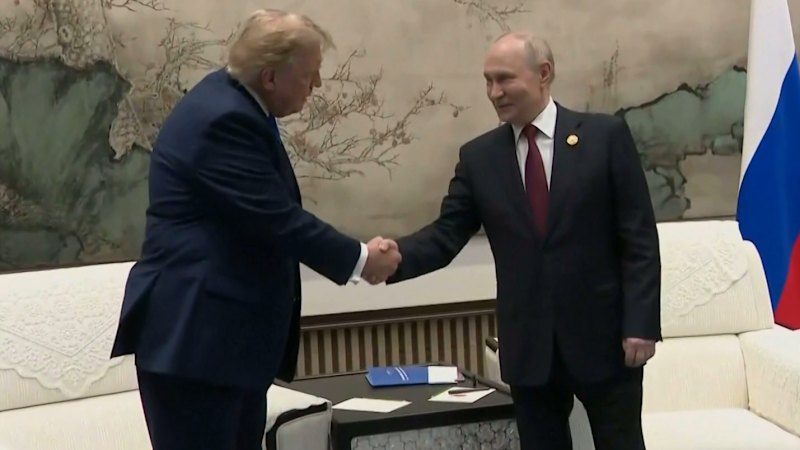
Three leaders sat down in Shenzhen on Thursday, November 19, 2026, for the first formal trilateral meeting between Donald Trump, Xi Jinping, and Vladimir Putin at an APEC summit. Everyone watched the cameras. Most people missed the real tension underneath.
Hours before the three met at Kylin Villa, Russian state media aired footage showing a naval officer carrying Putin's nuclear briefcase, known as the Cheget. Theater? Absolutely. A reminder of raw power in a room built for trade talks? No doubt. Yet the headline spectacle of Trump, Xi and Putin sitting together at the 33rd Asia-Pacific Economic Cooperation summit is only half the story.
If you're looking at this meeting expecting a neat peace treaty or a sudden arms-control breakthrough, honestly, you're setting yourself up for disappointment. A roughly 90-minute huddle doesn't erase years of war in Ukraine, friction over Iran, or deep distrust over nuclear arsenals. Still, watching the three biggest military and economic heavyweights share a table in China changes the diplomatic mood across the entire Pacific Rim.
Why Trump, Xi and Putin Stole the Spotlight in Shenzhen
APEC is supposed to be a trade and economic forum. Twenty-one member economies account for more than 60 percent of global GDP and roughly 40 percent of the world's population, meeting under the banner of openness, innovation, and cooperation. On paper, delegates in Shenzhen were hashing out supply-chain resilience, artificial intelligence governance, digital infrastructure financing, and the APEC Policy Support Unit's updated 2026 growth forecast of 3.4 percent.
In practice, bilateral and trilateral power politics hijacked the week.
Trump arrived in Shenzhen after a stop in Manila with Philippine President Ferdinand Marcos Jr., greeted on the airport tarmac by Xi in a deliberate mirror of Xi's September visit to Washington. Over the course of the summit, Trump held bilateral talks with Xi and a separate roughly 40-minute sit-down with Putin before the three gathered together. Trump called the trio's meeting historic and pointed to shared responsibility on nuclear stockpiles and global conflicts. Putin spoke of converging interests on Ukraine and energy security. Xi urged every effort to prevent nuclear war, arguing that nuclear weapons should be prohibited and destroyed.
From a purely diplomatic standpoint, getting all three leaders in one room on Chinese soil is a massive win for Beijing's hosting stagecraft. China hasn't hosted APEC in twelve years, having last held it in 2014, and staging a first-ever three-way summit between the United States, China, and Russia lets Xi frame China as an indispensable hub of global stability.
Wait—don't confuse a photo-op with alignment. Look closely at the geometry of that triangle.
The Real Power Dynamic Behind the Camera
Trump likes to treat big-power diplomacy like a personal dealmaking room. He praised both Xi and Putin as friends, talked up tariff adjustments and the Board of Trade set up with Beijing in May, and argued that the three nations are uniquely positioned to talk about reducing nuclear weapons.
Here's the catch. Personal rapport isn't the same thing as aligned strategic interests.
Xi and Putin have met more than forty times since 2013, and their partnership rests on long-term structural alignment rather than a single summit's mood. Beijing has kept Moscow economically afloat after Western sanctions following Russia's 2022 full-scale invasion of Ukraine, while both capitals share a desire to push back against U.S.-led rules and pressure. When Putin called Xi his "dear friend" and Xi greeted him as his "old friend," that warmth carried years of backing behind it.
Nuclear arms control shows just how wide the gap remains. Following the expiration of New START in February 2026, Trump floated a modernized framework that brings China into the fold. Analysts at institutions like the Arms Control Association and the Stockholm International Peace Research Institute have long pointed out the math problem here. Estimates from SIPRI put China's arsenal at roughly 620 warheads early in 2026, compared with more than 5,000 each for the United States and Russia. Beijing isn't going to cap its buildup while its total remains a fraction of Washington's and Moscow's.
Big-power summits often look decisive on television and ambiguous on paper. Leaders can agree that nuclear war shouldn't happen without agreeing on a single verifiable limit.
Even Trump's swipe at the International Criminal Court—calling it "out of control" in the presence of Putin, who faces a 2023 ICC arrest warrant—underscored how sharply Washington's posture can diverge from traditional multilateral norms.
What Allies and Markets Are Actually Worried About
If you run a business exposed to Asian supply chains or follow regional security, the biggest risk isn't a sudden grand bargain between Washington, Moscow, and Beijing. It's the feeling among U.S. allies and partners that big powers might trade over their heads.
We already saw hints of that friction around the edges of Shenzhen. Australian Prime Minister Anthony Albanese pressed Putin directly at the leaders' gathering to end the war in Ukraine. Japanese leader Sanae Takaichi used a face-to-face meeting with Putin to push for the release of a detained Japanese journalist. Across Europe, leaders like German Chancellor Friedrich Merz have voiced concern about great-power talks sidelining Ukraine and European security interests.
That unease matters for markets, too. When trade policy, export controls, AI rules, and security talks blend together, companies face whiplash. A tariff truce or board of trade can calm nerves for a quarter, yet energy price pressures, regional flashpoints in Eastern Europe and the Middle East, and competing tech standards keep boards cautious.
I've watched plenty of international summits over the years—from APEC and G20 weeks to trade ministerial marathons—and the same mistake pops up every time. People read the opening statements like final contracts. They aren't. Opening remarks are positioning; real shifts show up months later in customs rules, sanction enforcement, energy flows, and defense budgets.
There's also a legitimate counter-argument worth taking seriously. Supporters of direct high-level engagement argue that talking beats silence, especially when nuclear-armed powers are fighting proxy battles or staring each other down. Keeping channels open between Washington, Beijing, and Moscow can lower the odds of a miscalculation spiraling out of control. Both things can be true at once: the meeting can carry real risk of sidelining allies and still serve as a pressure-relief valve.
What You Should Watch Next
Don't get stuck replaying clips of handshakes or the nuclear briefcase. Track the concrete moves that follow the Shenzhen summit instead.
- Check the G20 calendar in December. Trump and Xi are slated to meet again at the G20 summit later this year, giving them a fast follow-up test to see whether May's trade understandings and Shenzhen's talks hold up or fray.
- Watch energy and shipping lanes. Look at crude oil pricing, insurance rates, and sanctions enforcement around Russian and Middle Eastern trade flows rather than diplomatic soundbites.
- Audit your supply chain and tech exposure. If your business relies on cross-border components, dual-use tech, or Pacific trade routes, map out single-country bottlenecks before tariff or export-control rules shift again.
- Separate rhetoric from policy text. Read official joint declarations, trade directives, and agency rulemakings—not just cable-news summaries—to see what actually changed.
The cameras in Shenzhen captured a historic trio at the table. Real geopolitical shifts take a lot longer than ninety minutes to settle.



