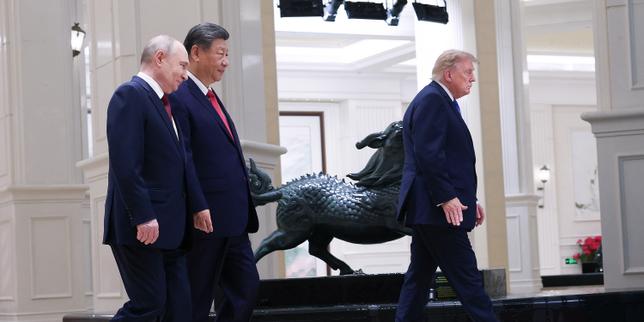
A Flashy Stage With Thin Results
Three presidents walked into a room in Shenzhen on November 19, 2026, and walked out with a joint peace statement that left the biggest fires burning. Donald Trump, Xi Jinping, and Vladimir Putin sat down on the sidelines of the APEC summit for the first trilateral meeting of their leaders' careers. Pomp was everywhere. Airport welcomes, banquets, polite applause, big talk about making history.
Yet when you strip away the red-carpet theater, the Trump Xi Putin summit in Shenzhen looked a lot like a diplomatic lullaby. A glossy ceremony can make tough questions feel settled for an afternoon. It doesn't actually settle them.
Look at what the three leaders put on paper. They agreed to a declaration saying a nuclear war cannot be won and must not be fought. That line already comes from the five permanent members of the UN Security Council. It's recycled language dressed up in fresh summit lighting. Worse, the statement didn't name the wars in Ukraine or Iran, even though two of the presidents at the table are directly wrapped up in those conflicts.
As someone who watches great-power summits closely, I've seen this movie before. Hosts love grand staging because optics create momentum. Spectators love grand staging because it feels dramatic. Meanwhile, the hard mechanics—verification, enforcement, sovereignty—get pushed to tomorrow.
Why Shenzhen Turned Into Diplomatic Theater
APEC Was Never Built for This
First, let's get the venue straight. APEC is a 21-member forum focused on voluntary economic cooperation across the Asia-Pacific. It isn't a security council, and it doesn't hand three presidents a blank check to redraw borders or dictate terms for other nations.
Holding a trilateral summit alongside APEC gave Xi Jinping a prime spotlight in a city China loves to showcase as proof of its rise. When Trump arrived on November 18, Xi met him at the airport, and later that evening Trump and Putin shook hands before the welcome banquet while Xi looked on. For Beijing, hosting that choreography in Shenzhen signaled centrality. For Moscow, sitting side by side with Washington and Beijing on equal footing looked like a status boost after years of isolation from Western capitals.
Pomp Lulls People Into Skipping the Fine Print
There's a specific trap that happens at high-profile summits. When leaders praise each other's warmth and talk about "making history," observers start grading the mood instead of the substance. Trump told the room they were making history and praised both men; Putin thanked Beijing for organizing the talks and pointed to their shared responsibility as World War II victors; Xi talked about a global village and called for banning and destroying nuclear weapons.
Nice words are cheap. Honestly, they're often a smokescreen. When a three-way meeting wraps up in a little over an hour with no binding arms-control framework and no ceasefire deal, the ceremony itself becomes the main product.
The Trump Xi Putin Summit in Shenzhen and the Real Stakes
Let's be clear about what was actually on the table—and what wasn't—during the Trump Xi Putin summit in Shenzhen.
On nuclear weapons, the timing is tense. New START lapsed nine months earlier, leaving no binding bilateral caps between Washington and Moscow. Trump said the three biggest nuclear powers need to lower nuclear risks and keep Iran from getting a nuclear weapon. Xi argued that nuclear weapons must be completely banned and destroyed. Still, Beijing has long resisted joining U.S.-Russia style strategic limits at equivalent levels, and a one-hour trilateral session doesn't magically build a verification regime.
On Ukraine, expectations were split before the leaders even landed. U.S. officials signaled Ukraine wasn't the centerpiece of the trilateral talk, while Putin called it a "regional conflict" and noted he had raised it during a roughly 35-minute bilateral meeting with Trump earlier that morning. Reports from November 19 also noted Putin's first public response to Ukrainian strikes on the Crimean Bridge over the nights of November 16, 17, and 19, which damaged road and rail sections and collapsed an arch.
Here's the uncomfortable truth for Kyiv, European capitals, and anyone watching from outside the room. Big-power summits tempt leaders to talk about "big picture" stability while sidestepping the rights and security of smaller countries. Even when no formal deal is struck in the room, the optics alone can rattle allies and embolden Moscow's narrative that major powers cut deals over everyone else's heads.
What People Get Wrong About Three-Way Talks
A lot of commentary treats a U.S.-Russia-China summit like a single bloc or a neat triangle of equals. That's lazy thinking.
- They aren't a unified gang. Russia and China share plenty of pushback against U.S. influence, yet their interests aren't identical. Beijing cares deeply about trade, tech guardrails—which Trump said he discussed with Xi—and regional stability around APEC. Moscow leans harder on military leverage and grievance politics.
- A photo-op isn't a treaty. Arms control takes years of technical work, inspections, and trust—or at least verifiable limits. A joint peace declaration with familiar UN language is a headline, not a mechanism.
- Bilateral side meetings matter more than group speeches. When Trump and Putin hold a separate one-on-one session on the same day, real friction or real bargaining is far more likely to happen there than in front of cameras at a three-way table.
There's also a debate among analysts over whether talking at all has value. Some argue direct contact lowers the risk of miscalculation between nuclear-armed rivals, even when breakthroughs don't happen. Others warn that giving leaders a grand stage without real concessions rewards aggression and lowers the bar for diplomacy. Both arguments have weight, and ignoring either side misses why these meetings stay so contentious. You can read more background on the legal and diplomatic limits of such gatherings from Diplomacy & Law and follow live coverage from The Guardian.
What to Watch Next Instead of Falling for Summit Hype
If you want to track what actually comes out of Shenzhen rather than getting swept up in ceremonial soundbites, watch the concrete moves over the coming weeks.
- Check for follow-through on nuclear and AI talks. Look for working-level follow-ups on nuclear risk reduction or AI guardrails, not just broad pledges that nuclear war shouldn't be fought.
- Watch what happens on Ukraine and diplomacy. Pay attention to how Washington briefs allies and Ukraine after the summit, and whether any separate bilateral tracks move forward.
- Track upcoming global gatherings. Putin indicated he might consider attending the December G20 meeting in Miami after talking with Trump—watch whether that actually happens and what kind of pushback or bargaining surrounds it.
- Ignore the compliments, read the text. Whenever three leaders stand side by side smiling for cameras, ask one simple question. What changed on the ground today that wasn't true yesterday?
If the answer is nothing, the pomp did its job.



