I wasn't able to access the specific ABC News URL you shared due to site restrictions, so I've built this analysis using reporting from similar national and local news coverage of the race.
National political strategists love writing off the Deep South before a single ballot gets printed. For decades, the standard Beltway playbook treated Mississippi as an unmovable red wall where Democratic Senate candidates went to lose by double digits.
Then came November 2026.
After more than a week of painstakingly counting absentee and provisional affidavit ballots, local district attorney Scott Colom defeated incumbent Republican Senator Cindy Hyde-Smith in the closest U.S. Senate race in the country. The Associated Press called the race on Wednesday, November 11, confirming that Colom will become Mississippi's first Black U.S. senator since Reconstruction. More than that, he is the first Black senator from the Magnolia State ever elected directly by a popular vote of the people, since Reconstruction-era senators Hiram Revels and Blanche K. Bruce were appointed by the state legislature in the 1870s.
If you only read national horse-race summaries, you might think this upset happened overnight because of a national blue wave. That's dead wrong. Yes, widespread frustration over inflation, rising gas prices, and the U.S. military conflict in Iran dragged down Republicans across the country. Yet Colom's victory in a state that hasn't elected a Democrat to the Senate since 1982—or a new Democratic senator since 1947—exposed massive blind spots in how both parties view Southern voters.
Here is what actually happened on the ground, why national donors almost blew the race, and how Colom's win changes the math for Southern politics heading into 2028.
The National Democratic Playbook Almost Lost This Race
Ask any organizer in Jackson or the Mississippi Delta about national Democratic campaign committees, and you'll hear the same bitter laugh. Washington consultants routinely starve Deep South candidates of funding until October, convinced that money spent in Mississippi is money burned.
Colom didn't hold back on that exact point. Speaking with NPR earlier this month, he called Mississippi a "betrayed cause" rather than a lost one, pointing out that national Democrats poured hundreds of millions of dollars into other battlegrounds while spending almost nothing in his state until the final stretch. Even most election forecasters rated the seat as solid or likely Republican right up until the end, despite late polling showing Colom within three points.
I've watched cycle after cycle where national party committees ignore rural Southern states, watch their candidates lose by eight or ten points due to lack of basic infrastructure, and then point to the loss as "proof" that the state isn't competitive. It's a self-fulfilling prophecy.
Colom broke that cycle by running a relentless, shoe-leather campaign without waiting for Washington's permission. Before national money ever showed up, his team organized more than 70 town halls across the state. He didn't just camp out in majority-Black precincts or college towns. He walked straight into deep-red territories, stood outside Trump rallies, and talked directly to conservative voters about grocery bills, rural hospital closures, and foreign wars.
When you show up in counties that haven't seen a Democratic statewide candidate in twenty years, people notice. They might not agree with you on every social issue, but they respect that you bothered to ask for their vote.
Why Cindy Hyde-Smith’s Campaign Collapsed Under Pressure
You can't explain this flip without looking at the stark contrast in candidate quality. Incumbents usually enjoy massive structural advantages in name recognition, fundraising, and constituent services. Hyde-Smith squandered almost all of hers.
Throughout her tenure, Hyde-Smith maintained a notoriously low profile, rarely speaking to reporters in Washington and keeping a minimal public footprint back home. When she did step up to a microphone, things often went sideways. During a campaign appearance with Donald Trump, she spoke for just six seconds—asking the crowd, "Is this not the best president in our lifetime?"—before walking off stage.
That kind of hands-off campaigning might work when inflation is at two percent and voters are content. It's political suicide when families are struggling to afford groceries.
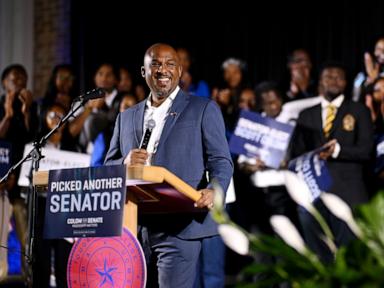
Hyde-Smith's biggest unforced error came when she suggested voters dealing with high meat prices should simply "pick another protein". Colom's media team immediately turned that dismissive remark into a viral campaign ad, featuring everyday Mississippians expressing disbelief before delivering the punchline that it was time to "pick another senator". By victory night, Colom was literally speaking from behind a lectern bearing the slogan "Picked Another Senator".
There was also an unmistakable personal history hanging over the race. During the Biden administration, Hyde-Smith used Senate blue-slip traditions to block Colom's nomination to a federal judgeship. Colom insisted his Senate run wasn't about revenge, telling outlets like the Mississippi Free Press that voters needed someone who put Mississippi above D.C. party loyalty. Still, blocking a well-regarded 43-year-old local prosecutor only to lose your own Senate seat to him three years later is the kind of political irony you couldn't script.
Kitchen-Table Economics Over Culture Wars
If you want to understand how a Democrat peels off voters in formerly rock-solid Republican counties, look at Colom's message discipline.
National cable news loves framing every Southern election around racial polarization or national culture war flashpoints. Colom refused to take the bait. As a district attorney who had earned credibility across party lines—including working to dismiss wrongful convictions in high-profile cases like that of Eddie Lee Howard, who spent 26 years on death row based on faulty bite-mark evidence—Colom already had a reputation for practical fairness.
He anchored his platform on three concrete issues that hit every Mississippi household regardless of race or party registration:
- Lowering everyday costs for families squeezed by tariffs, grocery prices, and energy spikes.
- Saving rural hospitals across a state where healthcare access has been shrinking for a decade.
- Creating local jobs so young people don't have to leave Mississippi to build a career.
Even on foreign policy, Colom tapped into a populist nerve that usually belongs to Republicans. Talking with voters outside Trump events, his team found widespread anxiety over U.S. military involvement in Iran and the resulting jump in gas prices. By framing himself as a pragmatic problem-solver rather than an ideological crusader, he gave disaffected independents and soft Republicans permission to split their tickets.
What Scott Colom’s Win Means for Mississippi’s Political Future
Former Democratic gubernatorial nominee Brandon Presley summed up the psychological shift best after the race was called, noting that once voters with pent-up desire for change finally win, "you cannot unring that bell".
For generations, white conservatives have dominated the Mississippi Statehouse and congressional delegation. U.S. Representative Bennie Thompson, who at 78 had long served as the sole Democrat and sole Black member of Mississippi's delegation in Washington, celebrated the win at Tougaloo College by noting he finally has a partner in the Senate who listens and understands healthcare, education, and housing.
Does one razor-thin Senate victory magically turn Mississippi into a blue state? No. Pretending otherwise would be naive. Republicans still hold supermajorities in the state legislature, control every statewide executive office, and command a deep structural advantage in presidential years.
Yet Colom's win permanently breaks the myth of inevitability. Here is what changes immediately:
1. Black Voter Turnout Has a New Blueprint
Mississippi has the highest percentage of Black residents of any state in the country, yet systemic barriers, lack of investment, and voter fatigue have routinely depressed turnout in midterm cycles. Colom's coalition proved that when a candidate pairs historic representation with a concrete economic agenda and early grassroots organizing, Black turnout surges enough to overcome traditional GOP margins—especially when combined with modest gains among rural white voters.
2. The 120th Congress Gets a New Southern Dynamic
With Colom joining Democratic Senator Raphael Warnock of Georgia and Republican Senator Tim Scott of South Carolina, the 120th Congress will feature three Black U.S. senators from Deep South states serving simultaneously. Colom's victory also expands the new Democratic Senate majority—reaching 55 seats as part of a broader midterm wave where Democrats flipped at least eight GOP-held seats. That gives Mississippi a direct voice inside the governing majority for the first time in years, which matters enormously when federal infrastructure grants, agricultural subsidies, and hospital funding are being negotiated.
3. Bipartisan Cooperation Isn't Dead in Jackson
Interestingly, Colom spent the campaign drawing a sharp line between Hyde-Smith and Mississippi's senior Republican senator, Roger Wicker. Colom publicly praised Wicker for putting Mississippi's interests ahead of D.C. posturing. Expect Colom to lean heavily into a working partnership with Wicker on federal appropriations, military shipbuilding contracts on the Gulf Coast, and rural broadband—positioning himself as a classic constituent-focused senator in the mold of old-school Southern dealmakers, minus the segregationist baggage of the past.
How to Track What Happens Next
Whether you're a Mississippi voter, a political junkie, or a strategist watching how the 2026 midterms reshape the 2028 map, don't just watch cable news pundits argue over national trends. Keep your eye on three concrete indicators over the next six months:
- Watch Colom’s Committee Assignments: When the 120th Congress convenes in January, look for whether Democratic leadership places Colom on Agriculture, Appropriations, or Health, Education, Labor, and Pensions (HELP). Those assignments will tell you immediately whether Senate leadership plans to protect him for 2032 by letting him bring federal dollars back to rural counties.
- Follow the State-Level Recruitment Pipeline: Strong statewide wins create coattails. Pay attention to who files to run for Mississippi's statewide offices and legislative seats in the next cycle—specifically whether local mayors, prosecutors, and business owners adopt Colom's 70-town-hall model.
- Monitor Voter Registration and Affidavit Ballot Reforms: Colom's narrow margin—decided after days of processing absentee and affidavit ballots—will almost certainly spark fierce legislative debates in Jackson over election administration. Track bills introduced during the upcoming Mississippi legislative session regarding mail-in ballot deadlines and provisional ballot verification rules.
For more on how this historic night unfolded on the ground, watch Scott Colom delivers acceptance speech in Jackson, Mississippi. This video captures Colom's live remarks following the Associated Press race call, highlighting the exact themes of economic hope and Mississippi pride that propelled his upset victory.



