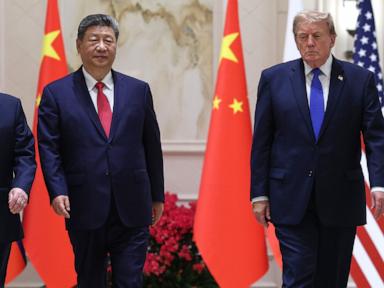
One loud question in a diplomatic room can get you locked out of the next one. That's basically what happened in Shenzhen on November 19, 2026, when Chinese officials blocked Bloomberg reporter Annmarie Hordern from entering a trilateral meeting with U.S. President Donald Trump, Chinese President Xi Jinping, and Russian President Vladimir Putin.
Earlier that day, during a bilateral session between Trump and Xi, Hordern shouted out a question asking whether former Nvidia CEO Jensen Huang had been disloyal to the United States, a pointed reference to a scandal involving alleged ties to a Chinese spy. Trump didn't answer. Chinese officials, however, treated the unscripted outburst as a breach of decorum and barred Hordern from the subsequent three-way sit-down at Kylin Villa. Even after a White House official pushed to get her reinstated, Beijing held firm.
At first glance, it looks like a classic clash between Western press habits and Chinese state control. Shouted questions are everyday noise at the White House. In Beijing's tightly choreographed world, they're treated as rude disruption. Look closer, though, and this isn't just a squabble over etiquette. It exposes how sensitive U.S.-China tech rivalries have become, how fragile press pool leverage is on foreign soil, and why even a fleeting moment in front of cameras can reverberate all the way to Capitol Hill.
http://googleusercontent.com/lmdx_content/WVqSOAuzeFYmcSrYgDuNlURpEEBdrGnbLDogZIOOEnVomkGjmCCgaQaXxQHMUjuyEEbkvixbsOnjHodARLWHxVsLpqENyHsEvLmPRkZKafORYAfZQTLZVXOnimjdxtniIIAokwnCRSoSphYuGBJlnOGTQsPyjdbpyZMSVGBmgACJxo152946 As extensively documented in latest articles by USA.gov, the results are notable.
Why China Bars a Reporter Over a Shouted Question
To understand why a single question triggered a ban, you have to look at two colliding cultures. In Washington, shouting questions while presidents walk down hallways or sit for photo sprays is standard operating procedure. Reporters holler over noise, presidents pick and choose what to ignore, and nobody loses their credential just for raising their voice.
Chinese officials operate on a completely different script. High-level meetings in China are staged like precision theater, with movement, lighting, and timing locked down well in advance. According to pool dispatches from Shenzhen, officials warned journalists that shouting questions was considered extremely rude and could get them removed, even silencing another reporter who started to ask a question and moving a security official to block a camera.
What made Hordern's question especially combustible wasn't just the volume. It was the timing and the subject. Asking about potential disloyalty involving former Nvidia chief Jensen Huang right in front of Xi Jinping dragged an explosive American domestic and national-security controversy straight into a bilateral setting. Beijing doesn't want unscripted national-security bombs dropped into its diplomatic showcases, especially when the host government is trying to project calm control.
When a foreign host controls the room, traditional White House press norms don't automatically travel with the traveling pool.
The White House Press Pool Dilemma
Whenever a U.S. president travels abroad, the traveling press corps faces an awkward reality. The White House can request access, argue with host officials, and press for inclusion—just as a White House official reportedly did on Hordern's behalf—but the host nation controls physical entry to its venues.
In practice, that creates a tough bind for reporters and editors. If you stay quiet to keep access, you surrender the ability to ask uncomfortable questions in real time. If you shout a hard question anyway, you risk getting locked out of the next room, leaving your outlet blind during a historic meeting like the first-ever three-way sit-down among Trump, Xi, and Putin.
Even Trump seemed to nod to the tight lid on coverage during the trip, remarking to Xi that it was too bad the media couldn't see some of it because every move was executed so smoothly. That comment captures the paradox of modern summit diplomacy. Leaders love polished optics, while journalists are paid to poke holes in the choreography.
The Nvidia Spy Allegations Behind the Outburst
Hordern's question didn't come out of nowhere. It tapped directly into a fast-moving storm around Jensen Huang, who stepped down as Nvidia's CEO the previous week after acknowledging extramarital affairs, including one reportedly involving a Chinese spy.
In Washington, those allegations sit right at the intersection of Silicon Valley power, personal conduct, and foreign espionage risks. Congress isn't letting the story drift away. Reports indicate Huang has agreed to appear before the Senate Banking Committee in December 2026, and he and Nvidia general counsel Tim Teter are slated to face questions from three House committees on December 1.
Trump had said ahead of the summit that he didn't plan to bring the matter up with Xi. By shouting the question during the bilateral session, Hordern forced the issue into the open air of the meeting room, putting both leaders on the spot without getting a verbal reply.
Honestly, that explains why Chinese officials reacted so swiftly. Anything linking a top American chip executive, espionage allegations, and Chinese influence strikes a nerve in Beijing—particularly as the Trump administration has moved to block China from indirect access to U.S. AI technology and tech rivalry intensifies.
A Familiar Pattern of Press Friction in China
If this feels like déjà vu for veteran foreign correspondents, there's a reason. Friction over how aggressive American reporters behave around Chinese leaders has surfaced before.
During a 2022 meeting between then-President Joe Biden and Xi Jinping in Bali, Indonesia, a White House pool reporter described being yanked by her backpack and knocked off balance while trying to shout a question about human rights, prompting two White House staffers to step in. That earlier episode showed the same clash of expectations: reporters doing what they consider basic accountability journalism, and security or event minders treating unapproved shouting as a violation of order.
Zooming out, foreign correspondents covering China have long navigated a much harsher environment than their peers in Washington or Brussels. Over recent decades, international journalists have faced expulsions tied to their reporting or perceived misbehavior at events, while resident reporters have periodically faced questioning, detention, or pressure when covering sensitive topics. Domestic journalists in China face far steeper consequences—including censorship, firing, or imprisonment—if they cross political lines.
At the same time, it's worth acknowledging a nuance that gets flattened in quick headlines. Even in the United States, access to major summits and bilateral sit-downs is heavily managed by press offices and pool rules. The difference is that in the U.S., a reporter shouting a question rarely gets barred from the next official event by state security. In China, event access is tightly rationed and easily revoked.
What the Shenzhen Summit Actually Produced
While the press ban grabbed intense media attention, the underlying trilateral meeting in Shenzhen was already drawing scrutiny for what it accomplished—or didn't. After roughly 70 minutes behind closed doors, Trump, Xi, and Putin didn't announce sweeping breakthroughs on nuclear risks.
Instead, statements and summaries pointed to a narrower set of talking points, including United Nations reform, oil production and supply, the International Criminal Court, and nuclear conflict risks. Arms-control analysts noted that high-profile three-way gatherings can easily turn into diplomatic theater rather than concrete agreements.
For readers trying to make sense of the day's news, that context matters. A single reporter getting barred from a photo spray is dramatic, yet the bigger story is how tightly controlled information remains around high-stakes talks involving the world's top powers. When reporters are kept out or cameras are blocked, the public has to rely more heavily on official readouts and pool notes rather than unfiltered observation.
Common Misconceptions About Summit Press Access
People who don't cover diplomatic trips often assume a few things that don't match reality:
- The White House runs the room overseas. It doesn't. The host country sets security perimeters and decides who crosses the threshold into its buildings.
- Every reporter gets into every meeting. Not even close. Most bilateral and trilateral sessions allow only a small "pool" of selected writers, photographers, and videographers for a brief window, often just a few minutes at the start.
- Shouting is always a winning tactic. Sometimes it gets a quote or a reaction. Other times, especially abroad, it gets you shut out while the rest of the pool stays inside.
Practical Ways to Read Stories Like This Critically
When you see a headline about a journalist getting blocked at an international summit, a few habits will help you separate real stakes from routine noise:
- Check who did the barring. Look at whether the restriction came from the White House press office or from foreign host officials. The political meaning is very different.
- Look at the question behind the ban. Figure out why that specific topic was sensitive in that moment—whether it touches on espionage claims, human rights, sanctions, or tech competition.
- Compare multiple wire and pool reports. Early social media posts can exaggerate or garble what happened inside a room. Cross-checking reports from outlets like the Associated Press or PBS News gives clearer context on pool rules and official statements.
- Watch the follow-through. A diplomatic scuffle over press access often fades within days, while the underlying story—such as upcoming congressional hearings on Nvidia or real policy shifts on nuclear arms—keeps moving.
In high-stakes diplomacy, who gets in the door is never just a logistics detail. It's a clue to what leaders want the world to see—and what they'd rather keep quiet.



