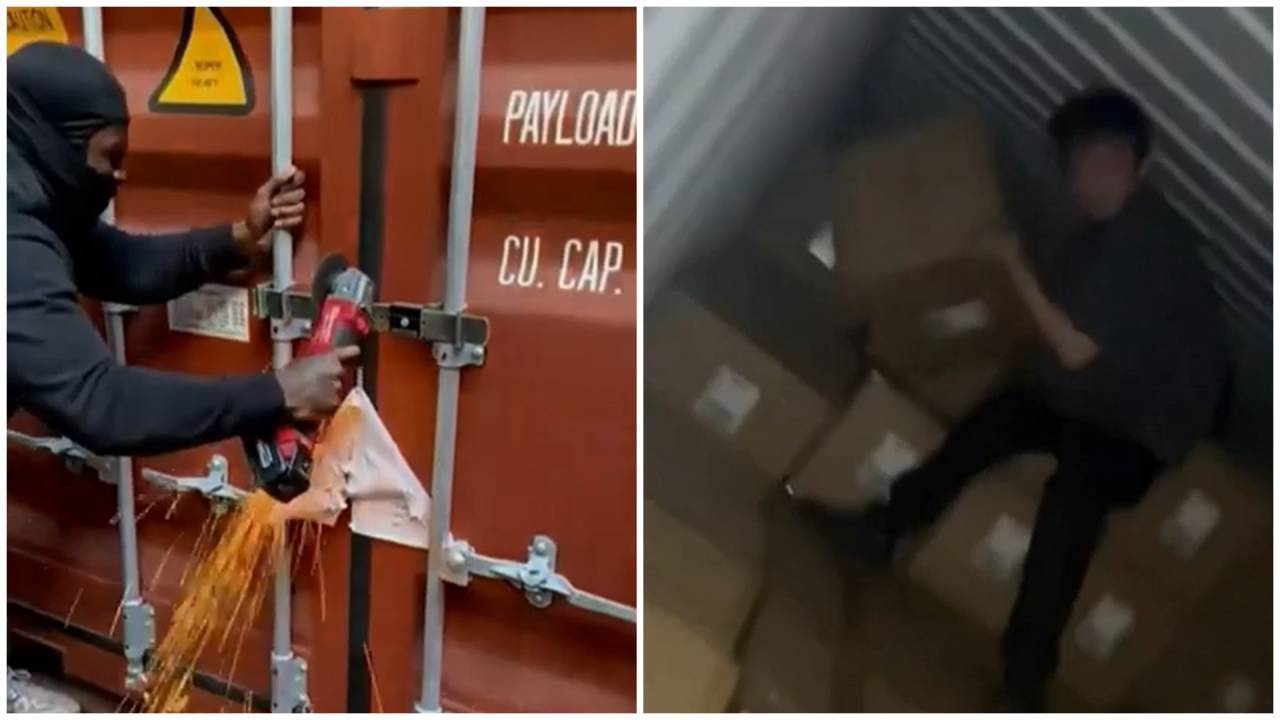
Cutting air hoses to force a freight train to an emergency stop sounds like a plot straight out of an old Western. Yet federal prosecutors say a 14-person crew pulled off that exact trick at least 36 times across Southern California between February 2024 and August 2026, allegedly walking away with more than $22.5 million in stolen goods, including Nike sneakers and Milwaukee power tools.
The story broke publicly on Thursday, November 19, 2026, when the U.S. Attorney's Office for the Central District of California announced a 17-count federal indictment and the arrest of 13 of the 14 suspects. Plenty of headlines focus on the headline dollar figure or the flashier details like Instagram messages and Air Jordans. Honestly, the bigger story is how organized cargo theft has become along vital freight corridors and why retailers, resellers, and everyday buyers keep getting tangled in the fallout.
How the Alleged Train Theft Operation Worked
According to the U.S. Department of Justice announcement, the alleged scheme didn't rely on random opportunism. Prosecutors say it ran like a division of labor.
Members of the crew allegedly targeted trains carrying high-demand consumer goods moving inland from the Ports of Los Angeles and Long Beach, many of them headed to distribution centers and retailers outside California. Spotters identified locations along tracks in cities like Pico Rivera and Fullerton. Others allegedly severed train air hoses—the brake line system connecting railcars—which triggers emergency braking and brings a heavy freight train to a halt. Further insights on this are detailed by The Washington Post.
Once the train stopped, crew members allegedly climbed aboard, broke into containers, and passed boxes down to waiting vans and trucks. From there, lookouts and drivers moved the stolen merchandise to residences and storage spots. Even during active burglaries, prosecutors allege the group shared photos and shipment details in messages, coordinated pickups, and checked boxes for tracking devices.
It's a stark reminder that modern supply chains aren't just vulnerable at mega-ports or big-box warehouses. Slow-moving or stopped rail corridors through dense urban areas create physical choke points that criminals know how to exploit.
Inside the Resale Pipeline and the Federal Charges
Stealing tens of millions of dollars in sneakers and tools is only half the puzzle. Moving that volume of boxed goods without drowning in inventory requires buyers.
Federal court filings allege that two defendants, Fredy Marquina and Carlos Luis Fernando Martinez, sold thousands of pairs of stolen Nike sneakers—many still in original factory boxes—to an unauthorized Los Angeles sneaker and streetwear resale business listed in the indictment as Company 1 between May and October 2025, bringing in roughly $1,081,493. Prosecutors have not publicly named Company 1 or charged its representatives in this indictment. Another defendant, Jorge Angel Aguilar Espinoza, allegedly took stolen sneakers and goods from suppliers including alleged ringleader Nathan Daniel Angel, stored them at his home, and marketed them online for profit.
As FreightWaves reported, messages cited by prosecutors also show members trading tips on shipment trackers and reacting to law enforcement pressure and missing inventory.
All 14 charged defendants face a federal conspiracy count, along with counts tied to theft and possession or receipt of stolen interstate railroad cargo, plus charges alleging violence against railroad carriers. Statutory maximums run up to five years for conspiracy, up to 10 years per cargo theft count, and up to life in prison for violence against railroad carriers. Of course, an indictment is an allegation, not proof of guilt, and every defendant is presumed innocent unless proven guilty in court.
Why Sneakers and Power Tools Keep Showing Up on the Black Market
If you've worked in retail loss prevention, supply chain security, or commercial insurance, seeing Nike sneakers and Milwaukee tools on the same charge sheet won't surprise you a bit.
Both categories hit a sweet spot for illicit resale. High-demand athletic footwear carries strong brand recognition, clear sizing, and active secondary markets where buyers don't always ask how a seller got 500 pairs in factory cartons. Meanwhile, cordless power tools like Milwaukee gear are expensive, durable, and constantly in demand among contractors, mechanics, and DIY buyers who shop online marketplaces or swap meets.
Here's what people outside the industry often get wrong. They picture stolen freight ending up in some shadowy back-alley warehouse only accessible to hardened criminals. In reality, thieves lean heavily on mainstream social media posts, local resellers, and online listings to turn bulk pallets into fast cash. When a reseller buys way below wholesale with zero chain-of-custody paperwork, "I didn't know it was hot" starts looking pretty thin to investigators.
From my perspective covering freight and retail security, this case highlights a tough tension for legitimate businesses. Small and mid-sized resellers often argue they rely on third-party sources to stay competitive, while brands and prosecutors push back that ignoring obvious red flags—like brand-new factory cartons offered at steep discounts on social media—fuels organized theft.
Who Investigated and What It Means for Freight Security
Cases of this size rarely come together from a single agency. The Department of Justice release notes that Homeland Security Investigations (HSI), the Los Angeles Police Department Commercial Crimes Bureau, the Union Pacific Railroad Police Department, and the California Highway Patrol Cargo Theft Interdiction Program worked the investigation, with assistance from IRS Criminal Investigation.
First Assistant U.S. Attorney Bill Essayli emphasized that enforcement isn't stopping at people climbing onto trains; buyers and resellers profiting knowingly from stolen cargo are in the crosshairs too. Bringing in the IRS is a classic sign that prosecutors are tracing the money trail—bank deposits, cash flows, and online sales proceeds—alongside physical surveillance and digital messages.
Even with aggressive multi-agency enforcement, rail security faces real friction. Freight lines stretch for thousands of miles, and stopping a train by cutting air hoses takes seconds, whereas patrolling every mile of track around the clock isn't physically realistic. That's why covert trackers tucked inside high-value cartons, better intelligence sharing between railroads and local police, and financial tracing on resellers matter so much. Data on total off-invoice cargo theft can also be messy because victims sometimes report losses late or classify incidents differently, which is one reason prosecutors treat court-verified seizure and loss figures carefully.
Practical Next Steps for Businesses and Everyday Buyers
Whether you run an online shop, source inventory for a retail store, or simply buy gear and sneakers online, a few concrete habits cut your exposure right away.
- Demand verifiable provenance for bulk inventory. If a supplier offers pallets of brand-name sneakers or power tools well below market with no invoices or authorization trail, walk away. Legal headaches and asset seizures aren't worth a quick margin bump.
- Watch for red flags when buying secondhand. Brand-new tools or boxes of sneakers sold in bulk on social media or classifieds at suspiciously low prices—especially without receipts or from accounts pushing constant "fresh drops"—deserve extra skepticism.
- Layer covert tracking and packaging controls. For shippers and brands moving high-theft SKUs along rail corridors, combine discreet GPS/BLE trackers inside cartons with tamper-evident seals and rapid alert workflows so security teams can act before goods scatter across residences.
- Document every transaction. Keep clean purchase records, serial numbers where applicable, and payment trails so legitimate businesses can prove good-faith compliance if a supply chain audit or law enforcement inquiry ever touches their inventory.



